If you have ever walked into a room and noticed a damp scent or felt a heaviness in the air, you are likely dealing with excess indoor moisture. While it might seem like a minor inconvenience, managing humidity is one of the most important steps you can take to protect your health and the integrity of your home.
I know that a humid environment and fixing a damp home is not necessarily the most glamorous part of creating a healthy home. But it’s definitely a necessary and often very simple part of the process.
Even if your home isn’t a humid space now, it’s still important to know how to prevent the possibility of a damp house in the future. You’ll not only prevent a must smell or humid basement, but you’ll be keeping your home as a healthy living space.

Why Moisture Management Matters for Your Health
Living in a damp environment is more than an aesthetic or structural concern; it is a significant health variable. When a home has high humidity, it becomes a primary driver for various health challenges.
Research has consistently shown a link between dampness and respiratory issues. According to a review published in Environmental Health Perspectives, dampness and mold in homes are associated with a 30% to 50% increase in respiratory-related health outcomes, such as asthma and cough. When moisture levels are high, it encourages the proliferation of dust mites and the growth of various microbes.
Beyond just the lungs, a damp house can impact the immune system. Exposure to damp indoor environments is often linked to “Sick Building Syndrome,” where occupants experience fatigue, headaches, and skin irritation. From a building biology perspective, we understand that our bodies are in constant conversation with our environment. When that environment is saturated with biological vapors and stagnant air, the body must work harder to maintain its own internal balance.
Understanding the Damp Scent and Biological Off-gassing
The familiar smell many people associate with damp basements is actually the result of biological off-gassing. When mold, bacteria, and other microbes have access to moisture, they release microbial volatile organic compounds (mVOCs).
These biological vapors are not just a nuisance; they are indicators of active microbial metabolism. Studies in the Journal of Exposure Science & Environmental Epidemiology indicate that these compounds can be irritating to the mucous membranes and may contribute to the “brain fog” or lethargy often reported by those living in damp spaces. In building biology, we prioritize a dry home because moisture acts as a catalyst for these biological processes. By controlling the moisture, we stop the off-gassing at the source.
The Building Biology Approach to Humidity
The Building Biology Evaluation Guidelines (SBM-2015) provide a framework for creating a healthy living space. These guidelines suggest that our indoor environment should closely mimic the natural world, where moisture is handled through proper drainage and constant air movement.
The 30-35% Humidity Target
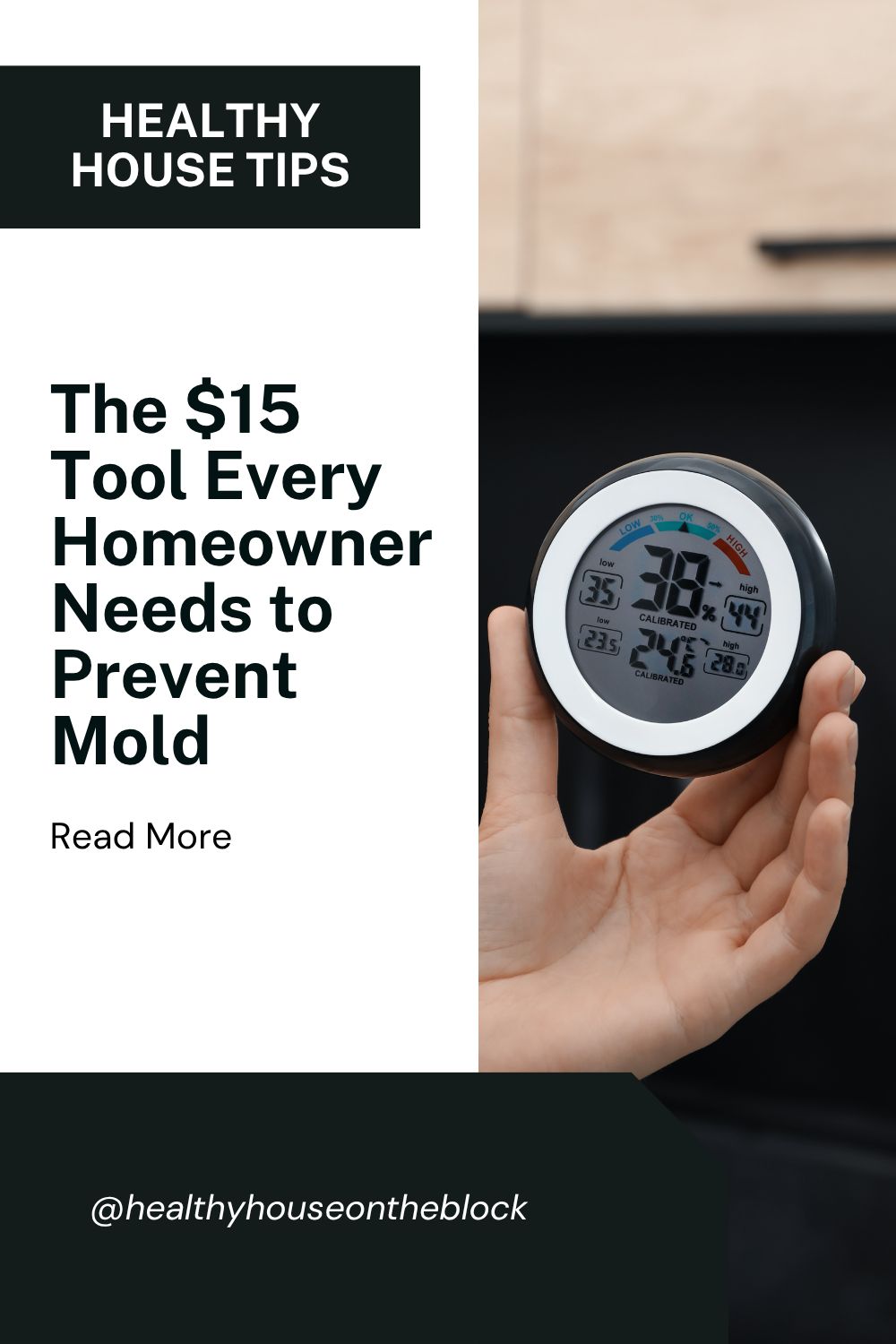
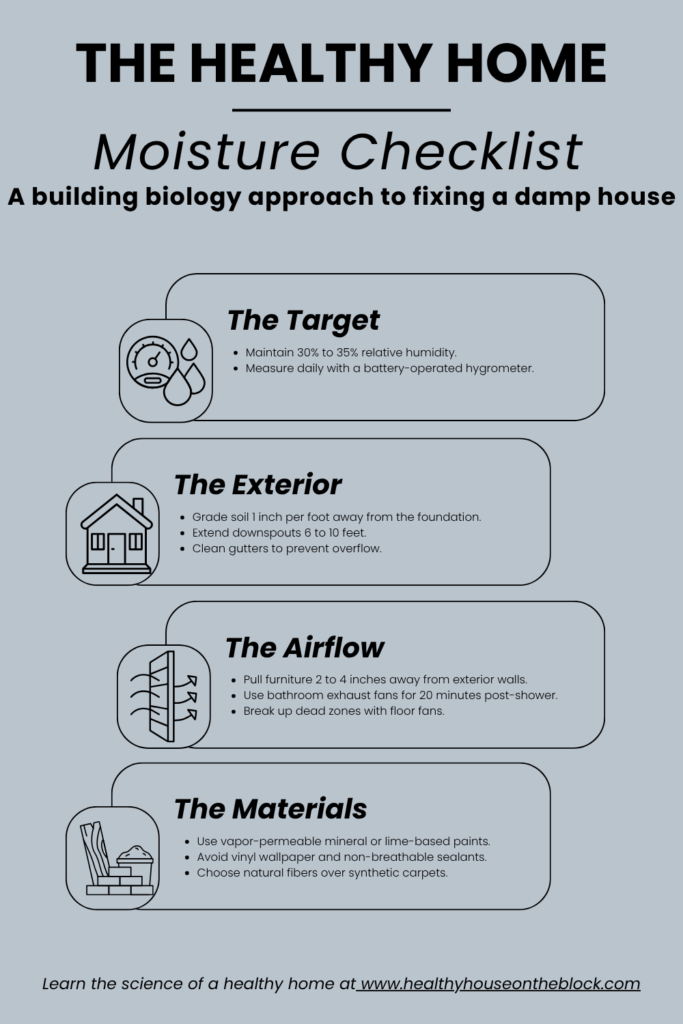
While many standard home manuals suggest keeping humidity below 50%, building biology often looks for a tighter range of 30% to 35% in many climates. This range is the “sweet spot” because it creates an inhospitable environment for spores to settle while keeping your nasal passages from becoming overly dry or irritated.
Monitoring Without the Tech Stress
To manage this, I recommend keeping a simple, battery-operated hygrometer in various areas of your home. I prefer battery-operated models over those that connect to wifi to reduce unnecessary electromagnetic exposure while providing the fact-based data you need.

Step-by-Step: How to Fix a Damp House From the Outside In
To truly fix a damp house, we must address the root causes rather than just treating the symptoms. This requires a systematic approach to the building envelope.
1. Master Your Exterior Drainage
In building biology, we believe the best way to handle moisture is to never let it reach the structure. Your home should sit like an island on a hill.
- Correcting the Grade: Look at the soil surrounding your foundation. It should slope away from the house at a rate of at least one inch per foot for the first six to ten feet. This ensures that gravity moves bulk water away from your basement walls rather than allowing it to pool and create hydrostatic pressure, which eventually pushes water through concrete pores.
- Managing the Roof Runoff: A standard roof can shed thousands of gallons of water during a heavy rain. If your gutters are clogged or your downspouts drop water right at the foundation, you are essentially creating a moat around your home. Ensure downspouts extend at least ten feet away from the foundation using solid piping.
- Capillary Break Awareness: If you notice dampness rising from the floor, it may be “wicking” up through the concrete. Ensuring that garden beds and mulch are not touching the siding is vital to preventing this moisture bridge.
2. Optimize Indoor Airflow and Eliminate Stagnant Air
Stagnant air is a primary contributor to biological off-gassing. When air sits still, moisture settles on cool surfaces, leading to condensation and microbial growth.
- The Science of “Dead Zones”: Move furniture a few inches away from exterior walls. This allows air to circulate behind wardrobes or sofas, preventing “micro-climates” where the humidity might be 20% higher than the rest of the room.
- Strategic Ventilation: Use your exhaust fans correctly. Bathroom fans should run for at least 20 minutes after a shower to fully evacuate biological vapors and steam. In the kitchen, always use the range hood when boiling water. Ensure these systems vent directly to the outdoors. If they vent into an attic or a soffit, the moisture is simply being relocated, often leading to hidden issues in the roof assembly.
- Opening Windows: When outdoor weather and air quality allow, “cross-ventilation” (opening windows on opposite sides of the house) is the most effective way to flush out stagnant air and refresh the indoor microbiome.

3. Choose Vapor Permeable Materials
One common mistake homeowners make is trying to “seal” a damp house with plastic liners or waterproof paints. In building biology, we want a “breathable” building envelope.
- Avoid “Vapor Barriers” Indoors: Using vinyl wallpaper or thick, non-breathable latex paints can trap moisture inside the drywall. When moisture cannot evaporate, it feeds mold behind the surface.
- Mineral-Based Solutions: For basements or masonry walls, consider lime-based washes or silicate paints. These materials are naturally high in pH, which inhibits microbial growth, and they allow moisture to pass through and evaporate harmlessly into the room where it can be handled by a dehumidifier.
- Natural Flooring: If you are dealing with dampness, avoid synthetic carpets. They act as a sponge for moisture and dust. Hardwood or tile with natural mortars are much easier to keep dry and clean.
4. Intentional Dehumidification
If your climate or home design makes it impossible to stay below 40% humidity through drainage and airflow alone, a dehumidifier is a necessary tool.
- Placement and Maintenance: Place your dehumidifier in a central location with plenty of space for intake. The most important step is maintenance. Empty and scrub the water bucket frequently with a non-toxic cleaner like vinegar to ensure you aren’t circulating biological vapors from the machine itself.
- Setting the Level: Set your machine to 35%. While the machine may work harder initially, reaching this level is what truly protects your air quality and stops the damp scent at its source.

Moving Toward a Healthier Foundation
By focusing on drainage, airflow, and consistent monitoring, you are doing so much more than just fixing a damp house. You are building a foundation for long-term wellness for everyone who lives there. This process doesn’t have to happen overnight. Start with a hygrometer, check your gutters, and move forward with the confidence that you are providing the healthiest space possible for your family.
If you are ready to dive deeper into creating a low-toxin home and want to understand the science of your living space better, you can download my free ebook here. It is designed to help you navigate these changes without feeling overwhelmed, providing you with the fact-based knowledge you need to protect your health and wellness.
Full Reference List
Fisk, W. J., Lei-Gomez, Q., & Mendell, M. J. (2007). Meta-analyses of the associations of respiratory health effects with dampness and mold in homes. Environmental Health Perspectives, 115(9), 1350–1356. https://doi.org/10.1289/ehp.10387 Cited by: 1245
World Health Organization. (2009). WHO guidelines for indoor air quality: dampness and mould. WHO Regional Office for Europe. https://iris.who.int/handle/10665/107830 Cited by: 3890
Lemfack, M. C., et al. (2018; updated 2025). mVOC 3.0: a database of microbial volatile organic compounds. Nucleic Acids Research, 46(D1), D1261–D1265. https://doi.org/10.1093/nar/gkx1016 Cited by: 412
Dooley, M. A., & McMahon, S. P. (2020). Fatigue and exposure to mold and/or dampness: A systematic review of the literature. Environmental Health and Preventive Medicine, 25(1), 1–15. https://doi.org/10.1186/s12199-020-00875-7 Cited by: 89
Moisture Ingress in Building Envelope Materials: Transport Mechanisms and Practical Mitigation Approaches. (2025). Buildings, 15(5), 762. https://doi.org/10.3309/2075-5309/15/5/762 Cited by: 12