

I am a total coffee lover. There is something so grounding about that first warm cup in the morning, and my family knows I usually need at least one quiet sip in silence before the day really starts. But as I’ve gone deeper into my work as a Building Biology Practitioner, I’ve had to take a hard look at the tools we use for this daily ritual.
We spend so much time picking out the right organic beans, but if we’re pouring them into a machine filled with plastic tubing and heated reservoirs, we might be undoing all that good work. Most modern coffee makers are a maze of plastic components that, when heated, can leach chemicals directly into your drink. The good news is that creating a healthy coffee routine is easier than you think, and it starts with understanding the materials in your kitchen.
The Science of Heat and Plastic Leaching
In Building Biology, we study how the environment and the tools we use impact our biological health. The typical coffee maker reaches temperatures between 195°F and 205°F to properly extract flavor. Heat acts as a catalyst for chemical migration; it weakens the chemical bonds in plastic, allowing additives to break free into the liquid passing through them.
Recent research published in early 2026 has shown that heating plastic components common in coffee machines can release over 10,000 microplastic particles into a single cup of coffee. Because these particles are so small, they can bypass our natural filtration systems, enter the bloodstream, and lodge in our tissues.
Health Impacts We Are Avoiding:
- Endocrine Disruption: Most plastic components contain bisphenols. Even “BPA-free” plastics often use BPS or BPF, which studies show are just as hormonally active. These chemicals mimic estrogen and can disrupt reproductive health, thyroid function, and metabolic balance.
- Neurological Risks: Emerging 2025 data suggests that microplastics can accumulate in brain tissue. Researchers are investigating the link between this accumulation and long-term cognitive decline, as these particles can trigger chronic neuro-inflammation.
- Cardiovascular Stress: A 2024 study in the New England Journal of Medicine found that patients with microplastics in their carotid artery plaque had a significantly higher risk of heart attack and stroke compared to those without.
Why the "Pod" Machine is the Biggest Culprit
I strongly suggest moving away from pod-based machines if your goal is a low-toxin home. These systems represent a “perfect storm” of toxic exposure: thin plastic pods are subjected to both high heat and high pressure simultaneously.
This process leads to “thermal chain scission,” where the plastic surface fragmentizes. Furthermore, many of these machines have internal water lines made of PVC or low-grade elastomers that are impossible to clean, leading to biofilm and mold growth inside the machine where you can’t see it. For a truly healthy home, we want to see every part of the water’s path.
HOW TO FIND AN ECO FRIENDLY COFFEE MAKER
The light here is that there are eco friendly and plastic free options for any type of brewing. You don’t even have to change that much of your morning routine when it comes to your cup of joe. Finding a plastic free coffee maker is easier than you might think, and I’m going to show you just how to do it.
Find glass or stainless steel carafe: Most carafes are either glass or stainless steel, but finding one that contains almost no plastic can be tricky to find. Look to make sure the spout and drip top are free from as much plastic as possible. Anywhere your coffee touches plastic, even BPA free plastic, should be avoided.
Want an expert set of eyes on your home? Amanda offers 1-on-1 virtual walkthroughs to review your priority rooms and build a prioritized, low-toxin action plan.

Look for stainless steel drip basket and internal parts: The drip basket is often forgotten about, but because the piping hot coffee runs right through it, you want to avoid plastic if at all possible. There are some great options out there that are plastic free coffee makers, but you might have to hunt for them. Before you buy a coffee maker at the store, take a peek to make sure the internal components aren’t plastic.
Try french press or pour over coffee: If you’re willing to make a slight adjustment to your morning routine, you can try french press coffee (one of my personal favorites!), or pour over coffee. These options have SO Many more plastic free coffee maker options because there are just fewer parts involved. Of course you’ll want to make sure you use a toxin free tea kettle too, but overall it’s a much healthier way to brew coffee.
If you’re using a single use coffee maker, use stainless steel reusable k-cups: If you’re using an automatic coffee maker that is for single use k-cups, I recommend using a reusable stainless steel k-cup, like this one. You can then fill it with your own fair trade coffee to ensure it’s the healthiest cup of coffee you can brew.
My Top Plastic-Free Recommendations for 2026
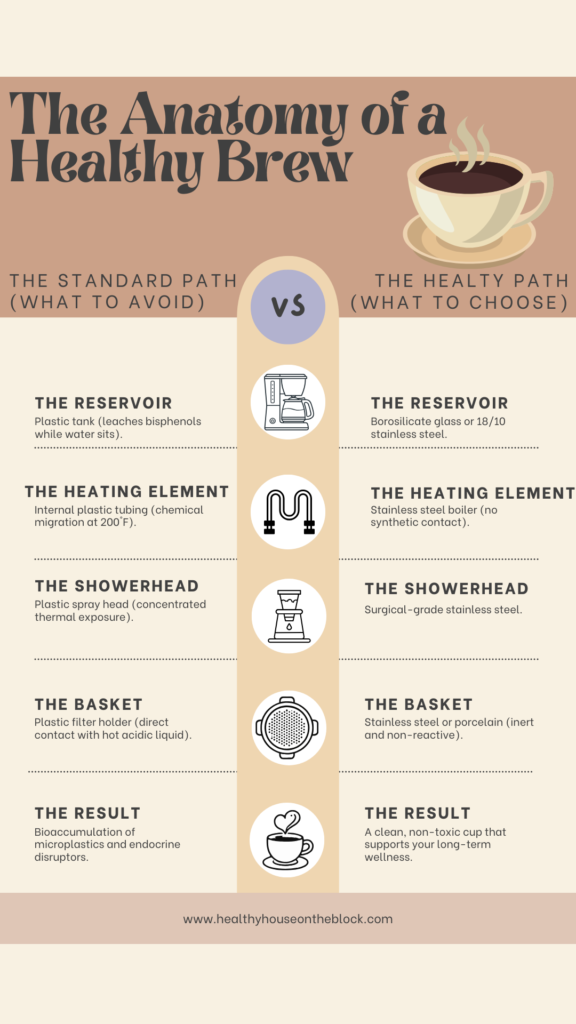
Finding a machine where water never touches plastic from the reservoir to the cup is a challenge. Most “stainless steel” machines still use plastic internal tubing or plastic-lined heaters.
1. The Drip Option: Simply Good Coffee
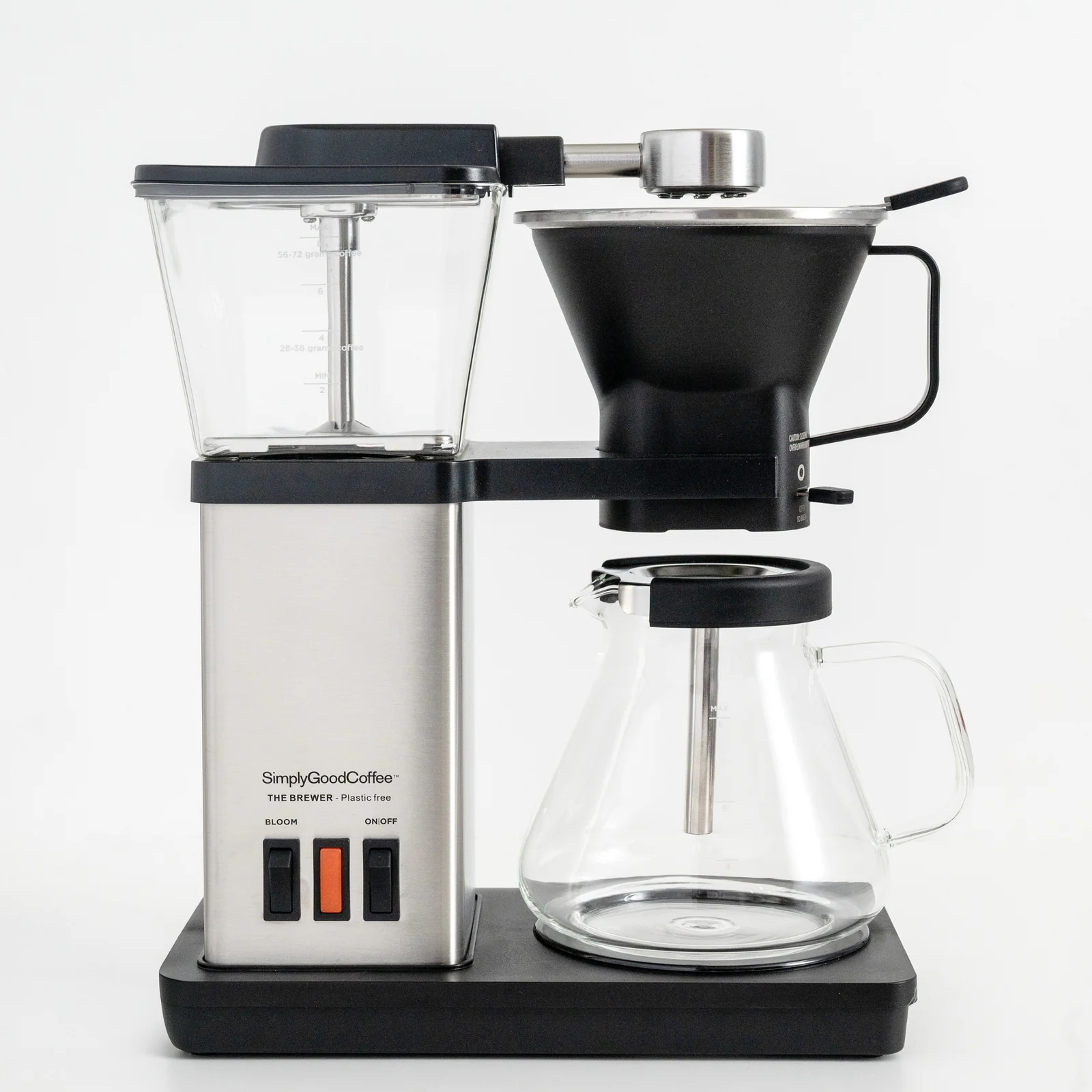
The Simply Good Coffee “The Brewer” is currently the only automatic drip maker I recommend for those wanting to avoid plastic entirely. While most brewers use a plastic tank and plastic “showerhead” to spray the water, this model uses a stainless steel boiler and a glass water reservoir. This ensures the water is never sitting in or being heated by synthetic materials. You can find more details on their plastic-free design here.
2. Manual Brewing (The Gold Standard)
If you are willing to adjust your routine, manual methods offer the most inert material paths because they eliminate the need for internal pumps and tubes:
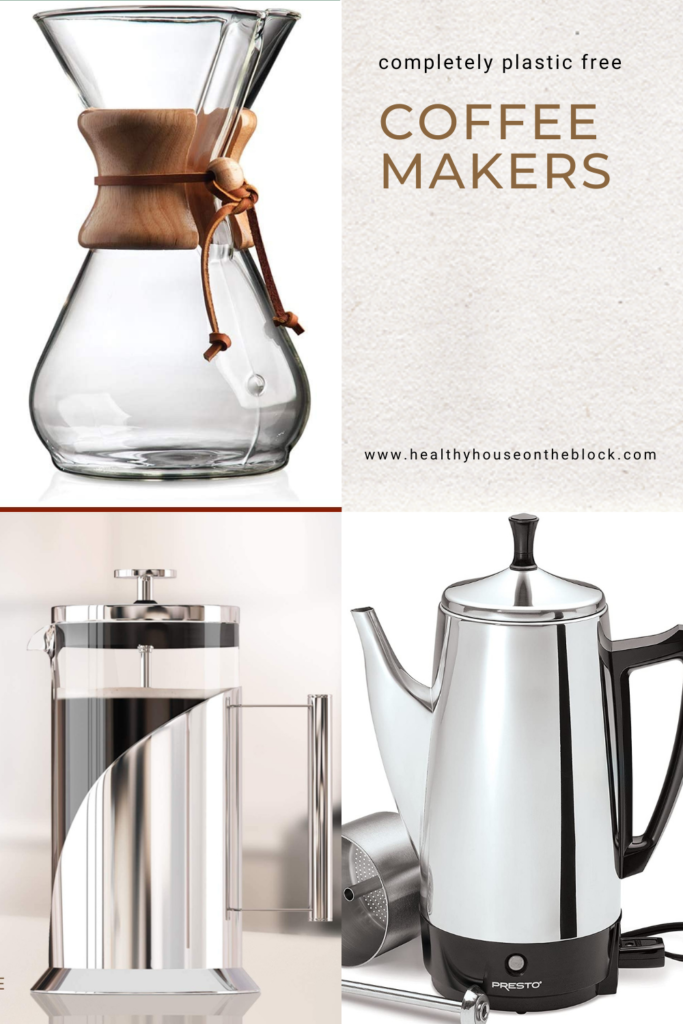
- Chemex Glass Pour-Over: This is made of non-porous borosilicate glass. It is completely inert, meaning it won’t leach chemicals or absorb odors from previous brews. It is one of the cleanest ways to make coffee.
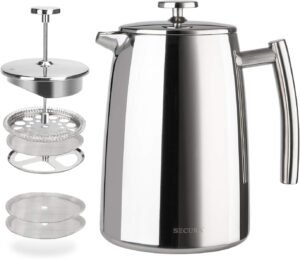
- Stainless Steel French Press: Many French presses use a plastic gasket to create a seal, but this one uses uses a double stainless steel micro-filter. This gives you the body of a French press without the plastic contact.
- Presto Stainless Steel Coffee Maker: I love that this pot and all it’s components are stainless steel, meaning your coffee won’t be leaching any plastic toxins while you’re brewing.


The Overlooked Ingredient: Water Quality
Coffee is 98% water, yet we often overlook what is in the kettle. Heating tap water doesn’t just make coffee; it concentrates the chemicals used in municipal treatment.
Why Proper Filtration Matters:
- Chlorine and Chloramines: These disinfectants are added to kill bacteria in city pipes, but they can react with coffee phenols to create disinfection byproducts (DBPs) like trihalomethanes, which are known carcinogens. They also negatively impact your gut microbiome.
- Fluoride: As a Building Biology practitioner, I recommend filtering this out due to research regarding its impact on the endocrine system, specifically the thyroid.
- Heavy Metals: Older plumbing can leach lead or copper into your water. Heating this water for coffee makes these metals more bioavailable.
I always recommend using water filtered through a system that specifically targets these contaminants, like a high-quality countertop filter or a reverse osmosis system with a remineralization stage. You can read more about my favorite filtration methods in my guide to clean water at home.
Selecting Mold-Free and Mycotoxin-Free Coffee
Coffee beans are a crop highly susceptible to mold growth during the drying and shipping process, especially in humid climates. These molds produce mycotoxins, such as Ochratoxin A, which are heat-stable and survive the roasting process.
Do your best to stay away from decaf coffee, as that can actually have more chemicals in it due to the process they use to remove caffeine.
It’s also best to purchase whole bean coffee and grind it yourself. Not only does it just taste better, but you have more control over the items in your own kitchen and what the coffee could come in contact with.
A few good certifications you can look for when purchasing coffee:
- Fairtrade
- USDA Organic
- Rainforest Alliance
And finally, stick to arabica beans (which generally have fewer mycotoxins) and dark roast (which also has fewer toxins and less caffeine).
Mycotoxins are nephrotoxic (harmful to the kidneys) and can cause the “coffee jitters,” brain fog, and digestive upset that people often mistake for a caffeine sensitivity. To ensure your cup is clean, look for brands that offer third-party lab testing for mold, mycotoxins, and pesticides. Here are a few I trust:
- Purity Coffee: They are the industry leader in health-focused coffee, testing every batch to ensure zero contaminants and high antioxidant levels.
- Kion Coffee: Their beans are organic and strictly tested for mold, yeast, and mycotoxins.
- Lifeboost Coffee: A great low-acid, organic option that is third-party tested for over 400 toxins.
Swapping out your coffee maker might feel like a big step, but it is one of the most impactful changes you can make in your kitchen. When we remove the plastic, the chlorine, and the mycotoxins, we aren’t just making a “healthier” cup of coffee—we are creating a ritual that actually supports our wellness.
Start by auditing your current setup. If you aren’t ready for a new machine, try switching to a glass pour-over or a stainless steel French press. These small, intentional shifts are exactly how we build a home that allows our families to thrive. Your morning routine should be something that makes you feel good, knowing you’ve done the work to keep your space and your body as healthy as possible.

Any coffee grinders that you can recommend ?