When the seasons shift, we are conditioned to look out the window to find the source of our congestion, headaches, and fatigue. We check the pollen counts, blame the blooming ragweed, and reach for over-the-counter antihistamines. But for many families, the struggle isn’t blowing in from the garden—it is off-gassing from the walls, the synthetic carpets, and the very air we breathe inside.
As a Building Biology Practitioner, I see a recurring pattern: families who have spent years treating “chronic allergies” only to find that their symptoms are actually a physiological response to the home itself. While seasonal allergies are an immune overreaction to natural outdoor elements, Sick Building Syndrome (SBS) is a systemic reaction to a combination of synthetic chemicals, microbial byproducts, and poor air exchange.
Understanding the distinction between Sick Building Syndrome vs. seasonal allergies is the first step in stopping the cycle of chronic inflammation and protecting the long-term wellness of your family.
What is Building Biology? Your Home as a "Third Skin"
To understand why a home can make us “sick,” we first have to look at our living spaces through the lens of Building Biology (Bau-biologie). This field of study views the home as a “third skin.”
Just as your biological skin protects you and breathes, your home should be a breathable, natural enclosure that supports your health. Building Biology identifies 25 core principles that focus on using natural building materials, maintaining high indoor air quality, and minimizing electromagnetic radiation. When a home is built with synthetic materials that “trap” moisture and off-gas toxins, that “third skin” becomes a source of irritation rather than a source of protection.

The Biological Mechanism: IgE vs. Toxic Load
To deduce what is happening in your family, we have to look at how the body processes different environmental triggers.
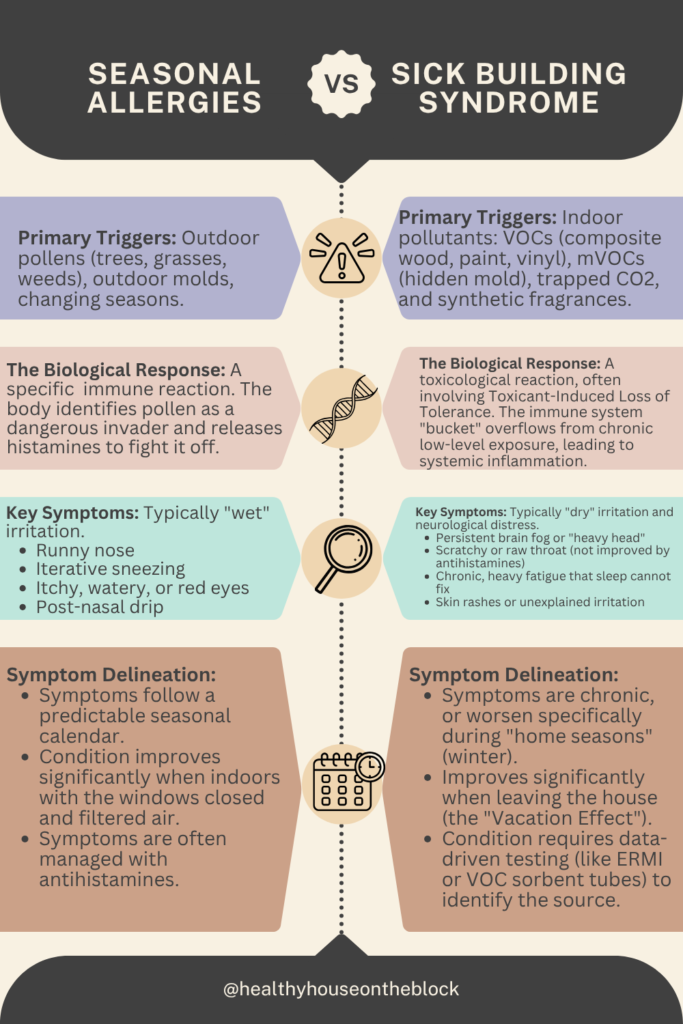
Seasonal Allergies are typically an IgE-mediated response. When you inhale pollen, your immune system identifies it as an invader and releases histamines. This causes the classic “wet” symptoms: sneezing, watery eyes, and a runny nose. These symptoms are usually acute and follow a specific botanical calendar.
Sick Building Syndrome, however, often involves Toxicant-Induced Loss of Tolerance (TILT). This theory, supported by research from the University of Texas Health Science Center, suggests that chronic exposure to low levels of synthetic chemicals—like the formaldehyde in your kitchen cabinets or the flame retardants in your sofa—eventually “tilts” the immune system.
Once this threshold is crossed, the body begins to react to almost everything in its environment. You might notice “dry” symptoms like brain fog, skin rashes, and a persistent, heavy fatigue that sleep cannot fix. This isn’t an allergy in the traditional sense; it is a toxicological overload.
Why Modern Homes Trigger Sick Building Syndrome
Many people ask, “Why are we seeing more of this now than our parents did?” The answer lies in how we build today versus fifty years ago.
- The “Airtight” Problem: In an effort to save energy, modern homes are built to be incredibly airtight. While this is great for your utility bill, it is terrible for air quality. Without proper mechanical ventilation, CO2, moisture, and chemical vapors are trapped inside, recirculating through your lungs.
- Synthetic Material Saturation: We have replaced solid wood, stone, and natural fibers with composite boards, vinyl, and petroleum-based fabrics. These materials release Volatile Organic Compounds (VOCs). Science shows that indoor air is often 2 to 5 times more polluted than outdoor air because of this constant off-gassing.
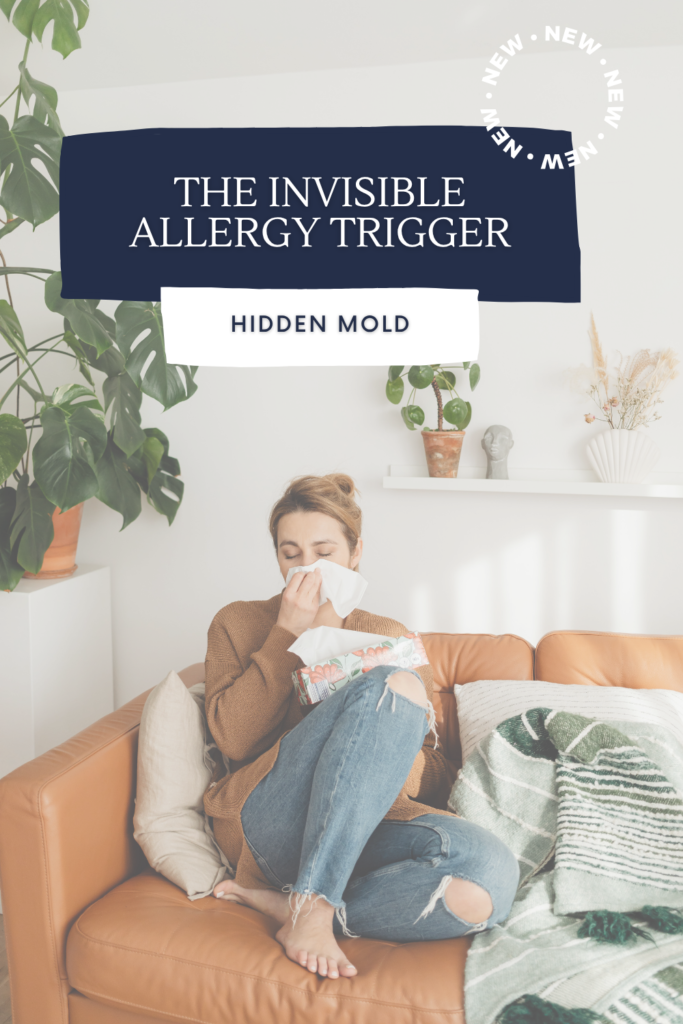
- Hidden Microbial Growth: Because modern homes often use plastic “vapor barriers” that don’t allow walls to breathe, even a small amount of moisture can lead to hidden mold. Mold doesn’t just release spores; it releases microbial VOCs (mVOCs), which are chemical gases that can cause neurological symptoms.
Long-Term Health Impacts: The Cellular Burden
Living in a home that triggers SBS means your family’s bodies are in a constant state of defense. This chronic activation has measurable long-term impacts, particularly for developing children:
- Respiratory Remodeling: Research published in Environmental Health Perspectives shows that children exposed to indoor nitrogen dioxide (from gas stoves) and VOCs are at a significantly higher risk for permanent changes in lung function and chronic asthma.
- Neuroinflammation and “Brain Fog”: The notable Harvard COGFX study found that even modest increases in indoor CO2 and VOC levels led to a 61% decrease in cognitive scores. Over years, this translates to children struggling with focus and parents experiencing chronic mental fatigue.
- Endocrine Disruption: Many indoor toxins, specifically phthalates found in vinyl flooring and synthetic fragrances, are known endocrine disruptors. Long-term exposure during critical developmental windows can interfere with hormonal signaling, affecting growth and metabolic health.
The Home Detective: How to Delineate the Problem
If you are trying to determine if your home is the source of the problem, look for these three scientific markers:
- The “Vacation Effect”: If your symptoms disappear within 48 hours of leaving home for a trip but return within hours of walking back through your front door, the trigger is likely your indoor environment.
- Symptom Mapping: Do symptoms flare up in specific rooms? If congestion worsens in a basement or a newly renovated bedroom, look for localized sources like dampness or off-gassing furniture.
- The Humidity Factor: Use a hygrometer to check your indoor levels. Science shows that when humidity stays above 50%, dust mite populations and mold growth accelerate. If your symptoms correlate with high-humidity days, the problem is likely biological rather than outdoor pollen.
Science-Based Testing: Getting Real Answers
To move from guessing to knowing, we need data. Building Biology relies on several gold-standard testing methods:
- ERMI (Environmental Relative Mold Index): Unlike a standard “air mold test” that only catches what is floating in the air for five minutes, an ERMI uses DNA testing of settled dust. This provides a historical record of the mold species that have lived in your home, catching “heavy” spores that often go undetected.
- VOC Sorbent Tubes: These identify the specific chemical “fingerprint” of your home, telling us exactly which materials (like flooring or cabinetry) are contributing to the toxic load.
- Particle Counting: Using a laser particle counter helps us see if your HVAC system is actually filtering the air or simply recirculating fine particulate matter (PM2.5) that can penetrate deep into the lungs.
Creating a Space for Healing
Your home should be the place where your body recovers from the world, not where it fights its hardest battles. By shifting our focus from masking symptoms to identifying indoor triggers, we protect the long-term vitality of our families. When we choose low-toxin materials and prioritize air exchange, we aren’t just decorating; we are practicing preventative medicine and honoring the principles of Building Biology.
Scientific References and External Resources
Below are the peer-reviewed studies and clinical resources that form the foundation of this research. These links provide deeper transparency into the biological and structural mechanisms discussed in the post.
Toxicant-Induced Loss of Tolerance (TILT): The TILT Checklist: A Tool for Evaluating Chemical Sensitivity University of Texas Health Science Center. This research explores how chronic low-level exposure to common household chemicals leads to a loss of tolerance in the immune system.
Indoor Air Quality and Cognitive Function: [suspicious link removed] Environmental Health Perspectives (The Harvard COGFX Study). This study demonstrates the significant link between indoor air pollutants and decreased cognitive performance.
Sick Building Syndrome (SBS) Clinical Overview: The Sick Building Syndrome Indian Journal of Occupational and Environmental Medicine. A comprehensive review of the clinical symptoms and structural causes associated with SBS in modern construction.
Respiratory Impacts on Children: Indoor Air Pollution and Its Impact on Children’s Health Environmental Health Perspectives. This research highlights how developing respiratory systems are affected by indoor nitrogen dioxide and VOCs.
The Microbiome of the Built Environment: Microbiomes of the Built Environment: From Research to Application National Academies of Sciences, Engineering, and Medicine. A consensus study on the relationship between indoor microbial growth, humidity, and human health.
Humidity and Biological Pollutants: Indirect Health Effects of Relative Humidity in Indoor Environments Environmental Health Perspectives. A foundational study establishing the 30% to 50% humidity range as optimal for minimizing the growth of mold, bacteria, and dust mites.
The 25 Principles of Building Biology: Standard of Building Biology Testing Methods Building Biology Institute. This resource outlines the foundational standards for creating healthy, non-toxic living environments.
VOC Exposure and Systemic Inflammation: Indoor Air Humidity, Air Quality, and Health – An Overview International Journal of Hygiene and Environmental Health. This review examines the physiological triggers caused by volatile organic compounds in airtight modern buildings.