When we talk about creating a low-toxin home, many people assume everything has to be brand new and come with a “certified organic” price tag. But honestly, some of the healthiest pieces in my home are ones that had a whole life before they met my family. Thrifting is about so much more than just a good deal or a sustainable choice for the planet. From a building biology perspective, older, solid-wood pieces have often already finished the heavy lifting of “off-gassing” their original finishes, making them a much cleaner choice for your indoor air than a brand-new dresser made of mystery materials.
Before I had kids, one of my favorite ways to spend a weekend was hunting for furniture to refinish. I clearly remember finding a solid wood dresser that I spent hours sanding, staining, and sealing. It eventually became the changing table for all three of my children and is still sitting in my son’s bedroom today. That piece isn’t just a memory; it’s a tool for health. By choosing a vintage, solid-wood piece and refinishing it with safe materials, I knew exactly what was (and wasn’t) in my children’s nursery.
Why "Old" is Often Healthier Than "New"
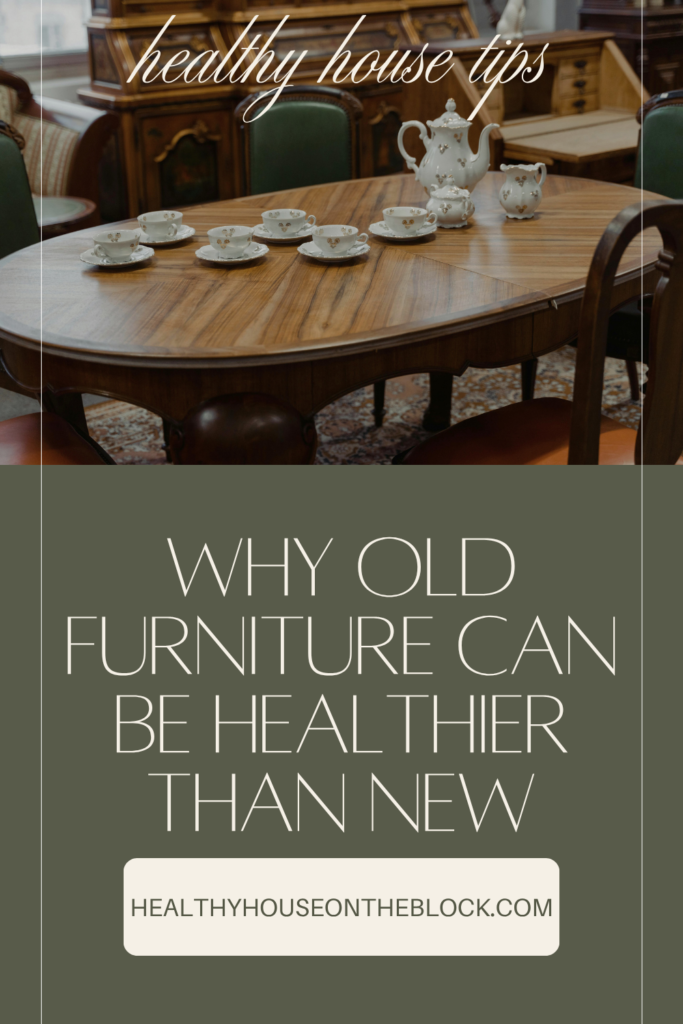
It might seem counterintuitive, but buying second-hand can actually be a superior health choice compared to buying new. Most modern, budget-friendly furniture is constructed from “engineered wood” like MDF or particle board. These materials are held together by urea-formaldehyde resins. Formaldehyde is a known human carcinogen and a significant respiratory irritant. According to the Environmental Care and Health Organization (ECHO), new furniture can off-gas these Volatile Organic Compounds (VOCs) at high levels for the first six months to two years of its life.
When you buy a vintage solid wood piece, that initial “gas-off” period happened decades ago. You are bypassing the most toxic phase of the furniture’s lifecycle. Furthermore, older items were often made with simpler, more natural materials—solid oak, maple, linen, and cotton—before the explosion of synthetic petro-chemicals in home manufacturing. By choosing “pre-loved,” you are often opting out of the modern chemical soup of PFAS (forever chemicals), phthalates, and brominated flame retardants that are standard in today’s mass-market goods.
The Real Health Impact of Modern Toxins
While thrifting helps us avoid new VOCs, we still have to be mindful of the “legacy toxins” that can linger in older items. Understanding the health impacts of these substances helps us prioritize what to vet:
- Endocrine Disruption: Phthalates (often found in soft vintage plastics and synthetic fragrances) and flame retardants (in older foam) are known endocrine disruptors. Research published in The Lancet Diabetes & Endocrinology suggests these chemicals interfere with hormone signaling, which can impact reproductive health and metabolic function.
- Neurological Concerns: Lead and cadmium, frequently found in vintage glazes and paints, are neurotoxic. The World Health Organization (WHO) notes that lead exposure is particularly harmful to the developing brains of children, potentially leading to reduced cognitive function and behavioral issues.
- Respiratory and Immune Stress: Residual “third-hand” fragrances and mold spores in textiles can keep the immune system in a state of high alert. Chronic exposure to these triggers is linked to an increase in asthma, allergies, and “Multiple Chemical Sensitivity” (MCS).
By understanding these risks, we can use building biology principles to filter out the “legacy” hazards while enjoying the low-VOC benefits of older, high-quality goods.
1. Kitchenware: Vetting for Heavy Metals
Vintage kitchenware is one of the most popular categories for thrifting, but it requires a very specific “detective” mindset. In building biology, we prioritize materials that are chemically neutral, especially those that come into contact with our food or water.
The Risk of Leaching
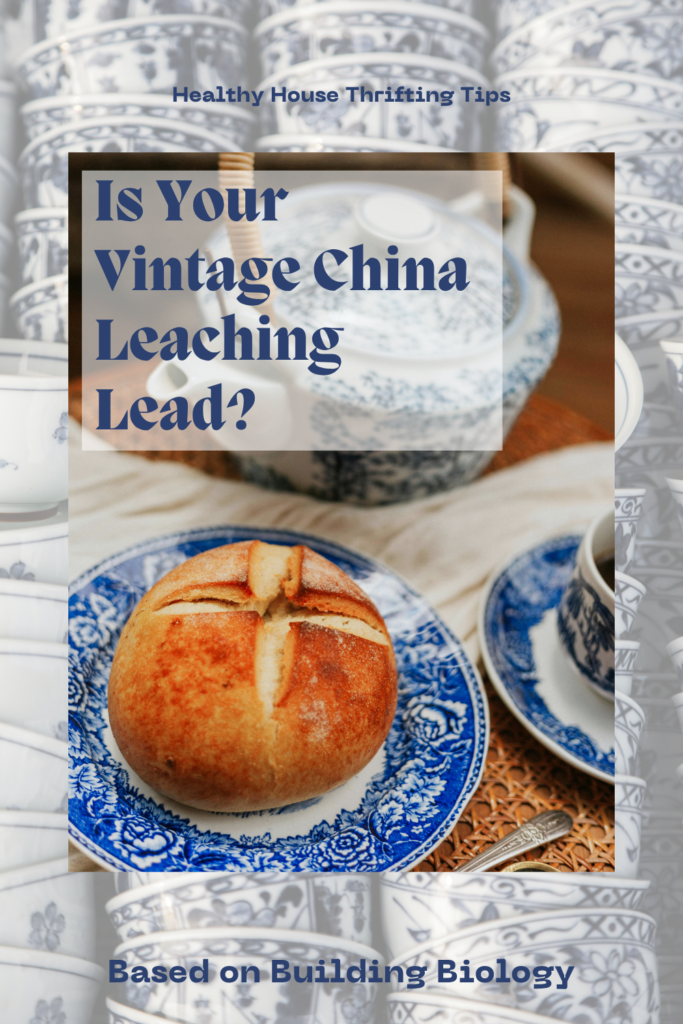
Many vintage ceramics and glassware pieces made before the 1970s used lead and cadmium in their glazes and decorative paints. Lead was prized for creating a smooth, glass-like finish, while cadmium produced those iconic, vibrant reds, oranges, and yellows we often see in “mid-century” patterns.
The Science: According to research from the FDA and studies in Environmental Science & Technology, these metals are not permanently locked into the finish. Over time, especially when exposed to heat (like a dishwasher) or acidic foods (like tomatoes, coffee, or citrus), these heavy metals can leach out of the glaze and into your meal. This risk directly impacts Building Biology Principle #1, which is to minimize exposure to toxic materials in our immediate environment.
Tangible Steps for the Kitchen
- Prioritize Clear Glass: If you love the vintage look, clear glass (like old Pyrex or glassware) is generally a much safer, non-leaching alternative to glazed ceramics.
- Avoid the “Brights”: Be extra wary of vintage pieces with heavy red, orange, or yellow decorations, as these pigments traditionally relied on cadmium and lead for their intensity.
- Feel for Decals: Run your fingers over the pattern. If the decoration feels raised, like a sticker sitting on top of the glaze, it is a “decal” applied after the firing process. These wear down easily and are much more likely to leach metals compared to under-glaze patterns.
- Check for Crazing: If you see tiny, spider-web-like cracks in the glaze (called crazing), that piece should be for display only. Those cracks provide a direct path for chemicals to leach out and for bacteria to grow.
2. Toys: Protecting the Most Vulnerable
When thrifting for children, we have to be even more vigilant. Children have a higher metabolic rate and thinner skin, meaning they absorb toxins more readily than adults. They also engage in “hand-to-mouth” behavior, which is a primary route for heavy metal ingestion.
The Problem with Vintage Plastic and Paint
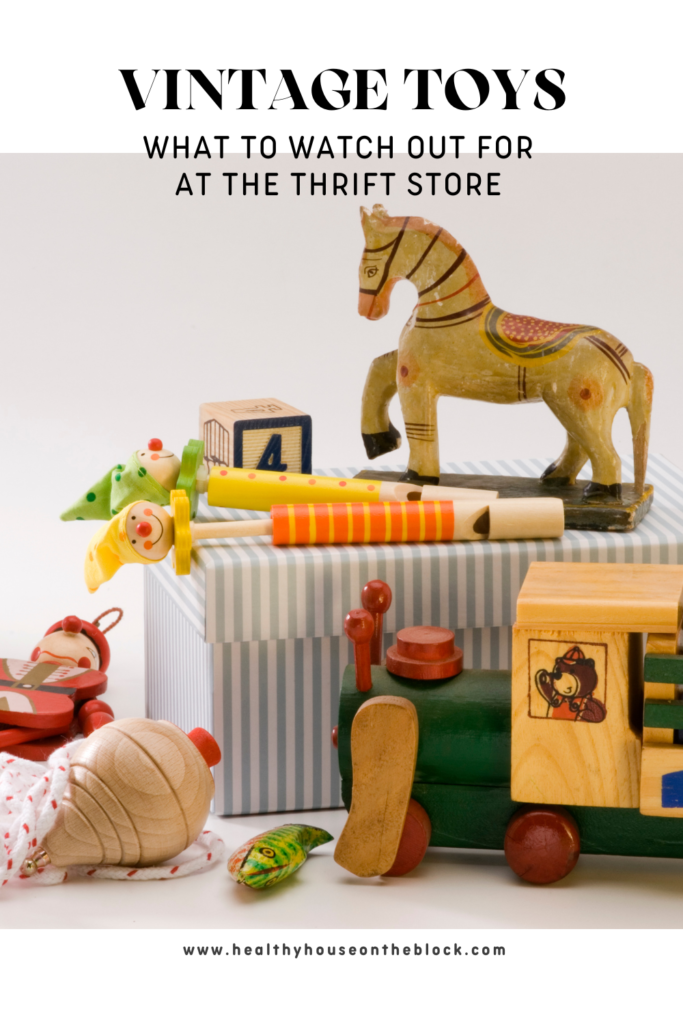
Vintage toys, particularly plastic ones from the 1970s and 80s, often contain high levels of lead, cadmium, and phthalates. Phthalates were used to make plastic soft and flexible, but they are known endocrine disruptors that can interfere with hormonal development. Older painted wooden toys are also a concern, as lead-based paint was common for decades before being banned in 1978. This aligns with Building Biology Principle #21, which emphasizes using natural, untreated materials in our living spaces, especially for those most sensitive.
Tangible Steps for the Toy Box
- Stick to Unpainted Wood: Look for solid, unpainted wooden blocks or puzzles. If the wood is unfinished or finished with a simple oil, it is much safer than painted alternatives.
- The “Sniff” Test: If a plastic toy has a strong “new shower curtain” or chemical smell, it is likely off-gassing phthalates and VOCs. It is best to leave those behind.
- Verify the Brand: Many heritage toy brands (like Brio or Hape) have long-standing safety standards. A quick search of the brand and the approximate year of the toy can help you determine if it was made after lead-paint regulations were strictly enforced.
- Wash and UV Treat: Always give thrifted toys a deep clean with a non-toxic soap and let them sit in the sun for a few hours to help neutralize any lingering surface toxins.
3. Textiles: Managing the "Third-Hand" Exposure
Textiles act like a sponge for environmental toxins. When you buy a used rug or a bag of hand-me-down clothes, you are often inheriting “Third-Hand Fragrance” and potential microbial growth from the previous owner’s home.
Fragrances, Phthalates, and Mold
Residual synthetic musks and phthalates from conventional laundry products can persist in fibers for years. These chemicals are common triggers for respiratory issues and skin sensitivities. Furthermore, if a textile was stored in a damp basement, it may harbor dormant mold spores that can impact your home’s air quality. This directly impacts Building Biology Principle #4, which focuses on providing sufficient fresh air and reducing indoor air pollutants.
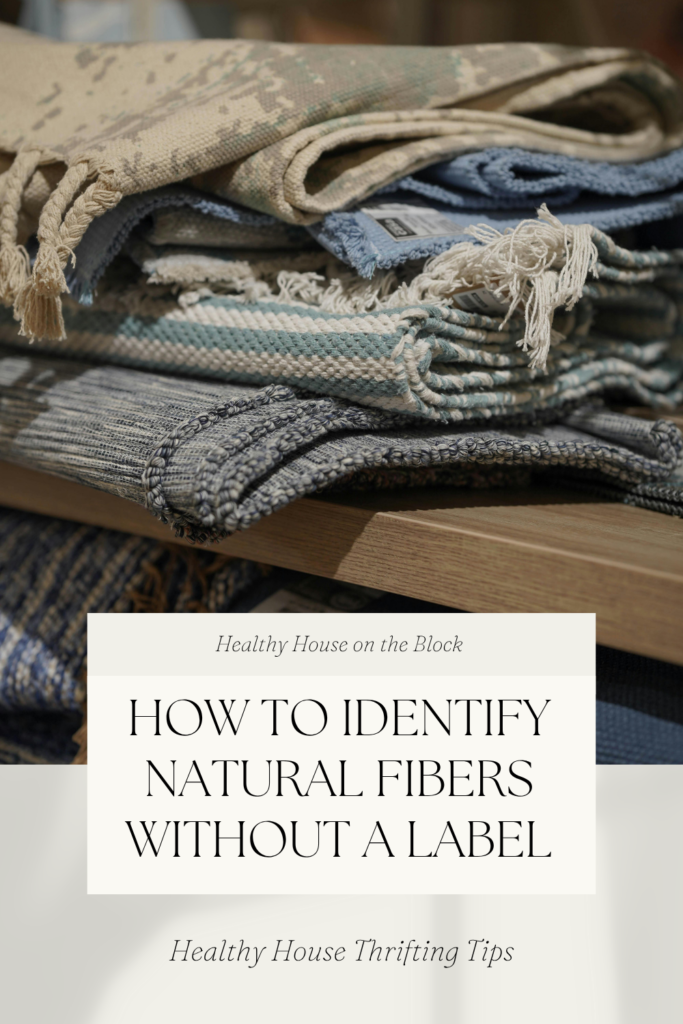
How to Identify Natural Fibers (The Senses Test)
- The Static Test: Rub the fabric against itself. If it clings or “crackles,” it is likely a synthetic like polyester or acrylic. Natural fibers like cotton and linen do not build up a static charge this way.
- The Temperature Touch: Natural fibers are breathable and tend to feel “cool” or “dry” to the touch. Synthetics are insulators and will feel warm or slightly clammy against your skin almost immediately.
- Look for Irregularities: Linen and hemp often have small “slubs” or tiny bumps in the weave. If a fabric is perfectly uniform and looks like plastic under your phone’s camera zoom, it is likely a synthetic blend.
4. Furniture: Avoiding Formaldehyde and Flame Retardants
Choosing furniture is one of the most impactful ways to support Building Biology Principle #22, which encourages using materials with a pleasant or neutral smell and no toxic off-gassing.
The Hidden VOCs
Older upholstered furniture (pre-2014) often contains polyurethane foam treated with toxic flame retardants (PBDEs). These chemicals migrate into house dust, where they can be inhaled or ingested. Additionally, many thrifted pieces are made of particle board, which uses formaldehyde-based glues that can off-gas for years. According to EWG research, these exposures can impact thyroid function and neurodevelopment.
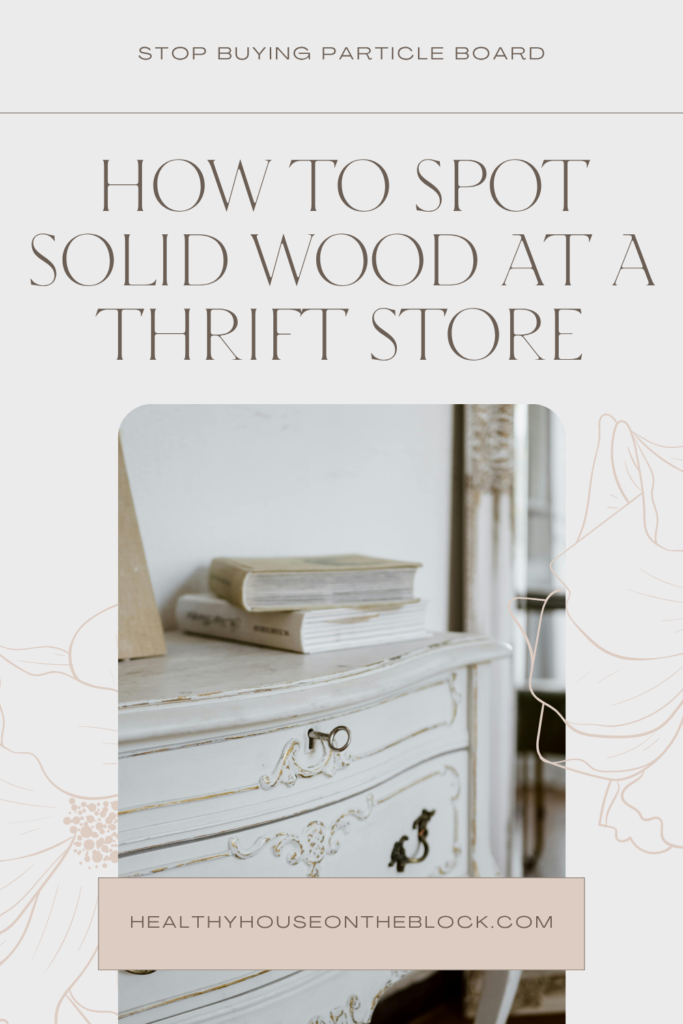
How to Spot Solid Wood
- Check the Grain: Look at the edges or joints. If the wood grain follows all the way through the thickness of the board, it is solid. If you see a “sandwich” of compressed wood chips, it is particle board.
- The Sound Test: Give it a knock. Solid wood has a deep, resonant thud. Manufactured wood often sounds thin, sharp, or hollow.
- Weight: Solid wood is significantly heavier. If it feels suspiciously light for its size, it is likely particle board.
5. The Detox Process: Cleaning Your Finds
Once you bring a safe item home, the final step is clearing away its chemical and environmental history using natural, building-biology-approved methods.
For Clothing and Textiles
- The Strip Soak: Soak items in a tub of warm water with a cup of baking soda or white vinegar for several hours to break down the oils from previous fabric softeners.
- UV Treatment: Hang items outside in direct sunlight for 1 to 5 days. UV rays are incredibly effective at breaking down VOCs and neutralizing lingering odors naturally.
For Furniture and Surfaces
- The Neutralizer: Wipe wood pieces with a mixture of high-proof vodka or white vinegar and water to kill surface mold and neutralize odors.
The Barrier: If you have a solid wood piece with an old finish you are unsure about, you can “seal” it using a zero-VOC sealant or a natural beeswax. This prevents any old stains or smells from off-gassing into your bedroom air.

Building a healthy home doesn’t mean you have to buy everything new from a high-end catalog. In many ways, the “old ways” of making furniture and household goods—using solid wood, natural fibers, and simple glass—are much more aligned with our biology than the synthetic, mass-produced items of today. By taking a little extra time to vet your second-hand finds, you are not only saving these items from a landfill but also creating a space that is uniquely yours and deeply supportive of your family’s wellness. Happy hunting.