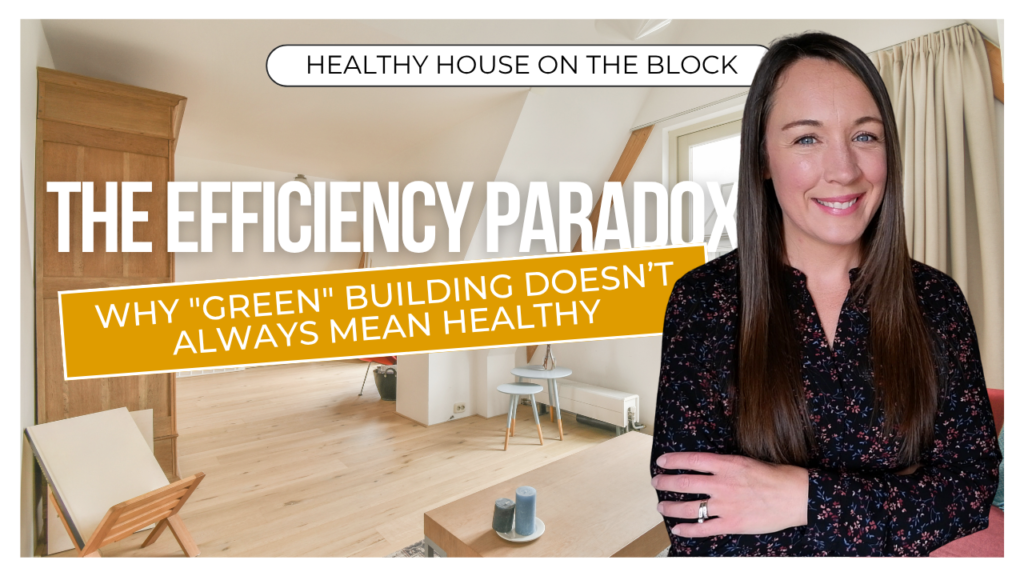
When we begin the journey of improving our living spaces, “energy efficiency” is usually the first milestone we are encouraged to reach. It feels like the responsible choice—good for the planet, beneficial for the utility bill, and ostensibly good for the family. However, as a building biology practitioner, I often spend my sessions helping families peel back the layers of these “high-performance” houses to discover a silent conflict. There is a profound paradox in the world of healthy home construction: the very features designed to save energy are often the same ones that compromise our biological health.
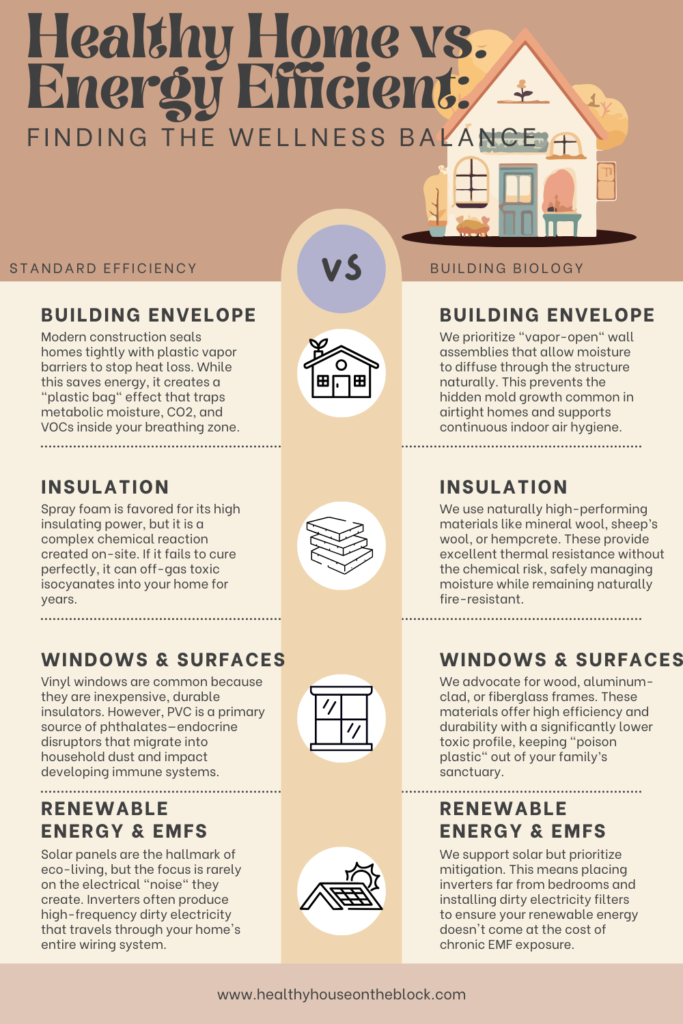
To understand why this is happening, we have to look at how building standards have evolved over the last several decades. Historically, homes were “leaky.” While this meant they were often drafty or more expensive to heat, they had a high rate of natural air exchange that diluted indoor pollutants. Modern codes have moved toward a “sealed box” philosophy. We are told to wrap our homes in plastic, spray them with foam, and eliminate every tiny gap where air might escape. While this is a victory for thermodynamics, it can be a significant challenge for human biology if not handled with extreme care.
The Biology of the "Airtight" Box
The primary concern with a highly sealed home is what happens to the air hygiene inside. Humans are biological organisms that constantly “off-gas.” We exhale carbon dioxide, shed skin cells, and produce significant amounts of moisture through daily activities like cooking and bathing. In an airtight home without a robust, perfectly functioning mechanical ventilation system, these biological byproducts have nowhere to go.
When we trap moisture inside a wall assembly that cannot “breathe,” we create the ideal conditions for microbial growth. This isn’t just about the mold you can see in the corner of a shower; it is about the hidden fungal colonies that thrive behind “efficient” vapor barriers. A study published in Nature and archived via PubMed discusses how energy-efficient retrofits often lead to an increase in “Sick Building Syndrome” symptoms. When air exchange rates drop, the concentration of indoor pollutants—including allergens, mycotoxins, and metabolic waste—rises exponentially. From a building biology perspective, a home should function like a third skin: it should protect us from the elements while remaining vapor-permeable to allow the house to “perspire” naturally.

The Chemical Legacy of Spray Foam and Synthetic Insulation
To achieve the high R-values (thermal resistance) required by modern energy codes, the industry has turned heavily toward spray polyurethane foam (SPF). It is marketed as a miracle product because it insulates and air-seals simultaneously. However, we must consider the chemistry required to create that seal.
SPF is a two-part chemical reaction—isocyanates and polyols—mixed at the tip of a spray gun right inside your home. If the temperature of the drums is slightly off, or if the installer moves too quickly, the chemical reaction remains incomplete. This leads to a “failed cure,” where the material can continue to off-gas toxic sensitized chemicals into the home’s air supply for years. Research on Health Effects Associated with SPF has linked this to persistent respiratory issues, skin rashes, and even neurological symptoms in residents. Even when “properly” installed, these materials often contain halogenated flame retardants, which are persistent organic pollutants that do not simply stay put inside the foam; they can migrate into the dust your children breathe and play in.
The Illusion of "Eco-Friendly" Recycled Plastics
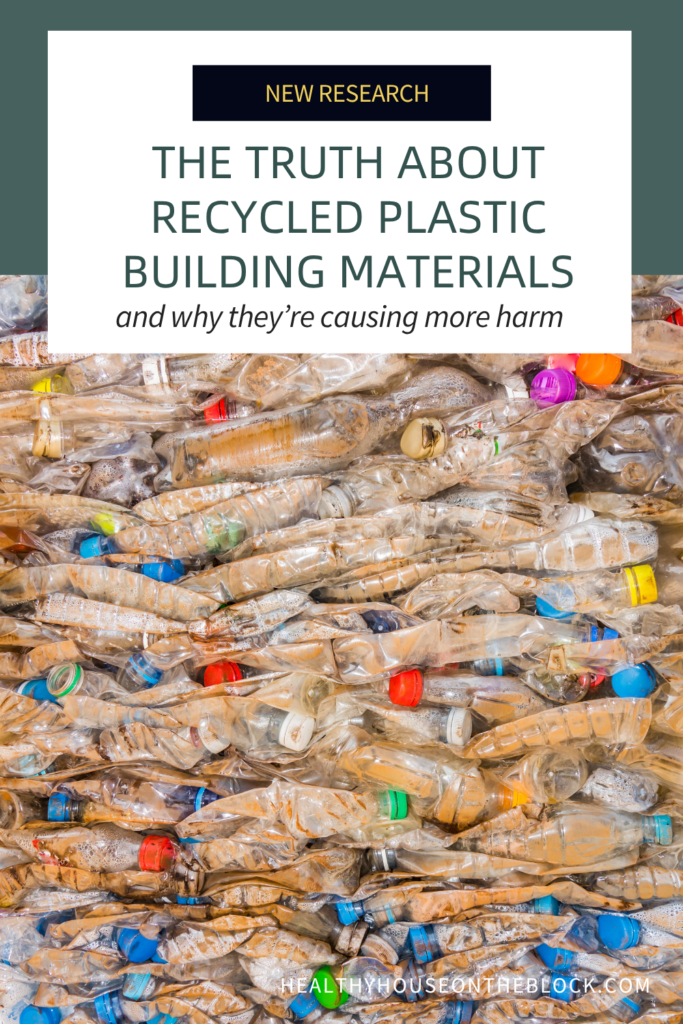
In our collective effort to be more sustainable, “recycled content” has become a major selling point for building materials. We see this in composite decking, recycled plastic flooring, and even structural components. While the intent—keeping plastic out of the ocean—is noble, the reality for indoor air quality is more complex.
Plastic recycling is not a “clean” process. When miscellaneous plastics are melted down to create building materials, they often carry “legacy toxins” from their previous lives. This includes heavy metals like lead and cadmium, as well as older generations of phthalates and flame retardants that are now banned in new products but still present in the recycled stream. A comprehensive review in Environmental Science & Technology notes that these recycled composites can release a cocktail of endocrine disruptors and persistent organic pollutants. For a family with young children, bringing these unknown chemical loads into the home environment creates a risk that standard “green” certifications often fail to measure.
Vinyl Windows and the Rise of "Antimicrobial" Overreach
Even the windows we choose to save energy have a hidden health cost. Vinyl (PVC) is the industry standard for efficiency because it is a poor conductor of heat, keeping the warmth inside during the winter. However, PVC is widely considered one of the most hazardous plastics in production. To make vinyl stable and flexible, manufacturers add phthalates and organotins. These chemicals are not chemically bound to the plastic; they off-gas over time and cling to household surfaces. According to the Ecology Center, exposure to these compounds is a significant concern for the developing immune and reproductive systems of children.
To combat the moisture issues that naturally arise in these airtight, moisture-trapping homes, the industry has introduced “antimicrobial” coatings. You will find these on “high-performance” drywall, paints, and even HVAC filters. These coatings often rely on silver nanoparticles or quaternary ammonium compounds (Quats). While the marketing suggests these keep your home “clean,” the science suggests otherwise. Field studies in ResearchGate show that these coatings often fail to perform in residential settings and can instead contribute to the development of antibiotic-resistant bacteria while disrupting the beneficial microbiome of your home.
Solar Energy: Green Power with a Hidden EMF Cost
The Science of Solar EMFs
Solar panels produce Direct Current (DC) electricity, but our homes run on Alternating Current (AC). To bridge this gap, an inverter must switch the DC power on and off at very high speeds to mimic an AC wave.
- The Concern: This switching process creates “dirty electricity” that travels along the home’s wiring, turning the entire house into a giant antenna. Furthermore, micro-inverters placed directly under each panel or a large string inverter on the wall can emit high levels of magnetic and radiofrequency fields.
- The Research: Research published in the Journal of Exposure Science & Environmental Epidemiology and highlighted by the Building Biology Institute notes that chronic exposure to these non-native EMFs can disrupt cellular communication and impact sleep quality. Another study in Science of The Total Environment discusses how high-frequency transients on electrical wiring can contribute to “electrical hypersensitivity” in sensitive individuals.
The Healthy Home Strategy: If you are committed to solar, the solution is strategic placement and filtration. We recommend placing inverters as far from sleeping areas as possible—ideally on a detached garage or a remote exterior wall—and installing high-quality “dirty electricity” filters at the main breaker panel to clean the power before it enters your home’s circuits.

Refining Your Approach to Healthy Home Construction
The goal of building biology is not to return to the drafty, inefficient homes of the past. Instead, it is to move toward a future where “performance” is redefined to include human wellness as a primary metric. We can have homes that are incredibly comfortable and energy-efficient without sacrificing our health.
True healthy home construction starts with choosing materials that are naturally high-performing. Instead of chemical foams, we can look to mineral wool, sheep’s wool, or wood fiberboard—materials that provide excellent insulation while remaining vapor-open and naturally fire-resistant. It means choosing wood or aluminum-clad windows over vinyl whenever possible. Most importantly, it means prioritizing the “Natural Breezes” principle of building biology, ensuring that the home has a mechanical or natural way to exchange indoor air for fresh, filtered outdoor air at a rate that supports human life.
If you are currently navigating a renovation or a project and feeling overwhelmed by “green” claims that seem too good to be true, please know that you do not have to settle for the industry standard “sealed box.” You have the power to ask for materials that support your family’s health and wellness. If you need a second set of eyes on your material list or architectural plans, I am here to help you navigate those choices. Through a private consultation, we can work together to ensure that your home is a true sanctuary—one that is efficient for the planet and life-giving for your family.