When we think about creating a healthy home, we often start with what is inside: the paint on our walls, the water in our taps, and the air in our bedrooms. However, as a building biologist, I view the home as an organism that is constantly breathing and interacting with its immediate surroundings.
In Building Biology, we refer to the home as our “third skin.” Just as our biological skin regulates temperature and filters toxins, the exterior of our home serves as the first line of defense for our internal health. The boundary between your yard and your living room is much more porous than it appears, and the science of landscaping for a healthy home is about creating a protective “buffer zone” that supports the biological needs of your family.

The Foundation: Managing the Moisture and Soil Pressure
In building biology, we prioritize the hygienic state of the building fabric. This starts with moisture control. The soil surrounding your foundation acts as a reservoir; if managed incorrectly, it becomes a primary source of indoor health issues.
The Physics of Negative Grading
When your yard slopes toward your house (negative grading), hydrostatic pressure builds up against the foundation walls. Concrete is a porous material that acts like a hard sponge. Through capillary action, moisture is pulled through the foundation and into your basement or crawlspace. This doesn’t just lead to visible leaks—it creates a high-humidity environment where mold and actinomycetes thrive.
These microorganisms release spores and microbial volatile organic compounds (mVOCs) into the air. Science shows that long-term exposure to mVOCs can lead to chronic respiratory irritation and inflammatory responses. To protect your internal environment, ensure your soil slopes away from the house at a rate of at least one inch per foot for the first six to ten feet.
Strategizing the Perimeter and the Splash Zone
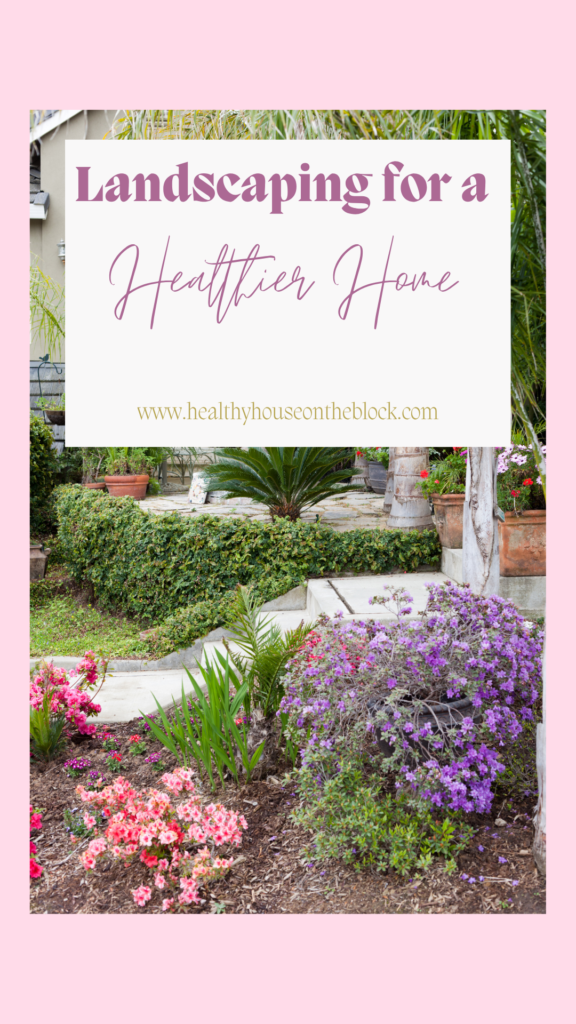
Avoid moisture bridges like thick wood mulch or dense garden beds directly against the foundation. These hold water and organic matter, creating a perfect environment for biological growth and pests. Instead, consider a 12-to-18-inch dead zone of washed river rock or pea stone. This allows the foundation to breathe and ensures that rain is directed away from the structure quickly, preventing the splash-back of soil-borne fungi onto your siding.

The Track-In Effect: Soil Microbiome and Chemical Migration
The health of your soil directly correlates to the health of your house dust. Studies in environmental science show that approximately 60% to 80% of the dust inside our homes is actually tracked in from the outside.
Volatilization and Pesticide Drift
When synthetic pesticides or herbicides are applied to a lawn, they undergo a process called volatilization. This means they turn into gases that can drift into your home through windows or air intakes for days or even weeks after application. These substances are often endocrine disruptors, which can interfere with hormonal health.
If you live in an area where you cannot control the neighboring applications, such as near a golf course, your landscaping can act as a literal filter. You can read more about managing these specific environmental stressors in my post on golf course pesticide safety.
Fostering a Healthy Soil Microbiome
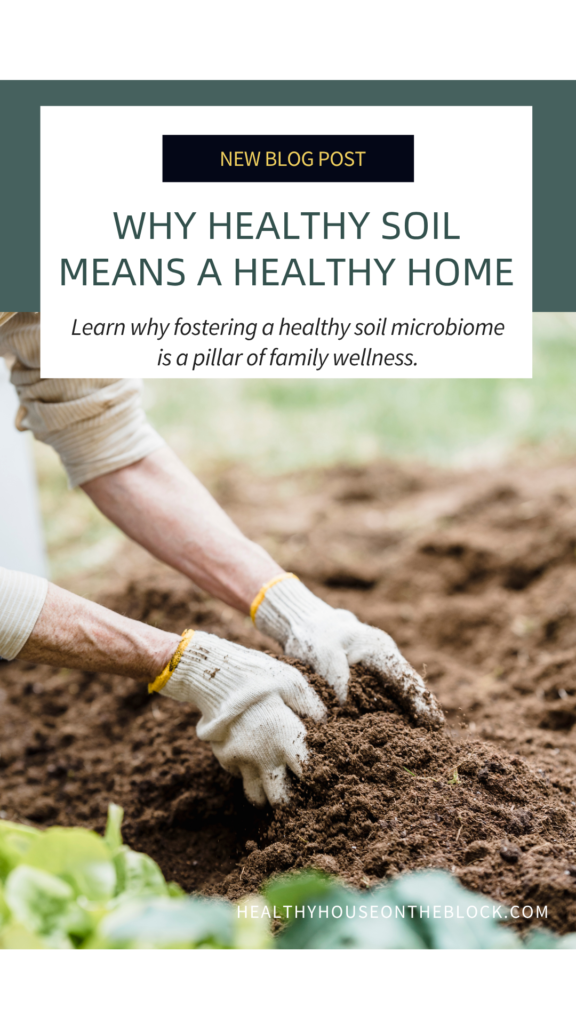
Rather than trying to sterilize your yard with chemicals, we want to encourage a diverse soil microbiome. Research into the “Hygiene Hypothesis” suggests that exposure to rich, natural soil diversity helps regulate our immune systems. By using organic compost and aerating your lawn, you promote the growth of beneficial bacteria like Mycobacterium vaccae. When these beneficial microbes are tracked in, they contribute to a healthy indoor “biome” rather than a toxic one.

Phytoremediation: How Plants Clean Your Environment
One of the most fascinating areas of science to apply to your yard is phytoremediation—the use of living plants to clean up soil, air, and water.
Trees as Biological Filters
Trees provide three layers of defense:
- Particulate Filtration: The leaves and needles of trees act as physical traps for particulate matter (PM2.5). These tiny particles are small enough to enter the bloodstream through the lungs. Evergreens, like the White Pine or Spruce, are excellent for year-round filtration.
- Gaseous Absorption: Trees absorb gaseous pollutants like nitrogen dioxide and ozone through their stomata. Large deciduous trees, such as Maples and Oaks, are powerhouses for this type of air cleaning.
Thermal Buffering: By strategically planting deciduous trees on the south and west sides of your home, you create a natural cooling system. This prevents your home’s siding from reaching temperatures that cause outgassing—the release of VOCs from building materials due to heat stress.
The Science of Air Movement and Cross-Ventilation
Landscaping also dictates the fluid dynamics of air around your home. In Building Biology, we want fresh air to actually be fresh.
If you have dense, overgrown shrubbery blocking your windows, it can create stagnant air pockets. These pockets trap humidity and pollutants near your home’s entry points. By pruning and spacing your plants, you encourage laminar flow—smooth air movement that allows for better cross-ventilation when you open your windows. This ensures that the air being pulled into your home is being refreshed by the oxygen-rich environment of your yard.

Water Management and the Role of Rain Barrels
Proper water management is a pillar of a healthy landscape. Standing water in the yard can lead to pest issues and localized humidity spikes.
- Lawn Aeration: Aerating your lawn at least once a year is a simple way to improve drainage. It allows oxygen and nutrients to reach the roots, which fosters a deep, healthy root system that can better manage heavy rainfall and prevent runoff toward your foundation.
- Rain Barrels: Utilizing rain barrels is an excellent way to reroute water away from your foundation. Using this collected rainwater for your gardens also avoids the use of chlorinated municipal water, which can harm the beneficial soil microbes we want to cultivate.

The Biophilia Connection: Why Outdoor Living Heals
The ultimate goal of landscaping for a healthy home is to facilitate your connection with nature. This is known as Biophilia. Scientific studies have repeatedly shown that spending time in a green environment reduces cortisol, lowers blood pressure, and improves sympathetic nervous system activity.
In our modern world, we are constantly bombarded by synthetic light and electromagnetic fields. Creating a comfortable outdoor living space gives your nervous system a chance to move from “fight or flight” into “rest and digest” mode. When you spend time in an organic, intentionally designed yard, you are giving your body the environmental signals it needs to maintain wellness.

Building Your Healthy Home Buffer
Landscaping for a healthy home is not just an aesthetic choice; it is a foundational health decision. By viewing your yard through the lens of building biology, you can create a protective barrier that supports your home’s integrity and your family’s vitality.
If you are looking for more ways to audit your environment and reduce the toxins in your daily life, I invite you to download my free Healthy Home Starter Guide. It is designed to give you clear, science-based steps to turn your home and yard into a true sanctuary for health.