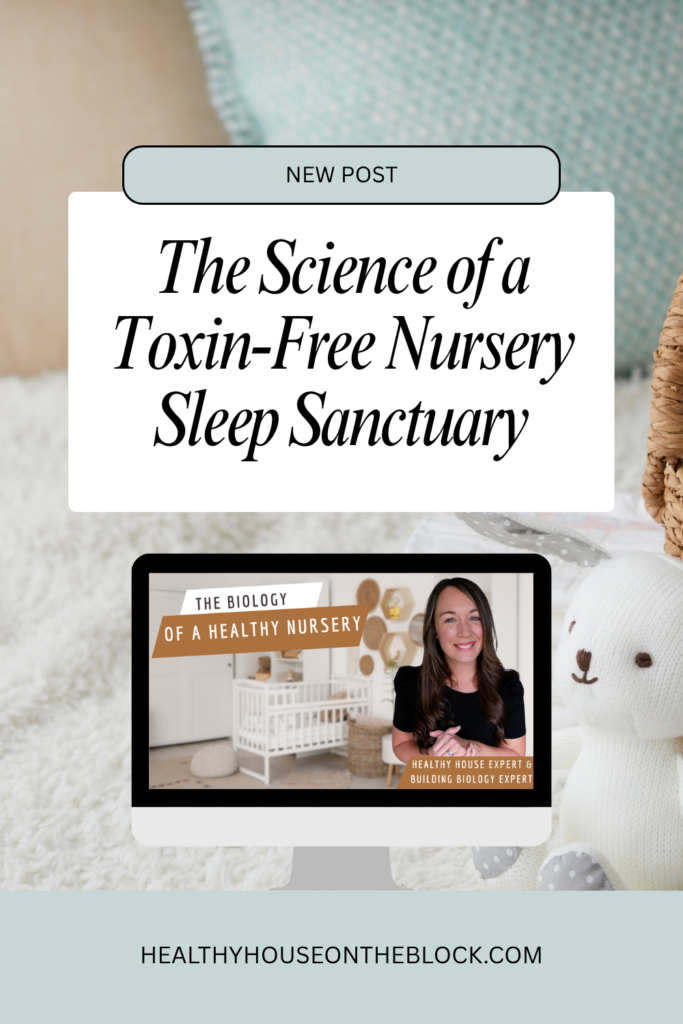
The Pinterest-worthy nursery of your dreams is often a beautiful disguise for an environment that can be biologically stressful for a newborn. As a building biologist, I view the nursery as a complex ecosystem. Your baby will spend nearly 70% of their first year in this one room. During those hours, their body is doing the intensive work of neurological development, cellular repair, and immune system mapping.
The design choices you make—from the rug on the floor to the placement of the crib—determine the indoor exposome your child interacts with every single day. We are moving beyond just a curated look and into a design philosophy that prioritizes biology, clean air, and restorative rest. Creating a toxin-free nursery is one of the most proactive steps you can take for your child’s long-term wellness.

Why the Nursery Environment Dictates Infant Health
Babies are not just small adults; they are physiologically distinct and significantly more vulnerable to environmental stressors. Their systems are in a state of rapid, sensitive development where every exposure can have a lasting impact.
- Immature Detoxification: A newborn’s liver and kidneys are not yet fully efficient at processing and excreting chemical toxins. This means substances that an adult body might easily filter out can circulate longer in a baby’s bloodstream.
- Respiratory Rate: Pound for pound, infants breathe much more air than adults. If that air is laden with volatile organic compounds (VOCs) from paint or synthetic textiles, their total dose of those chemicals is much higher.
- The Developing Brain: A baby’s blood-brain barrier is more permeable, and their skull is thinner and more conductive. This makes them uniquely susceptible to both neurotoxic chemicals and electromagnetic frequencies (EMFs).
- Ground-Level Exposure: Because babies roll, crawl, and play on the floor, they live in the zone where the heaviest pollutants settle. The health of the nursery is the foundation of their early physical development.

1. The Floor: Your Baby’s Primary Environment
In environmental health, the most polluted air in a home is often the six inches closest to the floor. This is where house dust, heavy metals, and pesticide residues settle. For a truly toxin-free nursery, the flooring is your first priority.
The Science of Dust and PFAS A study published in Environmental Science & Technology confirms that house dust is a major pathway for infant exposure to phthalates and flame retardants. Synthetic rugs made from polyester, nylon, or triextra are essentially plastic. They shed microplastics and are almost always treated with PFAS for stain resistance. These forever chemicals have been linked to immune system disruption and developmental delays.
Building Biology Solutions
- Material over Marketing: Ignore labels like stain-resistant or kid-proof. Instead, look for 100% GOTS-certified organic cotton or wool. Wool is a bio-fiber that is naturally flame-resistant and actually helps regulate humidity in the room.
- The No-Glue Rule: Conventional rugs use SBR (Styrene-Butadiene Rubber) latex to glue the backing, which off-gasses 4-phenylcyclohexene—the source of that new carpet smell.
- Vetted Source: I recommend Rugs by Roo because they are one of the few sources that specifically filter for rugs free of toxic glues and synthetic backings.
2. Walls, Windows, and the Room Envelope
The envelope of the room—the walls and windows—is a massive surface area that interacts with sunlight and temperature. In building biology, we consider the home’s walls to be the third skin that protects the inhabitant.
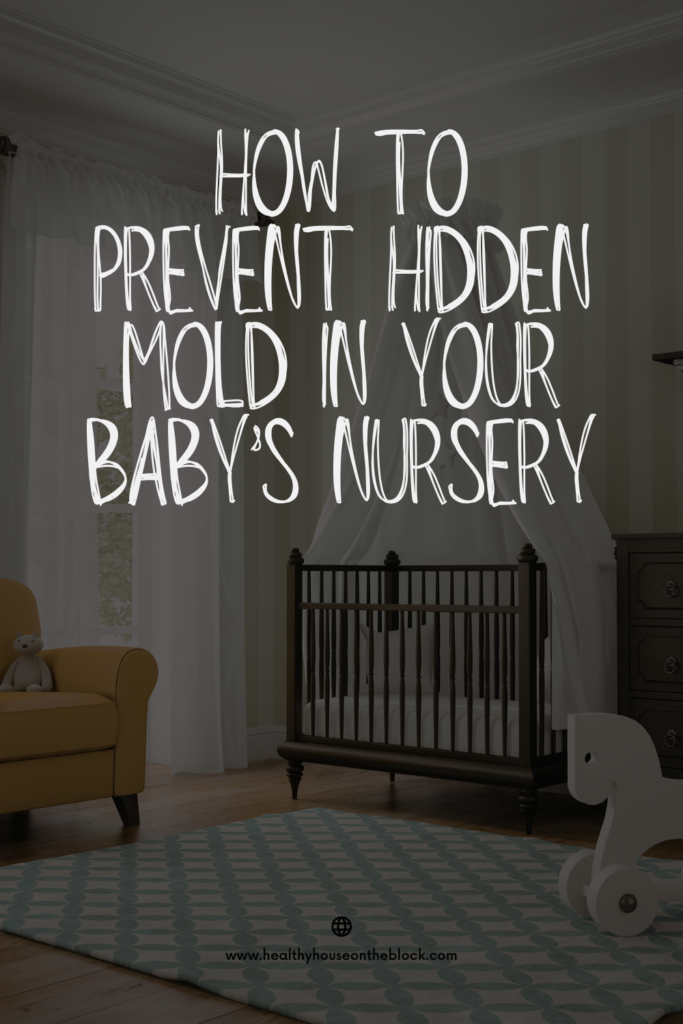
Wallpaper and Breathability Conventional vinyl wallpaper acts like a plastic wrap on your walls. If moisture gets trapped behind it, especially on an exterior wall, it can lead to hidden mold growth. If you want that beautiful patterned look, opt for PVC-free, breathable paper. I have a full guide on non-toxic wallpaper here to help you navigate these choices.
Solar Heating and Off-gassing When the sun hits a synthetic window shade or a plasticized blackout curtain, it creates a mini-greenhouse effect that accelerates the release of VOCs. Choose linen or hemp treatments. For blackout needs, look for tight-weave organic cotton liners rather than chemical-coated fabrics.
3. Atmospheric Health: Airflow, Humidity, and Fans
Air quality is a dynamic process. Because nursery doors are often closed for long periods while a baby sleeps, the air can quickly become stale, leading to a buildup of CO2 and metabolic byproducts. Maintaining airflow is essential to a toxin-free nursery plan.
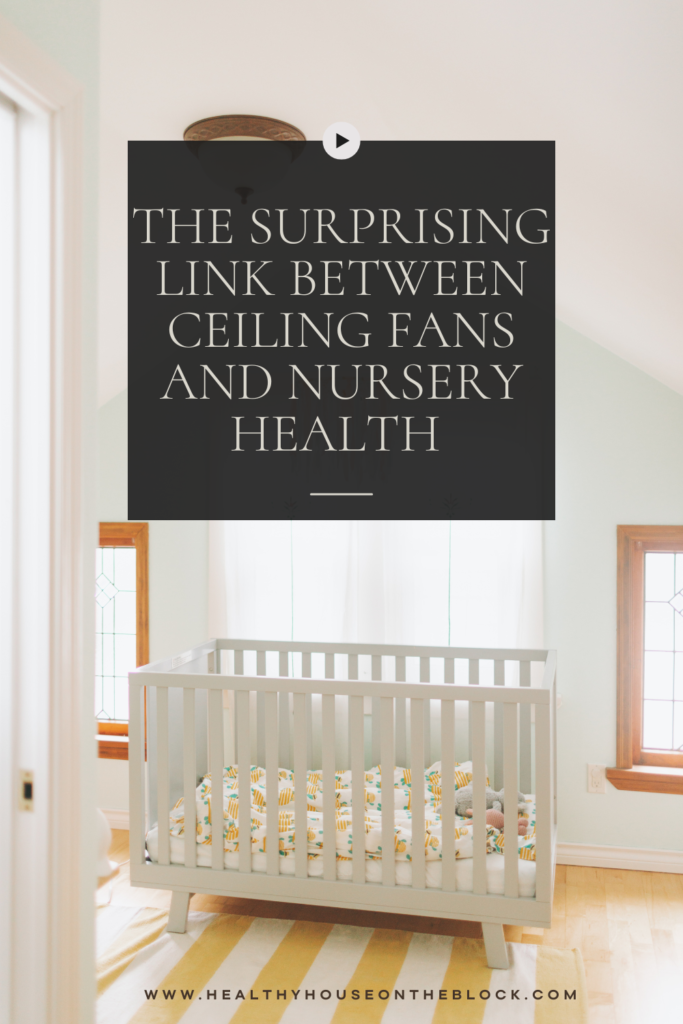
The Ventilation Link Research in the Archives of Pediatrics & Adolescent Medicine found that using a ceiling fan in a baby’s room was associated with a 72% reduction in SIDS risk. A fan ensures the air is constantly mixed, preventing CO2 pockets from forming around a sleeping baby’s face.
Design for Moisture Control
- The Window Wall Gap: Never push a large, heavy dresser or a crib flush against an exterior wall. This creates a dead zone where air can’t circulate. In the winter, that wall stays cold; when the warm, humid air of the nursery hits it, you get condensation and mold. Keep furniture at least 2 to 4 inches away from outside walls.
- Vent Maintenance: Ensure your furniture layout doesn’t block the return vent. Your home’s HVAC system needs that return vent to pull old air out so it can be filtered and refreshed.

4. Electromagnetic Hygiene: Placing the Crib
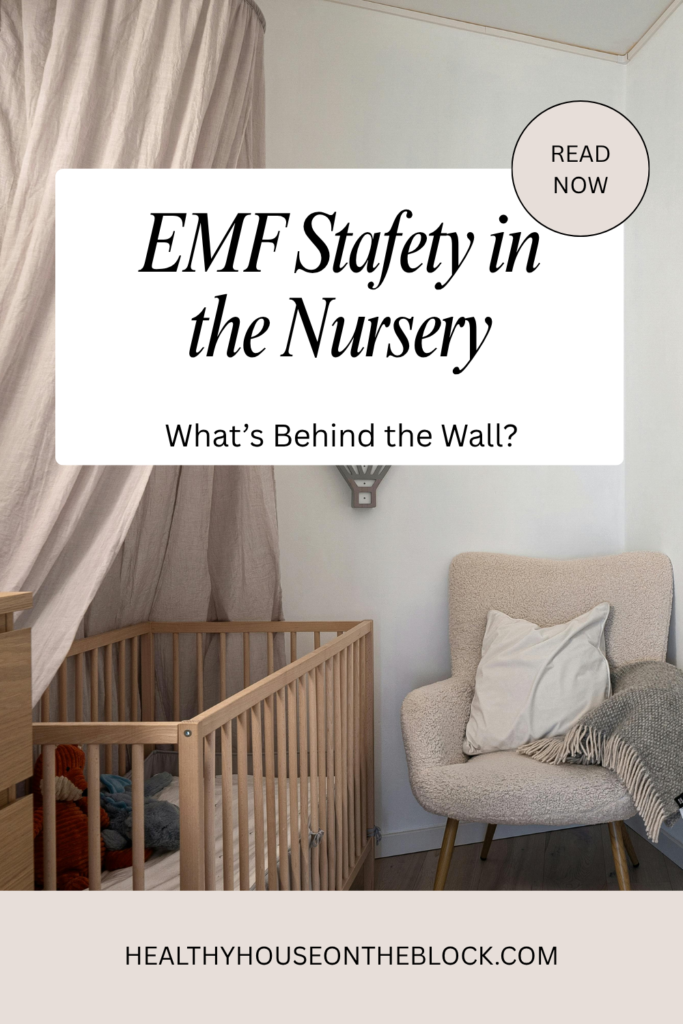
We often think of walls as solid barriers, but to an electromagnetic field (EMF), they are transparent. Before you finalize your layout, you must look at what is on the other side of the wall.
The Science of Developing Systems The BioInitiative Report highlights that children’s developing nervous systems are more susceptible to EMFs. Melatonin, the hormone responsible for deep sleep and cellular repair, can be suppressed by high levels of magnetic and radiofrequency fields.
Strategic Placement
- The Appliance Check: Check the room next door. Is the refrigerator, a large TV, or a microwave sitting right against the wall where the crib will go? High-draw appliances create magnetic fields that pass right through the drywall.
- The Electrical Panel: Never place a crib on the opposite side of the home’s main electrical panel or smart meter.
- Distance Equals Safety: Your baby monitor and white noise machine should be at least 6 feet from the crib. If possible, run a shielded Ethernet cable to the nursery and use a hardwired camera to eliminate wireless radiation entirely.
5. Lighting and Circadian Rhythms
Light is a biological trigger. The type of light in your nursery tells your baby’s brain whether it’s time to grow or time to sleep.
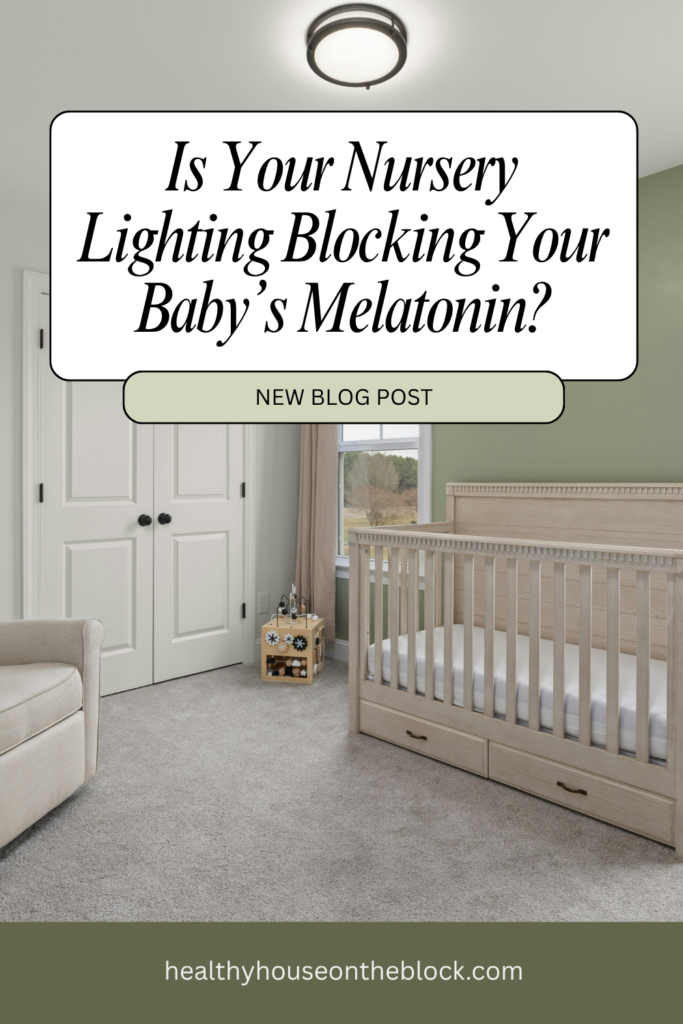
Most LED bulbs emit a high amount of blue light, which signals the body to stop producing melatonin.
- The Design Fix: For nighttime feedings and diaper changes, use amber or red spectrum bulbs. These colors do not disrupt sleep cycles.
- Dimmers: Ensure your overhead lighting is on a dimmer so you can slowly wind down the room’s energy as bedtime approaches.

6. Active Filtration: Your Air Insurance Policy
Even a perfectly designed room needs a way to scrub the air of particulates and gases.
HEPA and Carbon Standard air purifiers often only have a HEPA filter, which is great for dust but ineffective against chemicals like formaldehyde.
- The Requirement: You need a purifier with a substantial activated carbon filter (at least several pounds) to soak up VOCs from the rest of the house or new materials.
- Long-Term Health: Research published in The Lancet Planetary Health emphasizes that reducing fine particulate matter (PM2.5) indoors is a critical step in protecting a child’s long-term lung function.
Designing for a Lifetime of Wellness
Designing a toxin-free nursery is your first opportunity to curate the environment your child will grow up in. By choosing natural textiles from places like Rugs by Roo, prioritizing airflow, and being intentional with crib placement, you are building more than a room—you are building a foundation for their health.
For my curated list of vetted products that meet these high building biology standards, head over to my Toxin-Free Baby Registry Guide.
Every small choice—every inch of distance from an EMF source, every natural fiber chosen over a synthetic one—makes a measurable difference. You are doing a wonderful job.