You climb into bed after a long day, lay your head down, and take a deep breath. You expect to be breathing in clean, restful air. But what if you’re actually inhaling a cloud of invisible plastic dust?
I know how unsettling this thought can be. You work hard to provide the healthiest possible space for your family, but it’s overwhelming to try to fix a problem you can’t even see. My mission is to empower you with fact-based knowledge so you can easily reduce toxins inside your home. I know you don’t always have the time to research every single product, which is why I do the heavy lifting for you.
As a certified Building Biology Practitioner, I want you to feel totally supported and confident that you’re doing all you can to protect your family’s wellness. Today, let’s uncover the building science behind what’s really going on inside your pillow.
The Science Behind the Shedding
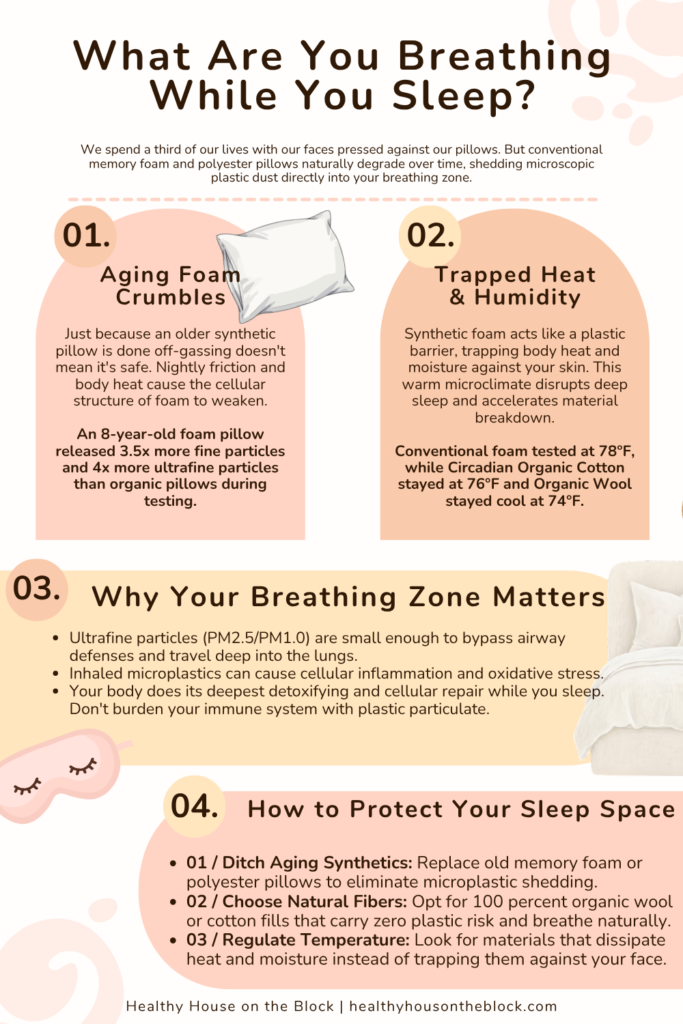
When it comes to microplastics in our breathing zone, the issue comes down to what our pillows are made of. Many conventional pillows are stuffed with synthetic polyester fill or polyurethane memory foam. According to building biology principles, petroleum-based materials like these naturally degrade over time. Through nightly friction, the weight of your head, and your body heat, synthetic fibers and foams break down, shedding microscopic plastic particles directly into the air you’re breathing.

Why This Matters For Your Health
It’s easy to dismiss household dust as just a nuisance, but when that dust is made of microplastics, it’s a completely different story for your wellness.
Recent studies have found microplastics deep within living human lung tissue and even circulating in human bloodstreams. When we breathe in these synthetic fragments night after night, they don’t just get exhaled. Smaller ultrafine particles, especially PM2.5 and PM1.0, are tiny enough to bypass our upper airway defenses and travel deep into the lungs. Research shows that inhaled microplastics can cause cellular inflammation, oxidative stress, and carry harmful endocrine-disrupting chemicals directly into our bodies.
Your body does its deepest healing, detoxifying, and cellular repair while you sleep. Burdening your immune system with plastic particulate during those crucial hours is the exact opposite of what a healthy home should do.
How Your Pillow Breathes
When I assess a home, I look closely at how materials breathe. When it comes to your sleep environment, poor air quality usually comes down to three invisible factors: particulate matter, relative humidity, and heat retention.
Synthetic foam and polyester act like a plastic barrier, trapping body heat and moisture. When humidity and temperature rise, it creates a warm microclimate that not only disrupts deep sleep, but also accelerates the mechanical breakdown of those synthetic materials. This increases the release of fine particles right at your nose and mouth.
Putting the Pillows to the Test: What I Found
So what is actually coming out of your pillow when your head hits the bed? To find out, I ran a side-by-side comparison in my own home. I tested a conventional memory foam pillow that’s about eight years old against two 100 percent natural options from Circadian: their Organic Wool pillow and their Organic Cotton pillow.
Most people think an older synthetic pillow is safe because that strong new-foam chemical smell is gone. Just because your pillow is done off-gassing doesn’t mean it’s healthy. In reality, while an older pillow releases fewer volatile organic compounds than a brand-new one fresh out of the plastic wrapper (which requires a sealed laboratory chamber to measure isolated emissions anyway), an aging synthetic pillow is actively crumbling into microscopic plastic dust.
Using my air quality monitor right in the breathing zone while compressing the pillows to simulate normal nighttime tossing and turning, here is what the data showed:
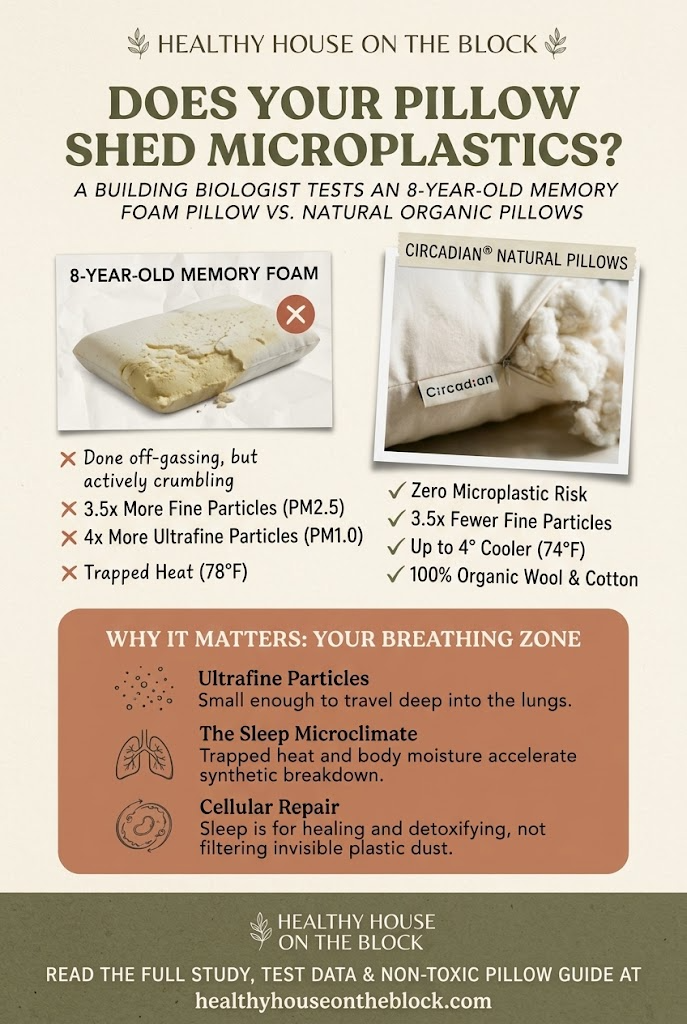
- Particulate Shedding: This was the biggest takeaway from the test. As synthetic foam ages, its cellular structure weakens and crumbles. The eight-year-old foam pillow released 3.5 times more fine particles (PM2.5) and 4 times more ultrafine particles (PM1.0) into the breathing zone than the natural wool and cotton pillows. That pushed the localized air pollution reading on the foam pillow to more than triple the level of the Circadian pillows. When you compress an older synthetic pillow under the weight of your head all night, those tiny degraded plastic fragments are what end up in the air you breathe.
- Temperature and Heat Retention: The conventional foam pillow held onto the most warmth, reaching 78 degrees. The Circadian Organic Cotton pillow stayed two degrees cooler at 76 degrees, and the Circadian Organic Wool pillow performed the best at 74 degrees—a full four degrees cooler than the synthetic foam. Natural fibers actively regulate temperature by moving warmth and moisture away from your skin instead of trapping it against your face.
Your First Action Steps
Before you worry about tossing every piece of bedding in your house, there are simple, science-based steps you can take today to start improving your indoor air quality.
- Ditch the aging synthetics Remember that just because a memory foam or polyester pillow no longer smells like chemicals doesn’t mean it’s safe. Years of friction and compression cause those plastic fibers and foams to break down and shed into your breathing zone. Swap them out for 100 percent natural fibers like organic wool or organic cotton, which carry zero risk of microplastic inhalation.
- Choose breathable materials Look for fills that naturally regulate temperature and moisture. As my testing showed, the Circadian Organic Wool kept the sleep surface four degrees cooler than foam, while their Organic Cotton pillow breathed beautifully and kept particle counts at a minimum. Both options dissipate heat rather than trapping it, which helps keep your breathing zone clean and dry.
- Protect your breathing zone By prioritizing materials that don’t degrade into plastic dust over time, you give yourself true peace of mind about what your family is breathing in all night.
Changing out everything in your home at once is impossible, so just take it one step at a time. If you’re ready to make a swap in your bedroom, replacing older synthetic pillows with natural fibers is a great place to start.
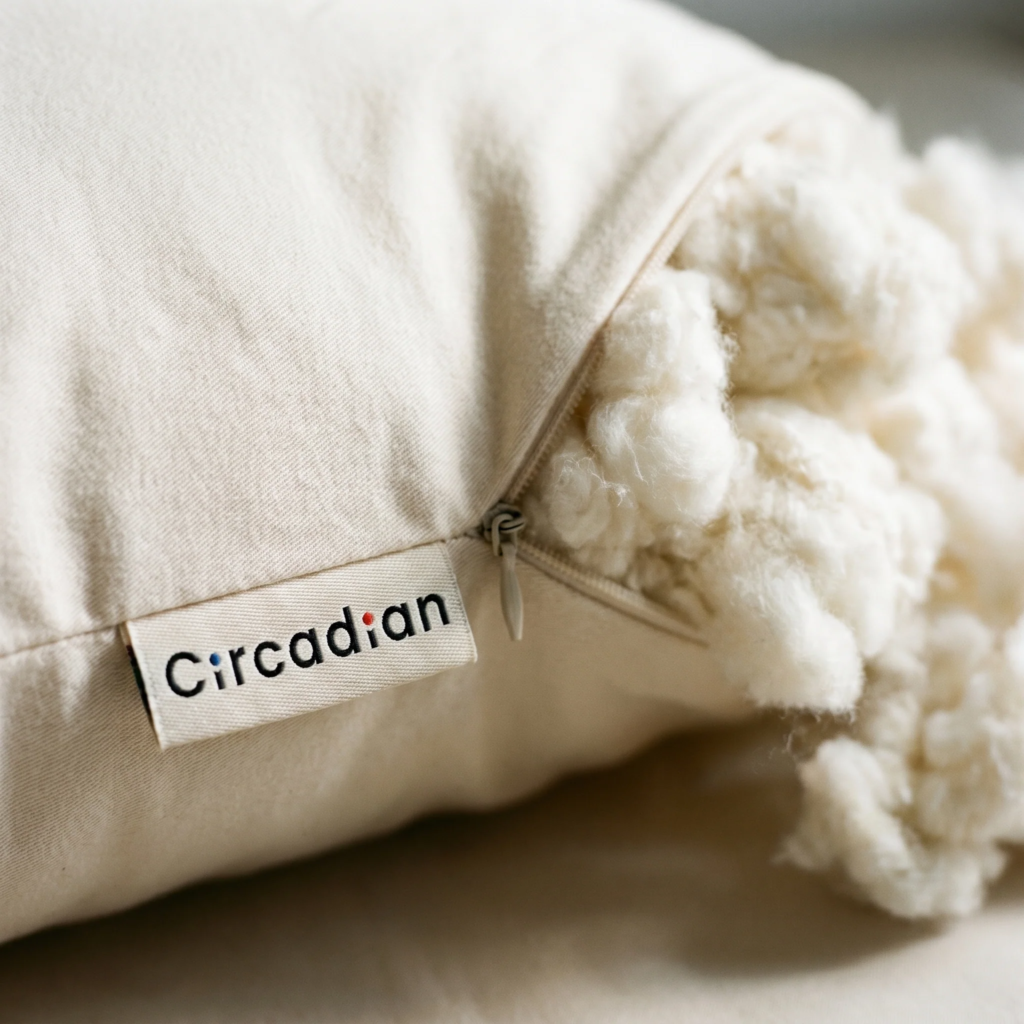
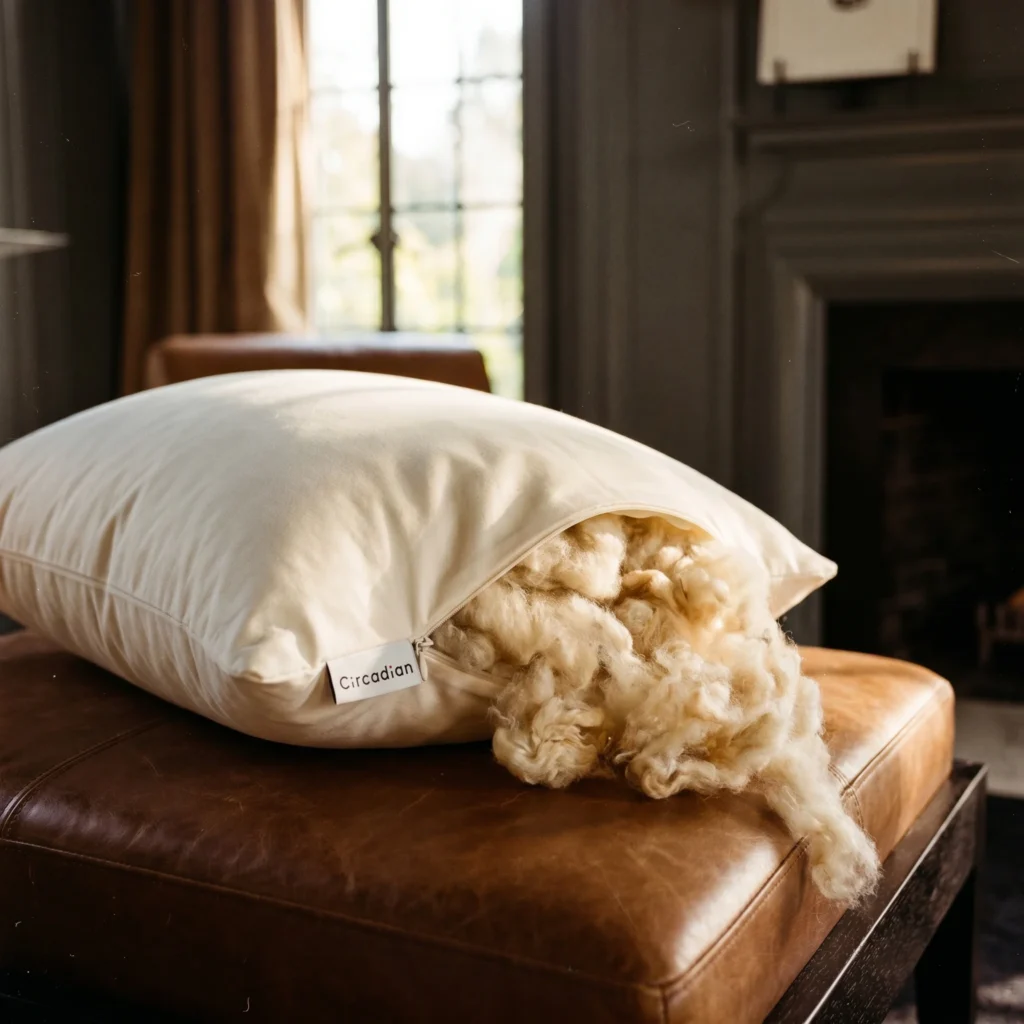
This week Circadian is running some AMAZING discounts on their pillows for Black Friday. If you think they might be a good fit for your family, you can check out the options I tested through the links below.
I hope this data helps you feel a little more confident in creating a healthier sleep space. Let me know in the comments if this changes how you look at your bedding, and tell me what healthy home question we should tackle next.