
Sleep is honestly one of my favorite things. I don’t get enough of it most nights, but I make it a habit to prioritize my sleep as someone who pays attention to my health and my wellness.
Sleep doesn’t just support your immune system — it’s a fast track to restoring every system in the body. Harvard studies on sleep tell us that the cost of poor sleep is much greater than many people think and it eventually leads to increased risk of chronic disease.
Pillows are just one piece of the sleep puzzle.
On October 5th, I’m hosting a live 60-minute Healthy Bedroom Audit where we’ll evaluate your mattress, wall placement, air exchange, and EMFs together.
It’s important to have healthy habits around sleep, but it’s just as crucial to have a healthy environment around your body while you sleep. The truth is, we spend 7-9 hours every night in our bedrooms, and the items closest to us are going to have the biggest impact on our health.
Think for a moment about everything that surrounds you all night long — pillows, blankets, sheets, mattress, electronics. When these items contain chemicals and toxins, our sleep becomes disrupted. Our body and brain read chemicals as a stressor, which triggers the release of cortisol — and cortisol inhibits sleep and disrupts otherwise-healthy sleep patterns.
A mattress can be a great swap, but it’s often one of the last changes people make because of how costly it is. I personally think the best swap for any bedroom is a toxin-free pillow.
Think about the proximity of a pillow to your face, your breathing zone, your skin. It has the potential to be a toxin pathway in multiple ways. But on the flip side, it can actually support your health and wellness during some of the most crucial hours your body spends healing and restoring.
The Science of the Sleep Environment
Your immediate sleep space deserves close attention because what surrounds you at night directly impacts your air quality.
A landmark exposure study from the University of Texas at Austin found that sleeping on conventional polyurethane foam creates an elevated chemical micro-environment right in your breathing zone. As your body rests against the pillow, heat and humidity speed up the off-gassing of volatile organic compounds, meaning you inhale higher concentrations of these chemicals right where you breathe.
At the same time, research published in Environmental Science and Pollution Research shows that synthetic, petroleum-based bedding constantly sheds airborne microfibers into the air of closed rooms.
During slow-wave sleep, your brain depends on the glymphatic system to clear out metabolic waste and cellular debris. By choosing clean, natural materials for your pillow, you remove that unnecessary chemical and particulate burden from your airways — giving your immune system and brain the uninterrupted recovery time they need.
Greenwashed Pillows
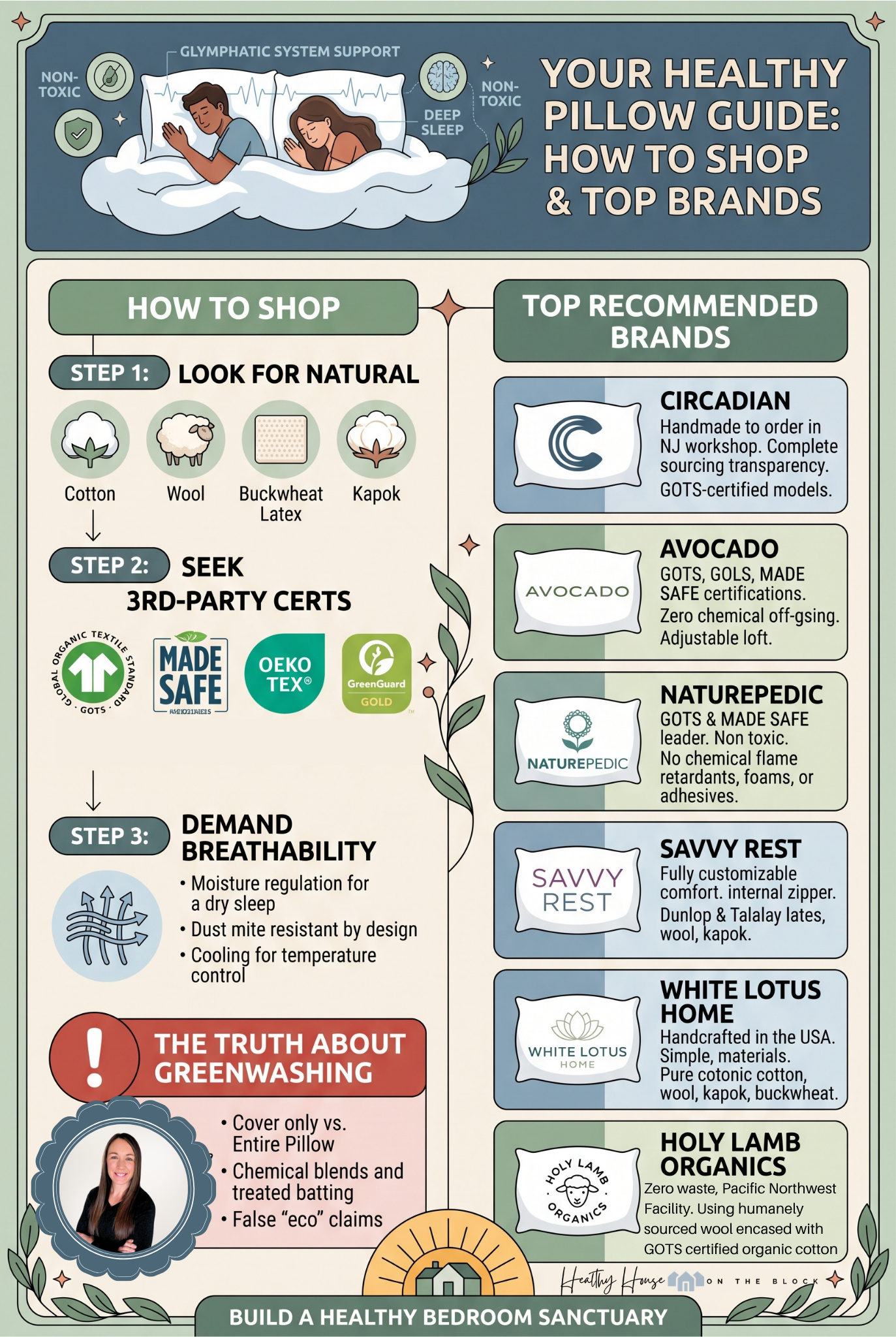
First, let’s talk about greenwashing. If you’re not familiar with the term, it basically means products using words like “green,” “organic,” or “natural” on their packaging when it’s not entirely true. A pillow may say organic, but that might only refer to the casing. It may say natural, but that might only refer to part of the inside — not the pillow as a whole.
Grabbing something just because it’s made to look like a healthy choice, or because it says “eco-friendly,” isn’t the best way to shop. A lot of these terms aren’t regulated by the FTC, which means anyone can put whatever they want on packaging.
Another place we see a lot of greenwashing with pillows is when brands only address one part of the product. Many advertise “organic” pillows while only certifying the removable slip cover — leaving the inside stuffed with synthetic fibers, blended fills, or chemically treated batting.
Instead, look for third-party certifications or do a little research before you buy. That way, you can avoid becoming a victim of the greenwashing epidemic.
What to Look For In Healthy Pillows
Organic Fibers: Cotton, wool, buckwheat, natural latex, and kapok are all great materials to look for in a pillow.
- Cotton: Naturally breathable and naturally resistant to bacteria. 100% organic cotton is grown and harvested without chemicals or pesticides — great for anyone who wants a soft pillow.
- Wool: A natural insulator that’s also fire- and water-resistant, and it naturally combats mold and mildew. Bonus: dust mites don’t care for it.
- Buckwheat: Made from buckwheat hulls, this is a great option for allergy sufferers. The way the hulls settle makes for a really breathable, cool, dry pillow.
- Natural Latex: Made from rubber trees, natural latex holds its form well and has a bit of bounce to it. It’s also 100% biodegradable.
- Kapok: Derived from a tropical tree, this soft fiber — sometimes called “silk cotton” — makes a great alternative to down or polyester fill.
Third-Party Certifications: These are your best friends when you don’t have time to research every brand yourself.
- GOTS (Global Organic Textile Standard): One of the better certifications to look for — it ensures the materials and manufacturing process are all in order.
- GOLS (Global Organic Latex Standard): The best certification to look for if you’re buying a shredded latex pillow.
- Oeko-Tex Standard: Tests the materials used in a product for hazardous chemicals at various stages of production, to ensure the health and safety of the finished product.
- GreenGuard: Checks for VOCs, formaldehyde, and other chemicals in the product. GreenGuard Gold is even better, with stricter limits on the chemicals allowed in the finished product.
- MadeSafe: Often the hardest certification to earn — it involves rigorous screening for known toxins, carcinogens, and endocrine disruptors.
Breathability: A breathable pillow won’t hold onto excess moisture or trap heat. This keeps your pillow feeling fresh and also helps prevent dust mites and mold spores from making themselves at home in your sleeping area.
What Pillow Materials & Additives to Avoid
Flame Retardants: Flame retardants (PBDEs) are commonly found in the polyurethane foam used in pillows. This chemical isn’t just unnecessary in this day and age — it’s been linked to real problems from a full night’s exposure, including issues with thyroid function and brain development in children. (STUDY)
Formaldehyde: Used as a preservative and to keep fabrics smooth and wrinkle-free, formaldehyde is added to many foam pillows and cushions. The problem? It’s a known human carcinogen — and we’re spending long stretches of time in close contact with it every night. (STUDY)
Deodorizers & Scents: Honestly, if it’s not an organic or natural scent, it’s probably worth avoiding. Deodorizers and added scents are usually there to mask a chemical smell from other toxic components. Opt for something unscented, or a product that claims to prevent odor rather than cover it up.
VOCs: Volatile organic compounds off-gas for the entire lifetime of the item they’re in, and they off-gas at a much higher rate in warm, humid environments compared to cool, dry ones. Think about your bed for a second — that’s exactly the kind of environment that encourages high rates of off-gassing.
Pesticides: Any material that’s farmed or grown has the potential for pesticide use. Residue can remain on natural materials — especially cotton. This post can help you understand what pesticides are actually doing to your body.
Polyester: Made from plastic toxins and petroleum, polyester is toxic on its own — and it off-gasses harmful chemicals as it breaks down over time, too.
Recommended Pillows
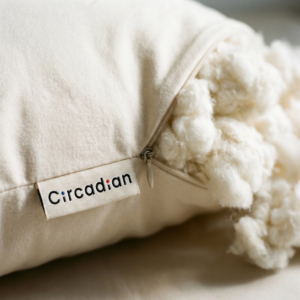
Circadian — Handmade to order in a New Jersey workshop, Circadian focuses on complete sourcing transparency. They offer end-to-end GOTS certification for their pure cotton and wool models, and each zippered pillow lets you easily remove fill for custom neck alignment. Their standout buckwool hybrid pairs firm, moldable buckwheat hulls with soft organic wool for balanced cervical support.
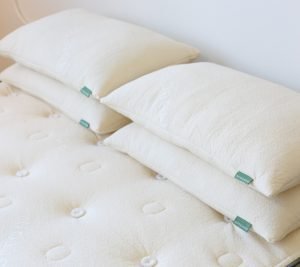
Avocado — Avocado pairs GOTS and GOLS certifications with the rigorous MADE SAFE seal, ensuring zero harmful chemical off-gassing. Their signature pillow blends responsive shredded organic latex with light kapok fiber inside a quilted organic cotton cover. An included bag of extra fill lets you tailor the loft to your exact sleep position.

Naturepedic — A longtime leader in non-toxic bedding, Naturepedic builds pillows certified to both GOTS and MADE SAFE standards. They avoid all chemical flame retardants, polyurethane foams, and questionable adhesives, offering solid organic latex and dual-sided wool and cotton options that resist dust mites naturally.
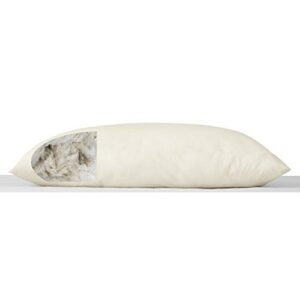
Savvy Rest — Savvy Rest emphasizes customizable comfort using clean Dunlop and Talalay shredded latex, organic wool, and natural kapok. Each pillow includes a zippered organic cotton casing, allowing you to remove fill handful by handful to protect neutral spinal alignment whether you sleep on your side, back, or stomach.
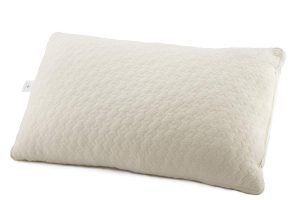
White Lotus Home — Handcrafted in the United States without synthetic batting or chemical treatments, White Lotus Home offers pure, single-material pillows. Choose from pure organic cotton, virgin wool, kapok, or buckwheat hulls, with zippered casing options that make refreshing or adjusting your pillow straightforward.
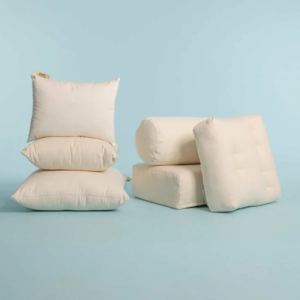
Holy Lamb Organics — Made in a zero-waste Pacific Northwest facility, Holy Lamb Organics focuses on premium, humanely sourced wool encased in smooth GOTS-certified organic cotton sateen. Wool naturally wicks moisture, keeps you cool, and repels dust mites without synthetic coatings, with multiple firmness options available to support proper neck posture.
Creating a low-toxin bedroom begins with simple, intentional swaps, and switching to a truly clean pillow is one of the most impactful choices you can make for your everyday air quality and rest.
If you’re feeling overwhelmed by product labels, conflicting certifications, or wondering what other hidden environmental stressors might be lingering in your living space, you don’t have to figure it out alone.
As a Building Biology Practitioner and professional home inspector, I help families identify practical, science-backed steps to remove toxins and create a restorative sanctuary at home. You can book an individual consultation with me directly on the website to review your specific space, prioritize your upgrades, and build a healthier home with complete confidence.



Pingback: Natural and Organic Bedding Guide - Healthy House on the Block
Pingback: Bedroom Ideas that will Lower Toxins and Benefit Your Sleep - Healthy House on the Block
Pingback: How to Decorate With Beautiful But Toxin Free Items