
In the world of healthy home design, we spend a significant amount of time discussing what we can breathe, touch, and drink. We filter our water, scrub our air, and choose non-toxic finishes for our walls. But there is an invisible element of our environment that often goes overlooked, despite its profound impact on our biological health: the “sonic environment.”
In Building Biology, acoustic comfort is considered a fundamental pillar of a healthy home. Principle #19 of the 25 Principles of Building Biology specifically calls for the optimization of room acoustics and the control of noise and vibration. Why? Because your home should be a place where your nervous system can finally rest and repair. When your home is filled with the constant hum of appliances, the whistle of unsealed ducts, or the harsh echo of hard surfaces, it creates a state of sensory overload at home that keeps your body in low-grade “fight or flight.”
Creating a sensory friendly home isn’t just about luxury or “peace and quiet”—it is about physiological recovery and nervous system regulation. When we talk about detoxing your home, we often forget that “detoxing” also means removing the auditory pollution that keeps your body from entering parasympathetic mode, the “rest and digest” state where true healing happens.
The Biological Stress of "Invisible Noise"
The human ear is an incredible biological tool that never truly sleeps. Even when you are in a deep slumber, your brain is actively processing the sounds around you. This is an evolutionary survival mechanism, but in the modern home, it can become a source of chronic stress.
When your environment is filled with “background hum”—the vibration of a refrigerator, the roar of a loud dishwasher, or the mechanical whine of an HVAC system—your sympathetic nervous system remains activated. This constant stimulation triggers the release of cortisol, the body’s primary stress hormone. Over time, chronic noise exposure has been linked to elevated blood pressure, sleep disturbances, and a decrease in cognitive performance, especially in children who are still developing their language and focus skills.

But here’s what most people don’t realize: noise pollution in your sensory friendly home doesn’t just affect your ears. Studies have shown that chronic exposure to environmental noise can disrupt your endocrine system, impair glucose metabolism, and even affect cardiovascular health. Your body interprets constant noise as a threat, which means your adrenal glands are working overtime even when you’re supposedly “relaxing” at home.
In Building Biology, we recognize that the home is part of an interconnected web of environmental stressors. Just as mold toxins can trigger inflammation, so can acoustic stress. The difference is that you can’t see sound on a petri dish, which is why it’s so often ignored in the healthy home conversation.
By addressing the acoustic health of your space, you are essentially “cleaning” your home’s energy. This allows your family’s internal systems to shift from a state of defense to a state of healing, turning a chaotic environment into a truly sensory friendly home.
The Vagus Nerve Connection: Why Sound Matters for Regulation
Let’s talk about the vagus nerve for a moment. This is the longest cranial nerve in your body, and it’s responsible for regulating everything from your heart rate to your digestion. When you’re in a calm, quiet environment, your vagus nerve sends signals to your body that it’s safe to rest, digest, and repair.
But when you’re surrounded by jarring, unpredictable, or constant noise, that signal gets interrupted. Your vagus nerve essentially tells your body, “Something’s wrong here. Stay alert.” This is why living in a sensory friendly home is critical for people dealing with chronic illness, autoimmune conditions, or nervous system dysregulation. If your home isn’t supporting vagal tone, it’s actively working against your healing.
I’ve seen clients who have done everything “right”—they’ve removed the toxic cleaning products, switched to organic food, filtered their water—but they’re still struggling with anxiety, poor sleep, and digestive issues. When we do a sonic audit of their home and start making acoustic improvements, suddenly their bodies can finally downregulate. That’s the power of a sensory friendly home.
Conducting a "Hidden Hum" Audit
The first step to achieving acoustic wellness is to identify the sources of sound stress that you may have simply tuned out over time. To begin your journey toward a sensory friendly home, I recommend a “Listen Tour.” Stand in the center of each room for two minutes with your eyes closed and your home’s usual electronics turned off. Listen for the subtle stressors that your brain is working hard to ignore.
You might be surprised at what you hear. Our brains are incredibly good at filtering out “constant” noise, which means you might not consciously notice the hum of your refrigerator anymore. But your nervous system notices. Your body is still processing that frequency, and it’s still costing you energy.
Common Culprits in the Healthy Home:
Vibrating Appliances: Large appliances like refrigerators and washing machines create low-frequency vibrations that travel through the floor and walls. These “structural hums” can be incredibly draining to the nervous system. Low-frequency noise is particularly insidious because it can penetrate walls and even affect sleep quality in adjacent rooms. In Building Biology assessments, we measure these vibrations because they contribute to what we call “structural noise pollution.”
Whistling Vents: Often, unsealed or poorly fitted ducts create a high-pitched whistle when air moves through them. This constant frequency can cause unexplained headaches or irritability. High-frequency sounds are particularly stressful to the human ear and can create a state of hypervigilance that’s exhausting over time. If you have children with sensory processing challenges, this is often one of the first things to address in creating a sensory friendly home.

Echo and Hard Surfaces: Modern home design often favors hard floors and open spaces. While beautiful, these surfaces cause sound to bounce, creating “acoustic clutter” that makes it harder for the brain to process speech and focus. From a Building Biology perspective, this is a form of “energetic chaos” that increases cognitive load. When your brain has to work harder to filter out reverberating sound, it has less energy for everything else—learning, emotional regulation, and immune function.
Electronic Device Hum: Computers, routers, printers, and even “smart” appliances emit a constant electronic hum. While individually these sounds may seem minor, collectively they create a sensory soup that keeps your body in a state of low-level stress. In a truly sensory friendly home, we consider not just the volume of sound, but the quality of the frequency being emitted.
The Building Biology Solution: Wool and Natural Fibers
When it comes to sound absorption, the materials we choose matter as much for our ears as they do for our lungs. This is where your commitment to low-tox materials provides a double benefit.
I often recommend wool as the “gold standard” material for a sensory friendly home. From a building biology perspective, wool is a miracle fiber. It is naturally flame-retardant, it manages indoor humidity, and it is a superior sound absorber. While synthetic foam panels or polyester curtains might dampen sound, they can also off-gas harmful chemicals (VOCs) into your breathing zone.
Here’s why wool works so well acoustically: the crimped structure of wool fibers creates millions of tiny air pockets that trap sound waves and convert sound energy into heat. This means wool doesn’t just “block” sound—it actually absorbs and dissipates it. And unlike synthetic materials, wool is breathable and hygroscopic, meaning it regulates moisture in the air, which also affects how sound travels through a space.
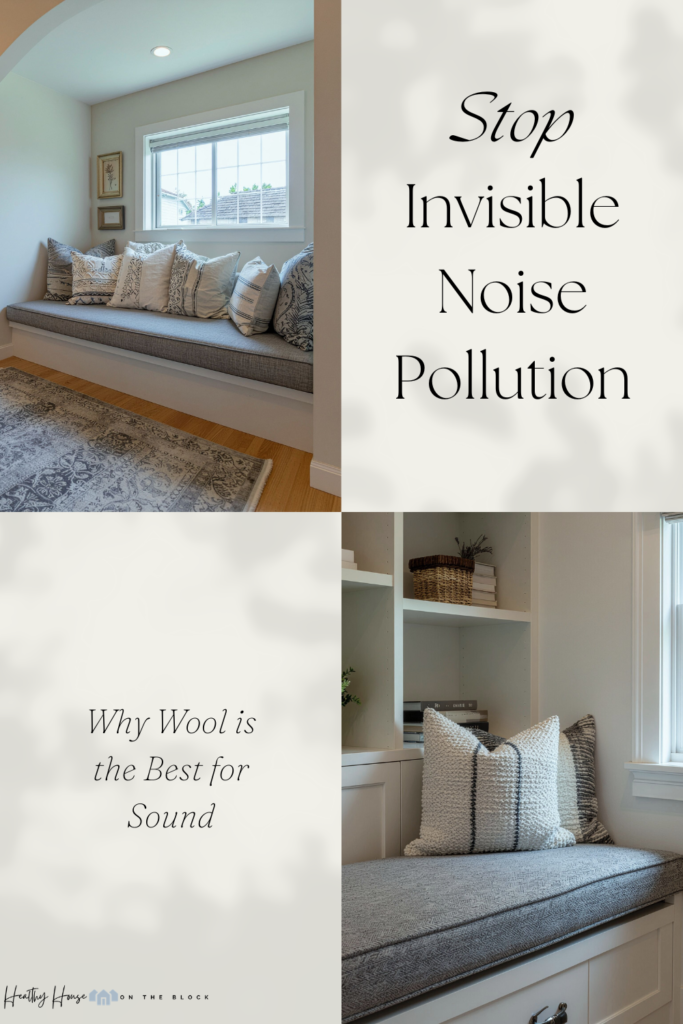
By strategically placing heavy wool rugs in high-traffic areas or hanging organic cotton or linen drapes over windows, you are physically “softening” the home. These natural fibers trap sound waves instead of reflecting them, significantly lowering the “echo” of a room. This creates a space that feels grounded and calm, providing a much-needed reprieve from sensory overload at home.
Other natural materials that support acoustic wellness in a sensory friendly home include:
- Cork: Naturally antimicrobial and an excellent sound dampener, especially for floors and wall panels
- Wood: Solid wood furniture and cabinetry can absorb sound while adding warmth and biophilic design elements
- Natural latex: For underlayment or cushioning, natural latex (not synthetic) provides sound dampening without off-gassing
Hemp and linen: Excellent for window treatments and upholstery in a sensory friendly home

Tactical Fixes for a Quieter Home (No Remodel Required)
You don’t need to tear open your walls to improve your home’s acoustics. There are several tangible, low-cost ways to decouple sound from your living space immediately.
Appliance Decoupling: One of my favorite “quick fixes” for a sensory friendly home is using inexpensive rubber anti-vibration pads under your washing machine or dishwasher. This breaks the physical connection between the vibrating machine and your home’s structure, stopping the hum before it can travel through the floorboards. For an even more effective solution, look for natural rubber pads rather than synthetic ones. The difference in your home’s baseline noise level can be astonishing—clients often report that they didn’t realize how much the vibration was affecting them until it stopped.
Sealing the Whistle: If you identify a whistling vent, a simple non-toxic silicone caulk or specialized foil tape can seal the gaps in the ductwork, silencing the high-frequency noise and improving your HVAC efficiency at the same time. This is a perfect example of how Building Biology solutions work on multiple levels—you’re improving air quality, energy efficiency, and acoustic comfort all at once, creating a more complete sensory friendly home.
Strategic “Softness”: In rooms with lots of hard surfaces, like a kitchen or dining area, adding felt pads to the bottom of chairs or placing a wool runner in the hallway can cut down on the sharp, “clacking” sounds that contribute to sensory overload for both moms and kids. These small touches add up. Every hard surface you soften is one less source of acoustic stress bouncing around your sensory friendly home.
Door and Window Sealing: Gaps around doors and windows aren’t just energy inefficiencies—they’re pathways for external noise pollution. Using natural wool weatherstripping or non-toxic silicone seals can dramatically reduce street noise, creating a quieter sanctuary and a more effective sensory friendly home. This is especially important for bedrooms, where acoustic privacy supports deeper, more restorative sleep.
White Noise Wisdom: If you use white noise machines, choose ones that generate true random white noise or, better yet, natural soundscapes. Cheap machines often use looped recordings that your brain will eventually detect, which can actually create more stress. In a sensory friendly home, even the tools we use to create calm need to be carefully chosen.

The Home-Body Connection: Impact on Wellness
In building biology, we look at the home as a “third skin.” Just as your actual skin protects your internal organs, your home should protect your family from external stressors. When the home environment is loud and vibrating, the burden of “processing” that stress shifts to your body.
By reducing noise pollution inside your walls, you are effectively lowering your family’s “toxic load.” A sensory friendly home supports better sleep architecture, allowing the body to enter deeper REM cycles. It also improves “speech intelligibility”—meaning your brain doesn’t have to work as hard to filter out background noise to hear a conversation. This leads to less mental fatigue at the end of the day and a more harmonious family dynamic.
But let’s go deeper. When we talk about “toxic load,” we’re usually referring to chemical exposures—pesticides, VOCs, heavy metals. But acoustic stress is just as real and just as measurable. In Building Biology, we call this your “environmental burden,” and it includes everything from electromagnetic fields to light pollution to sound. All of these invisible stressors add up, and your body has a finite capacity to process them.
When you create a sensory friendly home by reducing acoustic stress, you’re freeing up your body’s resources. That means more energy for detoxification, immune function, cellular repair, and emotional resilience. I’ve watched families transform when they finally address the sonic environment. Kids who were “always wound up” suddenly settle. Adults who struggled with insomnia start sleeping through the night. These aren’t coincidences—this is biology.
Sound and the Developing Brain: Protecting Your Children
If you have young children, creating a sensory friendly home is even more critical. The developing brain is extraordinarily sensitive to environmental input, and chronic noise exposure during critical developmental windows can have lasting effects.
Research shows that children raised in noisy environments have delayed language development, reduced reading comprehension, and higher stress hormone levels. This isn’t about creating a “perfectly silent” home (which would be its own form of sensory deprivation)—it’s about reducing the chaotic, unpredictable, mechanical noise that activates the stress response.
In Building Biology, we pay special attention to children’s spaces. Nurseries and playrooms should be designed with acoustic comfort as a priority. Soft textiles, natural materials, and strategic sound dampening create a sensory friendly home environment where young nervous systems can develop in a state of safety rather than hypervigilance.
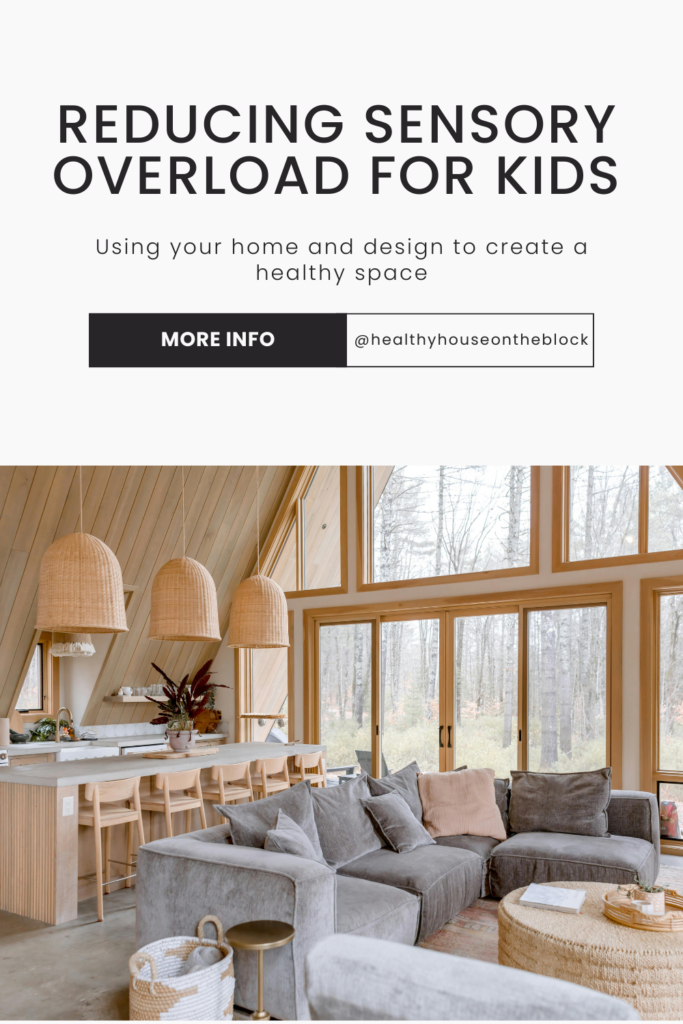
Even seemingly small choices matter: hardwood floors instead of tile (wood absorbs more sound), soft baskets for toy storage instead of plastic bins (which clatter), fabric wall hangings instead of bare painted walls. Each of these decisions contributes to a more regulated sonic environment and a more truly sensory friendly home.
The Evening Sound Transition: Dimming the Noise
Just as we dim the lights to prepare our bodies for sleep, we should also “dim the noise.” In a busy household, true silence is rare, but we can manage the quality of the sound our family is exposed to.
As the sun sets, try to create a “Sound Transition.” This involves turning off digital white noise, shutting down loud toys, and encouraging analog activities like reading or quiet play. If you find your home is too quiet or you live in a noisy urban area, consider shifting from “digital white noise” (which can sometimes have a repetitive, looping frequency that the brain detects) to natural soundscapes or “pink noise.” Pink noise has a more balanced frequency that mimics nature—like the sound of steady rain or wind—which has been shown to be more effective at settling the human nervous system into a restful state.
This evening transition is particularly important for circadian rhythm regulation. Just as blue light exposure in the evening can suppress melatonin production, jarring or chaotic sound can delay the body’s natural transition into sleep mode. By intentionally lowering the acoustic “volume” of your home as the day ends, you’re supporting your family’s natural biological rhythms and reinforcing your sensory friendly home environment.
Think of it as an acoustic version of “sleep hygiene.” We know that brushing teeth, dimming lights, and lowering the thermostat help prepare the body for rest. Sound is part of that equation. In a truly sensory friendly home, the evening hours should feel noticeably different from the daytime—softer, slower, quieter.
Beyond the Home: Protecting Your Peace in a Noisy World
Creating a sensory friendly home is about more than just what happens within your four walls. It’s also about recognizing when you need to protect your family from external acoustic stress.
If you live in a high-traffic area, near an airport, or in a dense urban environment, external noise pollution is a real health concern. In these situations, investing in high-quality, non-toxic window treatments becomes a health investment, not a luxury. Cellular shades made from organic cotton, heavy linen curtains, or even secondary window inserts can dramatically reduce noise intrusion while also improving energy efficiency.
For particularly challenging situations, I sometimes recommend working with a Building Biology consultant to assess whether structural interventions—like adding mass to exterior walls or upgrading to laminated glass windows—would be worthwhile. These are bigger investments, but for families dealing with chronic illness or extreme noise sensitivity, the return on investment in terms of health outcomes can be profound. Your sensory friendly home is your healing sanctuary.

Reclaiming Your Sanctuary
Acoustic wellness is the final touch in creating a home that truly supports your health. When you combine clean air and pure water with a calm, quiet, sensory friendly home, you are giving your family the greatest gift possible: a space where they can truly be at peace.
By paying attention to the sounds within your walls, you are honoring your body’s need for stillness. You are the gatekeeper of your home, and that includes being the protector of its silence.
Remember: your sensory friendly home is not just a physical structure. It’s a living environment that either supports or undermines your family’s health at every level—chemical, electromagnetic, and yes, acoustic. When you approach your home through the lens of Building Biology, you start to see all the invisible ways your environment is communicating with your body.
Sound is one of those invisible languages. And when you learn to speak it, when you learn to create true acoustic wellness in your sensory friendly home, you unlock a level of healing and regulation that most people don’t even know is possible.
You deserve a home that doesn’t just look healthy—a home that sounds healthy, too.


