

Once upon a time, I was the undisputed queen of scented candles. I had them organized by season, by room, by occasion. I loved everything about them: the ritual of lighting one after a long day, the way they made our home smell like a perpetual autumn afternoon or a spa retreat, the satisfaction of finding the perfect new scent at Target. Our entire house had this underlying fragrance that I didn’t even consciously notice anymore, but absolutely loved.
And then I started learning about indoor air quality. About volatile organic compounds. About how the very things I was using to make my home feel cozy were actually working against everything I was trying to build for my family’s health.
Here’s the thing, though. I didn’t want to know. I actively avoided researching candles because deep down, I knew what I’d find. I was scared of the change I’d have to make, and I loved my candles too much to face the truth. Change is hard. We like our routines. We like the way things are, even when we suspect they might not be serving us.
What finally shifted for me wasn’t fear. It was realizing I had options. I didn’t have to choose between a home that smelled beautiful and a home that supported our wellness. Once I discovered that I could still have candles, just cleaner ones, everything changed. Finding organic candles I genuinely loved made all the difference in moving forward without feeling like I was sacrificing something important.
If you’re reading this and feeling that same resistance, I see you. You can make this shift without losing what you love about candles. Let’s walk through it together.
Why Your Candle Choices Matter More Than You Think
Candles feel harmless. They’re cozy, nostalgic, beautiful. Most of us grew up with them and never thought twice about lighting one. But when you start paying attention to your home’s indoor environment, candles deserve a much closer look.
Any time you burn a candle, you’re creating combustion inside your home. That process produces soot, volatile organic compounds, and tiny particles that stay suspended in your air long after the flame is out. In a well-sealed home or a room with limited ventilation, those emissions build up and contribute to indoor air pollution in ways that genuinely affect your family’s health.
The act of burning means that any toxin in the candle gets a fast track into the air you’re breathing. This is why even candles that appear safer on the surface often aren’t any better than conventional options once they’re lit. The burning process changes everything.
With conventional candles, the problems usually come from three places: the wax, the fragrance, and the wick. Let’s go deeper into each one so you understand not just what to avoid, but why it matters. (STUDY)

The Hidden Toxins in Conventional Candles
Paraffin Wax: Petroleum in Your Living Room
Paraffin wax is the most common material used in candles, and it’s made from a chemically bleached petroleum waste product. When you burn paraffin, you’re essentially releasing the byproducts of petroleum combustion into your indoor air. Paraffin is a known carcinogen, but the problems don’t stop there.
When paraffin wax burns, it releases toluene into your air. Toluene is a chemical that has been shown to negatively affect both the central nervous system and the neurological system. The effects are subtle and cumulative, which is exactly why they’re so easy to overlook. You won’t feel immediate symptoms from burning a paraffin candle, but over time, the exposure adds up.
Paraffin combustion also releases benzene, a natural component of crude oil and natural gas that’s used industrially as a solvent. Benzene is highly toxic and has been definitively linked to cancer. Again, this isn’t about one candle causing immediate harm. It’s about the reality that every time you light that candle, you’re introducing these compounds into the space where your family breathes, plays, and sleeps. (STUDY)
Soy Candles: The “Natural” Option That Isn’t
Soy candles have been marketed as the cleaner, greener alternative to paraffin, but the reality is more complicated. Most soy is genetically modified, which means it’s heavily treated with pesticides during growth. Those residues don’t just disappear when the soy is processed into wax.
More importantly, many soy candles still contain paraffin. Manufacturers blend the two waxes together, but you won’t always see that on the label. And even pure soy combustion produces aldehydes and soot. Burning soy may create slightly less pollution than paraffin, but it’s not the clean solution it’s presented as. When those combustion byproducts enter your air, they linger, settle on surfaces, and contribute to the overall toxic load in your home.

Metal Core Wicks: Lead in Your Air
Some candles contain wicks with a metal core, often made with lead or zinc. While lead wicks were banned in the U.S. years ago, they’re still found in imported candles, and zinc or tin cores are still common.
A study conducted in Michigan found that burning a candle with a metal core wick for just two hours resulted in airborne lead concentrations that exceeded safe levels for human exposure. What’s even more concerning is that the lead from the candle fumes deposited on floors, walls, and furniture, where young children were exposed through normal hand-to-mouth contact. Babies and toddlers are especially vulnerable because they’re closer to the floor and constantly touching surfaces.
Many synthetic dyes contain dangerous chemicals such as naphtha and naphthalene. These two chemicals are a possible carcinogen but also cause issues with the gastrointestinal system as well as neurological degeneration. (INFORMATION). Again, because these toxins are in a candle that is burned, the toxins enter our air and can deposit on surfaces. Infants and children are even more susceptible to health repercussions from these toxins.
Dyes: Colorful Candles, Toxic Consequences
Many candles are dyed with synthetic colorants that contain chemicals like naphtha and naphthalene. Both are possible carcinogens, but they also cause gastrointestinal issues and neurological degeneration with repeated exposure.
Because these toxins are in a product that’s burned, they don’t just stay in the wax. They enter your air and deposit on surfaces throughout your home. Infants and children, who spend more time on the floor and have developing systems, are even more susceptible to the health impacts of these chemicals.

WHAT TO LOOK FOR IN ORGANIC CANDLES
Once you understand what to avoid, the next step is knowing how to shop for candles that actually support your healthy home. And here’s where it gets really clear: once you remove paraffin, soy, synthetic fragrance, metal wicks, and synthetic dyes, you’re left with one truly clean option.
The Cleanest Choice: 100% Beeswax with Organic Essential Oils
Pure beeswax candles scented only with organic essential oils are the gold standard for non-toxic candles. This combination burns significantly cleaner and contributes far less particulate matter to your indoor air. Here’s why beeswax stands out:
Beeswax burns cleanly. When the wick is properly trimmed, beeswax produces very little soot. It doesn’t require chemical processing the way soy does, and it’s not a petroleum byproduct like paraffin.
Beeswax naturally purifies the air. This is one of my favorite aspects of beeswax. It releases negative ions when burned, similar to the way an air purifier works. Most common allergens and pollutants carry a positive charge. When beeswax releases negative ions, those ions bind to the positive ions in your air. The bonded particles either get burned by the candle flame or fall to the ground, where they can be vacuumed up instead of breathed into your lungs.
Now, there haven’t been formal studies quantifying exactly how much a beeswax candle improves your air quality, so I can’t make specific claims about purification levels. But what we do know is that beeswax isn’t contributing to the problem. At minimum, it’s neutral. At best, it’s actively supporting your indoor environment. That’s a huge shift from conventional candles.
Beeswax lasts longer. Because it burns more slowly and evenly, beeswax candles last significantly longer than paraffin or soy. That means fewer products to buy, less waste, and fewer total exposures over time.
Organic essential oils offer scent without synthetic VOCs. When you choose candles scented only with 100% pure, organic essential oils, you’re avoiding all the petrochemical solvents and undisclosed compounds that come with synthetic fragrance. Essential oils derived from plants offer genuine scent without the toxic load. Just make sure the label specifically says “100% pure essential oils” or “organic essential oils.” Terms like “natural fragrance” or “nature-inspired scent” are often code for synthetic blends designed to smell natural.
Cotton Wicks Matter Too
Look for 100% cotton wicks, preferably organic cotton that’s free from pesticides. Cotton burns cleanly and evenly without the risks associated with metal cores. If you can confirm that the cotton is organic, that’s even better, as it eliminates any pesticide residue that could enter your air during combustion.
USDA Certified Organic Candles
You can find USDA certified organic candles if you look for them, though not all high-quality candles will carry the certification. Many are handmade by small artisans who use clean ingredients but haven’t gone through the formal certification process. That’s okay. What matters most is verifying the actual ingredients: 100% beeswax, organic essential oils, and cotton wicks.

My Top Recommended Beeswax Candle Brands
These brands prioritize transparency, clean ingredients, and truly non-toxic formulations. If you’re going to keep even one special occasion candle in your home, choosing one of these makes a meaningful difference.
Fontana Candle Co. 100% beeswax with organic essential oils. They’re transparent about sourcing, EWG-Verified, and one of the safest options on the market. (Use Code HHOTB for 15% off)
Bluecorn Beeswax. Pure beeswax candles with cotton wicks. They offer both unscented and essential oil scented varieties.
Branch Basics. Small-batch, beautifully simple, 100% beeswax candles.
Big Dipper Wax Works. Pure beeswax with essential oils. Just make sure to choose the varieties scented only with organic oils.
Aire Candle Co. Handcrafted beeswax candles with no paraffin or soy wax. They use only essential oils and cotton wicks.

Should You Burn Candles in a Healthy Home?
Here’s the truth, and I want to be really honest with you about this: even the cleanest candle still contributes some level of indoor air pollution. Burning anything indoors will always create combustion byproducts. There’s no way around that.
So while it’s best not to rely on candles every single day, you absolutely can enjoy them occasionally without compromising your healthy home goals. It’s all about intention, moderation, and proper ventilation.
How to Burn Candles Safely for Occasional Use
If you choose to enjoy candles once in a while, these habits help keep the impact minimal:
Trim the wick before every burn. A wick trimmed to about ¼ inch reduces soot significantly and helps the candle burn more cleanly.
Extinguish it by dipping the wick into the wax. This stops smoke almost completely. When you blow out a candle, you send a plume of soot directly into your room. Dipping the wick into the melted wax and then straightening it back up eliminates that smoke entirely.
Ventilate while burning. Crack a window or keep a door slightly open to increase air exchange. Fresh air circulation helps prevent combustion byproducts from building up in the room.
Run an air purifier afterward. A HEPA filter combined with a carbon filter will capture particles and help clear your air faster after you’ve blown out the candle.
Limit use to short durations. Lighting a candle for 20 to 30 minutes is enough to create ambiance and enjoy the scent without hours of exposure. You don’t need to burn candles for an entire evening to get the benefit.
Stick to larger, open rooms. Small bathrooms and bedrooms trap emissions more easily. If you’re going to burn a candle, do it in a living room or kitchen with more air volume and better circulation.
These small habits let you enjoy candlelight while still protecting your indoor air quality. It’s about balance, not perfection.

Other Ways to Freshen Your Home Without Candles
Essential Oil Diffuser: Besides candles, this is my TOP and FAVORITE way to add fragrance to my home. This diffuser is the one that I use at home and it’s my absolute favorite with a ceramic outer cover and an extra large reservoir. I also love that it’s easy to clean.
You can purchase just a few essential oils to make a number of different fragrance blends at home. I use Plant Therapy for my essential oils as they have an expensive line of USDA Certified Organic Essential Oils. This way I know they are free from pesticides and are not adding additional toxins to our indoor air.
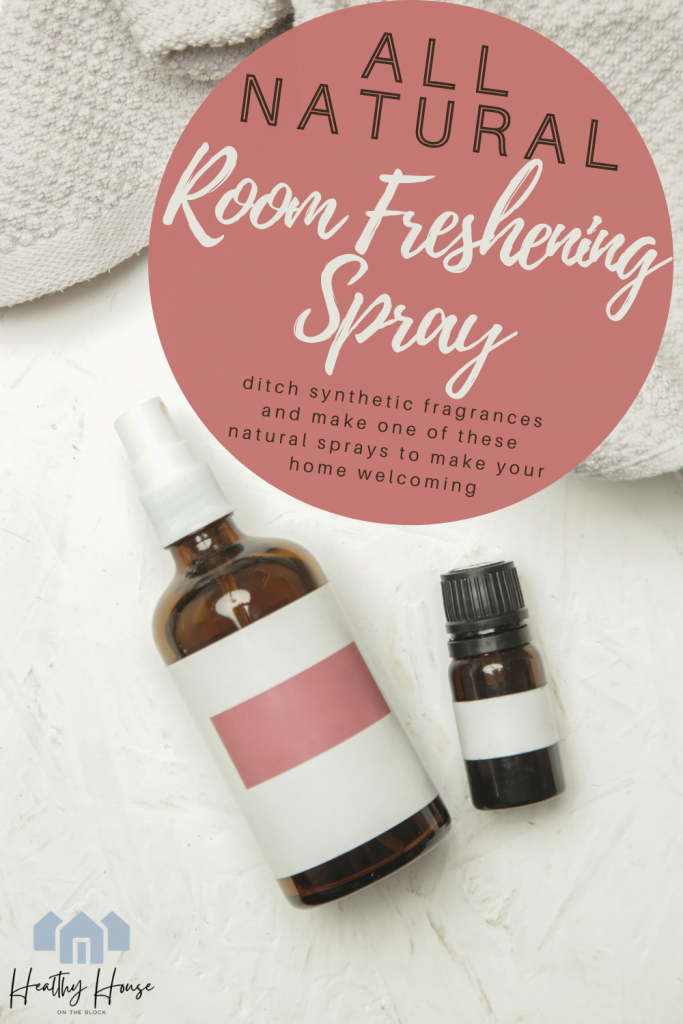
Room Freshening Spray: If you’re finding it hard to ditch products like Febreze or other room sprays, I would encourage you to make your own. You can also make one that can be used on upholstery, drapes and other textiles to freshen them up.
DIY Natural Room Freshening Spray:
4 oz mL glass spray bottle (I love these frosted glass spray bottles)
- 1 tablespoon witch hazel
- ½ cup distilled water (will make sure your room spray stays fresh longer)
- 30 drops of essential oils or one of the following blends
Happy Home:
- 10 drops Bergamot
- 5 drops Clary Sage
- 4 drops Lavender
Calming Vanilla:
- 8 drops Grapefruit
- 8 drops Sandalwood
- 8 drops Vanilla
- 6 drops Bergamot
Clean Citrus:
- 15 drops Grapefruit
- 15 drops Lime
- 10 drops Lemon
- 5 drops Bergamot
Cinnamon Cookie
- 15 drops Sweet Orange
- 10 drops Cinnamon
- 5 drops Clove
Flowers in Bloom
- 10 drops Geranium
- 10 drops Grapefruit
- 6 drops Ylang Ylang
Charcoal Odor Absorbing Bags: These charcoal odor absorbing bags are one of my favorite ways to take odors out the air. Sometimes it’s not that you need to add fragrance, but it’s that you need to clean the air inside your home from cooking smells or other odors. These bags can be reused and reused by just “recharging” them in the sunshine once they’ve done their job. We keep them in closets and near the kitchen garbage.
StoveTop PotPourri: This Christmas, one of our neighbors sent us this adorable jar with cranberries, dried oranges, pine sprigs, cinnamon sticks and cloves. All we did was add it to a pot of water on the stove and it left our home smelling absolutely AMAZING. It was a great way to add some fragrance to the air without using a candle or other toxic air freshening product.
Air Purifier with Ionizing Option: In our home we have a MedifyAir Air Purifier. It’s a medical grade air purifier to clean the indoor air, but it also has an ionizing option to remove odors from the air as well. The ionization process works where the negative ions produced by the air purifier “grab” the positive ions in the air (most toxins and allergens). It then causes the ions to fall to the ground where they can be vacuumed up rather than breathed into our lungs.

1. Ceramic Diffuser | 2. Stovetop Potpourri | 3. Charcoal Odor Absorbing Bags | 4 Homemade Room Spray | 5. Organic Candles | 6. MedifyAir Air Purifier
Creating a Home That Truly Supports Your Wellness
A healthy home isn’t created through fear or perfection. It’s built through informed choices, one decision at a time. Candles may seem like a small detail, but when you zoom out, every small exposure contributes to your overall indoor environment.
When you choose materials that support your health instead of working against it, you’re creating a space that helps your body rest, regulate, and restore. Beeswax candles are a beautiful example of that balance: natural, clean, intentional, and supportive of the home you’re building for your family.
You don’t have to give up the things you love. You just have to find better versions of them. And once you do, the shift feels easy, not like a sacrifice.
If you’d like help choosing other safe home products or learning how to reduce toxins in your space with clarity and confidence, my Healthy Home Blueprint course walks you through exactly how to make these decisions without feeling overwhelmed. You’ll learn how to evaluate products, prioritize changes, and create a home that genuinely supports your family’s wellness.



This was great information. Thank you so much. I never realized i was using paraffin waxed candles for about 5+ yrs. (Scary to think).
I will be definitely sharing this info and your channel.
Be well.
Thank you so much for this information. I just received a soy candle as a gift and I wasn’t sure if I should burn it in my home as I have thrown out all of my candles due to the toxicity of most. This article gives me great information on how to choose safety.