Most people think about food quality, ingredients, and cooking methods when they’re trying to eat healthier. Far fewer stop to consider what their food is touching while it’s hot.
Heat fundamentally changes how materials behave. It increases molecular motion, weakens chemical bonds, and accelerates the movement of chemicals from food contact materials into food. In other words, the same container that seems harmless for cold leftovers can behave very differently once you add hot soup, steaming pasta, or a microwave cycle.
For families who cook at home regularly, this matters. Hot food exposure is not occasional. It’s daily. And research consistently shows that chemical migration increases significantly under heat, especially when food is fatty or acidic.
This article takes a research-based look at the food contact materials most likely to leach under heat, why that leaching occurs, and how to make practical swaps using a realistic, evidence-driven approach. The goal is not perfection. It’s reducing unnecessary exposure where the science is strongest.

Why heat increases chemical migration
Chemical migration from food contact materials is a well-documented phenomenon in toxicology and materials science. Migration rates are influenced by temperature, duration of contact, food composition, and material structure.
As temperature rises, polymers and coatings become more flexible at a molecular level. This allows additives, residual monomers, and breakdown byproducts to move more freely into food. Multiple studies have shown that migration rates can increase several-fold when materials are exposed to heat compared to room temperature conditions (Muncke et al., 2020).
This is especially relevant because regulatory safety testing often evaluates materials under standardized laboratory conditions that do not reflect real-world use, such as repeated reheating, dishwashing, or prolonged contact with hot, fatty foods.

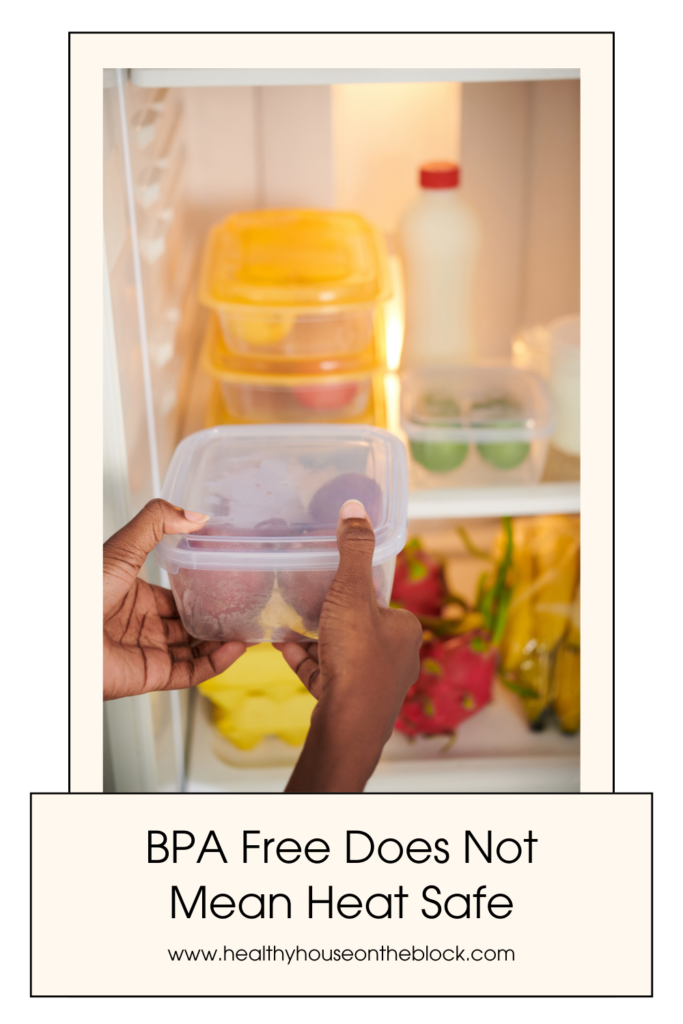
Plastic food containers, including BPA-free plastics
Plastic food containers remain one of the most common tools used for food storage and reheating, despite decades of research documenting their tendency to release chemicals under heat.
Plastics are not chemically inert. Even products labeled as food-grade contain a mixture of intentionally added substances such as plasticizers, stabilizers, antioxidants, and pigments, along with non-intentionally added substances formed during manufacturing. When heated, many of these compounds can migrate into food.
Research has repeatedly demonstrated that heating plastic containers increases migration of bisphenols and phthalates, particularly when food is fatty or acidic. Importantly, studies evaluating BPA-free plastics have found that alternative bisphenols such as BPS and BPF can exhibit similar endocrine-disrupting activity (Rochester & Bolden, 2015; Pelch et al., 2019).
Microwaving plastic containers has been shown to significantly increase chemical leaching, even when containers are marketed as microwave-safe. The term microwave-safe refers to melting resistance, not chemical stability.

For families seeking non toxic food storage for hot foods, plastic performs poorly under heat.
Use with caution: Plastic containers may be reasonable for cold, dry food storage or short-term refrigeration.
Avoid for heat: Reheating food, storing hot leftovers, or placing plastic containers in dishwashers with heated drying cycles.
Safer alternatives: Glass containers, stainless steel without plastic linings, and ceramic containers with verified lead-free glazes. For a deeper discussion of safer storage options, see my article on choosing non-toxic food storage materials.
Silicone food storage and bakeware
Silicone is often positioned as a safer alternative to plastic, but the research suggests a more nuanced picture.
Food-grade silicone is a synthetic polymer made primarily from silicon and oxygen, but it can contain fillers, curing agents, and residual byproducts from manufacturing. Studies have shown that silicone products can release cyclic siloxanes and low-molecular-weight oligomers, particularly when heated above typical cooking temperatures (Feng et al., 2021).
Migration increases with temperature and fat content, and lower-quality silicone products are more likely to release odors or residues. Silicone is also lipophilic, meaning it readily absorbs fats, which can increase chemical exchange over time.

This does not mean silicone must be avoided entirely, but it does warrant caution, especially for frequent high-heat use.
Use with caution: Occasional baking, lower-temperature applications, and high-quality platinum-cured silicone only.
Avoid for heat: Daily cooking, prolonged high-temperature baking, or frequent contact with hot, fatty foods.
Safer alternatives: Glass bakeware, stainless steel, and enameled cast iron. If you cook frequently at higher temperatures, these materials are more stable and predictable
Melamine dishware
Melamine dishware is commonly marketed for children and casual dining due to its durability and low cost. However, it performs poorly when exposed to heat.
Melamine resin can release melamine and formaldehyde, both of which increase in migration with heat and acidity. Multiple studies have demonstrated that serving hot foods in melamine dishware can result in melamine migration levels that exceed recommended safety thresholds (EFSA, 2010; Chien et al., 2011).
Scratches, age, and repeated dishwashing further increase migration risk. Despite labeling warnings, melamine is still commonly used for hot foods in home settings.
Use with caution: Cold foods only and short contact times.
Avoid for heat: Hot meals, microwave use, and dishwasher sanitizing cycles.
Safer alternatives: Stainless steel dishes for children, tempered glass, or ceramic.
Nonstick cookware and coatings
Nonstick cookware introduces concerns related to both chemical exposure and particulate release.
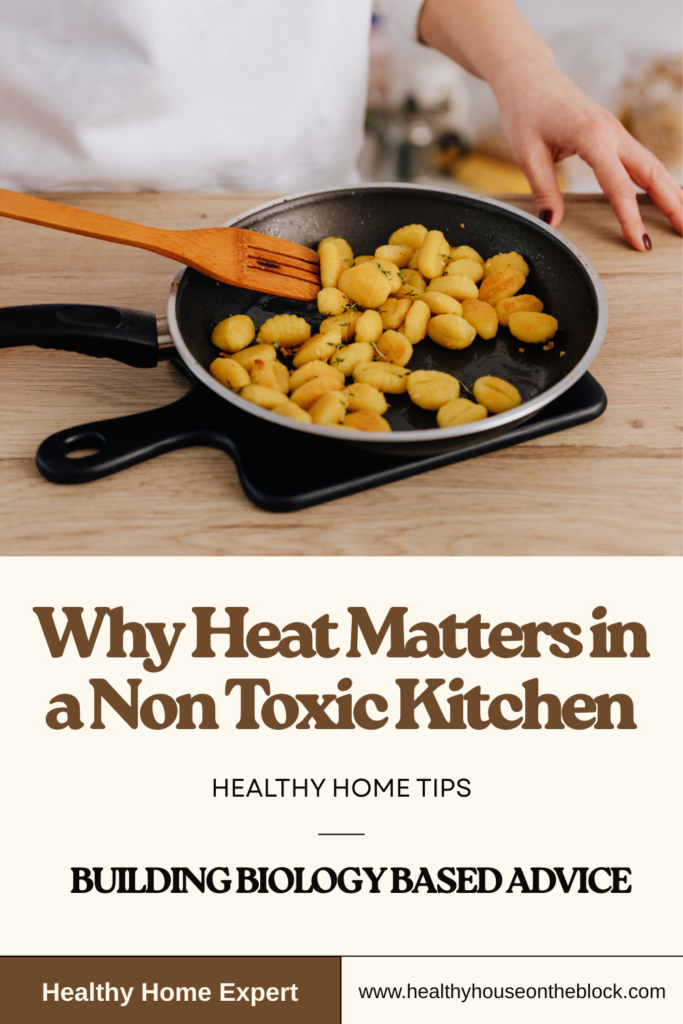
Traditional PTFE-based coatings can release toxic fumes and ultrafine particles when overheated. While many manufacturers now market PFAS-free nonstick options, these coatings can still degrade under heat and abrasion, releasing unknown breakdown products.
Research has shown that overheating nonstick pans, especially when empty, significantly increases emission of particles and gases that can affect indoor air quality (Sajid et al., 2020). This is particularly relevant in poorly ventilated kitchens.
Use with caution: Low to medium heat cooking with intact surfaces and adequate ventilation.
Avoid: High heat cooking, scratched or damaged pans, and preheating empty nonstick cookware.
Safer alternatives: Stainless steel, cast iron, carbon steel, and enameled cast iron. I explore these options in more depth in my dedicated non-toxic cookware guides linked here.
Paper, cardboard, and compostable food packaging
Paper-based food packaging is often assumed to be safer than plastic, but research suggests otherwise when heat is involved.
Many paper and compostable food containers contain PFAS to provide grease and moisture resistance. Studies have demonstrated that PFAS can migrate from paper packaging into food, with higher migration rates observed at elevated temperatures (Schaider et al., 2017).
Compostable labeling does not address chemical safety under heat, and reheating food in these containers can increase exposure.
Use with caution: Cold or dry foods.
Avoid for heat: Hot takeout containers and reheating food in original packaging.
Safer alternatives: Transferring hot foods immediately into glass or ceramic containers at home.
What works best for non toxic food storage for hot foods
When the research is considered as a whole, a clear hierarchy emerges for hot food contact.
Glass, stainless steel, ceramic with verified safe glazes, and enameled cast iron consistently demonstrate low chemical migration under heat. These materials are stable, durable, and well-supported by decades of data.
Materials such as silicone and paper-based packaging fall into a use-with-caution category, while plastics, melamine, and nonstick coatings perform poorly under heat and should be avoided whenever possible for hot foods.
This approach allows families to reduce cumulative exposure without unnecessary complexity or fear.
Why this matters for cumulative exposure
Exposure from food contact materials does not occur in isolation. Small, repeated exposures from hot food containers, cookware, and packaging contribute to overall body burden over time.
Children, pregnant women, and individuals with impaired detoxification systems are particularly vulnerable. Reducing heat-driven leaching is one of the most impactful changes families can make because it targets a frequent, preventable exposure pathway.

Learn more and explore safer options
If you want to go deeper, I’ve linked my in-depth articles on non-toxic pots and pans, cookware selection based on cooking style, and red flags to watch for in greenwashed kitchen products. You’ll also find links to specific containers and cookware I recommend, chosen for material stability and real-world performance.
Understanding how materials behave under heat empowers you to make informed choices without striving for perfection. When it comes to food contact materials, heat is where the science is clearest and where changes matter most.
References
Muncke, J., et al. (2020). Impacts of food contact chemicals on human health: A consensus statement. Environmental Health, 19(25).
Rochester, J. R., & Bolden, A. L. (2015). Bisphenol S and F: A systematic review and comparison of the hormonal activity of bisphenol A substitutes. Environmental Health Perspectives, 123(7), 643–650.
Pelch, K. E., et al. (2019). A scoping review of the health and toxicological activity of plasticizers and substitutes. Environmental Health Perspectives, 127(9).
Feng, Y., et al. (2021). Migration of siloxanes from silicone rubber into food simulants under thermal conditions. Food Additives & Contaminants: Part A, 38(6), 927–939.
European Food Safety Authority (EFSA). (2010). Scientific opinion on melamine in food and feed. EFSA Journal, 8(4).
Chien, C. Y., et al. (2011). Migration of melamine from melamine tableware to foods and food simulants. Food Additives & Contaminants, 28(9), 1185–1194.
Sajid, M., et al. (2020). Emissions from non-stick cookware under thermal stress and implications for indoor air quality. Environmental Science and Pollution Research, 27, 19396–19405.
Schaider, L. A., et al. (2017). Fluorinated compounds in U.S. fast food packaging. Environmental Science & Technology Letters, 4(3), 105–111.