One of the most powerful philosophies in building biology is the idea that you are the gatekeeper of your home. You have ultimate control over what is allowed into your living spaces. When we view our homes through this lens, the entryway stops being just a foyer or a mudroom and becomes a critical buffer zone—a biological filter that prevents outdoor pollutants from becoming indoor health hazards.
Creating a healthy home doesn’t always require a massive renovation or a structural overhaul. Often, the most significant impact comes from managing the “transition zones” where the outside world meets your interior environment. By implementing strategic, functional entryway ideas, you can prevent a staggering amount of bacteria, pesticides, and toxic dust from ever reaching your kitchen or your children’s bedrooms.
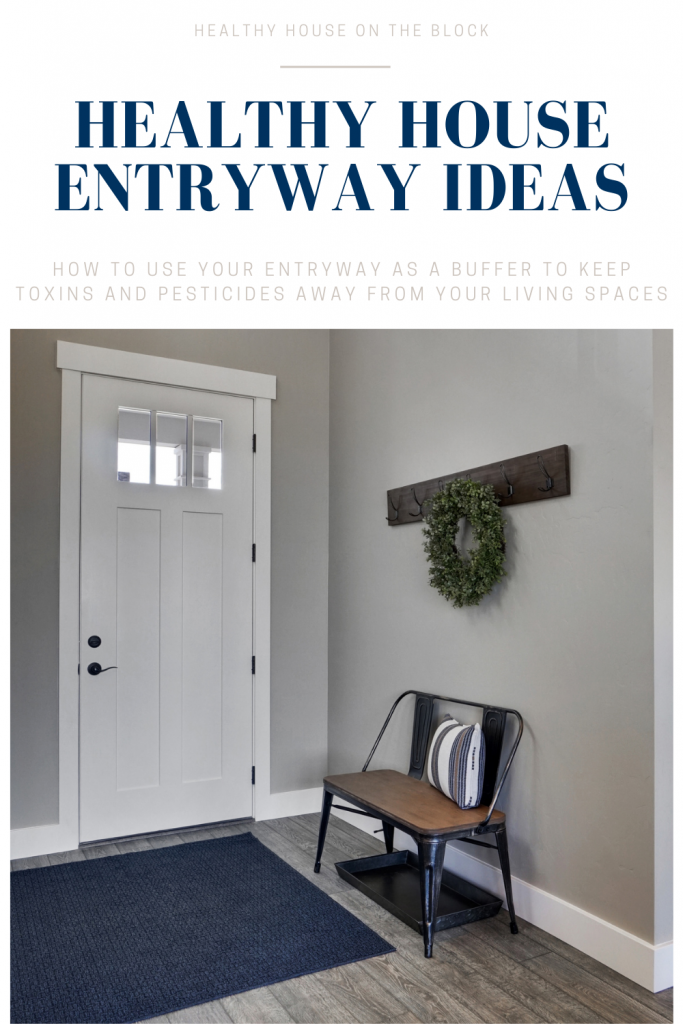
The entryway in my home isn’t large, but it works to house all the elements of getting ready to leave the house in one spot. I am all about a functional, pretty space, and the entryway is no exception to this idea. Once we’re in the mode of getting out the door, I can tell you that few things are more frustrating than traipsing back through the house to find something left behind (which inevitably happens on a regular basis).
The Science of What is Hitchhiking on Your Shoes
To understand why the entryway is so vital, we have to look at the “gross science” of what lives on the bottom of our shoes. As someone who grew up in a home where we always took off our shoes, I’m not really that surprised to see exactly what comes in on your shoes. Think about the many places you walk and travel?
As soon as we had crawlers, I suddenly realized just how much I DIDN’T want to wear my shoes in the house. Babies at that age find anything and everything on the floor, only to put it directly in their mouth as they crawl by.
A prominent study by University of Arizona microbiologist Dr. Charles Gerba found that within just two weeks of wearing a new pair of shoes, they can accumulate 440,000 units of bacteria. Even more concerning is that nearly 90% of that bacteria transfers directly to clean, smooth flooring like tile or wood the moment you step inside.
The study by Dr. Gerba also showed that viruses actually thrived more on the soles of shoes than on a toilet seat. And again, while viruses in general we try to avoid, keeping a sterile environment can also be detrimental to our overall health and wellness. (Let’s also talk quickly about how our homes shouldn’t be sterile environments. Some bacteria are incredibly good for our microbiome and our own immune systems. That being said, I wouldn’t voluntarily bring bacteria in and then place my kids right on top of it to play).
Beyond bacteria, our shoes act as magnets for environmental toxins. An EPA-referenced study highlighted that herbicides and pesticides can be tracked into a home for up to a week after they are applied to a lawn. What’s kind of alarming is that the amount of exposure is actually MORE than the exposure from residues on non-organic fruits and veggies. Because these chemicals are sheltered from the UV light that would normally break them down outside, they persist in your carpets and floor dust for much longer.
This blog post about house dust touches on the number of health concerns related to pesticide exposure, such as poor development in children, increased risk of cancer, chronic dermal irritation and rashes, and immune system deficiencies.
The Coal Tar Connection
Another significant risk involves families living near asphalt pavement sealed with coal tar. Research from Baylor University linked these sealants to an elevated risk of cancer, specifically noting that the polycyclic aromatic hydrocons (PAHs) settle into house dust. Children under six are at the highest risk because they spend so much time on the floor, where they can ingest these toxins at much higher rates than adults. They found that the risk for exposure was greatest in children under six years old, as they ingested more of the toxin at much higher rates.
The Home-Body Connection: How Your Entryway Impacts Your Health
In building biology, we look at the home as a “third skin.” Just as your actual skin protects your internal organs, your home should protect your family from external stressors. When the entryway fails to act as a filter, the burden of detoxification shifts from your house to your body.
When lead dust, pesticides, and flame retardants are tracked inside, they don’t just sit on the floor; they become part of the house dust. This dust is easily aerosolized—meaning it becomes airborne every time someone walks across the room or sits on the couch. Once airborne, these particles are inhaled or absorbed through the skin.
For the body, this means the liver and endocrine system are constantly working to process “background” toxins. Chronic exposure to these low-level pollutants has been linked to everything from disrupted sleep and respiratory irritation to more serious long-term concerns like hormonal imbalances and immune system fatigue. By securing your entryway with smart entryway ideas, you are effectively reducing the daily “toxic load” your family’s bodies have to process, allowing their natural detoxification systems to focus on health and healing rather than constant defense.
Using Your Entryway as a Gate to Your Home
Personally, for our home, we have a pretty firm no-shoe policy. Granted, there are a few exceptions (grandparents and older visitors who have a hard time getting shoes off and on, or a quick run inside to grab a forgotten item), but overall we keep shoes at the entryway.
Especially as our kids were little and crawling around, we did our best to keep shoes in one place of the house, away from little hands and we tried to keep our living spaces free from the pesticides and bacteria I mentioned before.
Having a shoe tray near the door can help indicate to guests that shoes come off when inside. I don’t think you have to feel guilty or awkward asking friends and family to take their shoes off when they come inside either. Your house, your rules, in my opinion. Afterall, you’re the gatekeeper of your home, and that’s true of shoes entering your home besides toxic materials and products.
Your entryway is really a buffer between the outside and your living spaces, and treating it as such will help you drop your shoes and bags in one spot before letting them travel inside. Many homes have a sectioned off space to serve as an entry way for the front door or from the garage area. But in some homes you might have to create your own space that will serve as your buffer area as the door opens up either into a kitchen or a living room. You can also use an area of the garage to serve as a place to leave shoes and bags if it works with your home’s design.
Every home is different. Some have a large mudroom, while others open directly into the living room. Regardless of your layout, you can create a buffer. If you don’t have a formal foyer, you can use a small rug and a single basket to define your “gate.” The important thing is the boundary you set between the outside world and your family’s wellness.
Essential Entryway Ideas & Elements for a Healthy House
A successful entryway must be as functional as it is healthy. If a system is too difficult to maintain, it won’t be used by busy families. The goal is to create a “path of least resistance” that naturally encourages everyone to leave the world’s grime at the door. The trick is to incorporate entryway ideas that are easy to keep up with and make your space super functional. Nothing is worse than creating a space that you can’t keep up with.
Shoe Trays:
This is a great way to keep wet and dirty shoes off your floors. I also think this is one of those entryway ideas that serves as a great reminder to your guests to take off your shoes. It also works well for kids. So often if there isn’t a “home” for shoes, they end up scattered around the floor as they come inside.
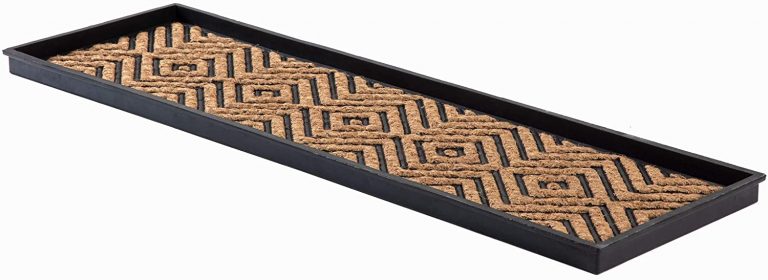
Your first line of physical defense is the doormat and shoe tray. I always recommend using a high-quality scraper mat made from natural coco coir rather than synthetic rubber or PVC, which can off-gas VOCs into a small, enclosed entryway. Once inside, a dedicated shoe tray serves as a visual cue to guests and children. I prefer natural rubber shoe trays or rustic wood trays with metal inserts, as these are durable and easy to clean.
Natural Rubber Shoe Tray with Coir
Rustic Wood Rolling Boot Tray with Metal Pipe Handles
Hooks:
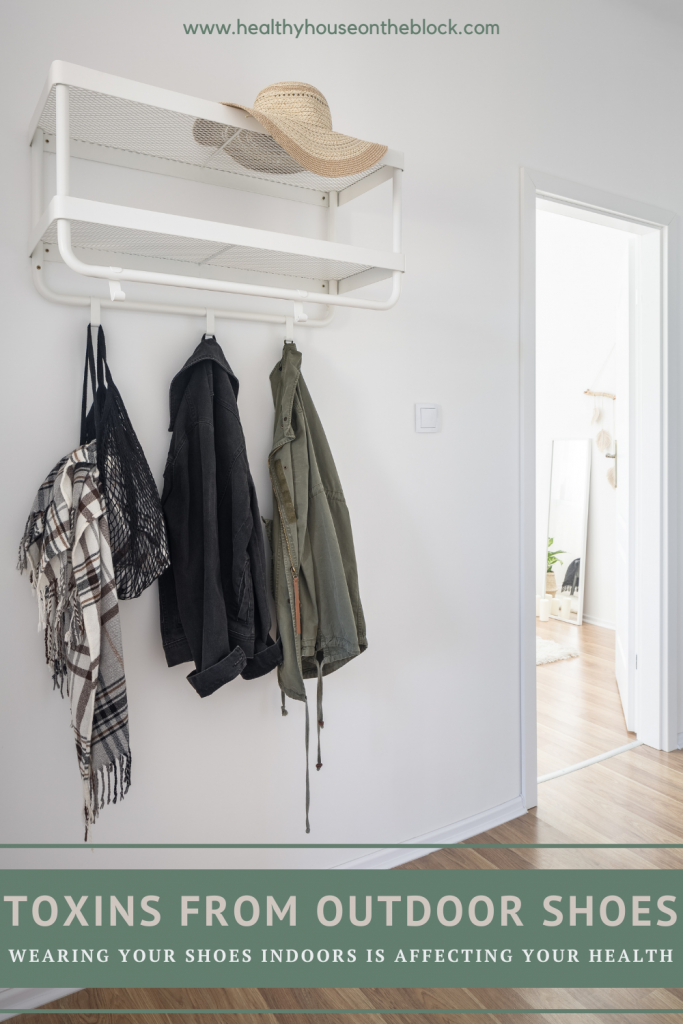
A place to hang backpacks, purses, leashes and coats is another great way to keep items that have left the house in their own place. It helps contain these items to areas that are not the main living spaces in your home.
We often focus so much on shoes that we forget about our purses, diaper bags, and backpacks. These items spend their days on the floors of libraries, buses, and public restrooms. If you set your diaper bag on the kitchen counter when you get home, you are effectively transferring those outdoor toxins to a food-prep surface. Utilizing wall-mounted hooks or a dedicated entry table with lower shelves allows these items to have a “home” that is isolated from your main living areas.
Wooden Hooks
Rustic Solid Pine Coat Rack
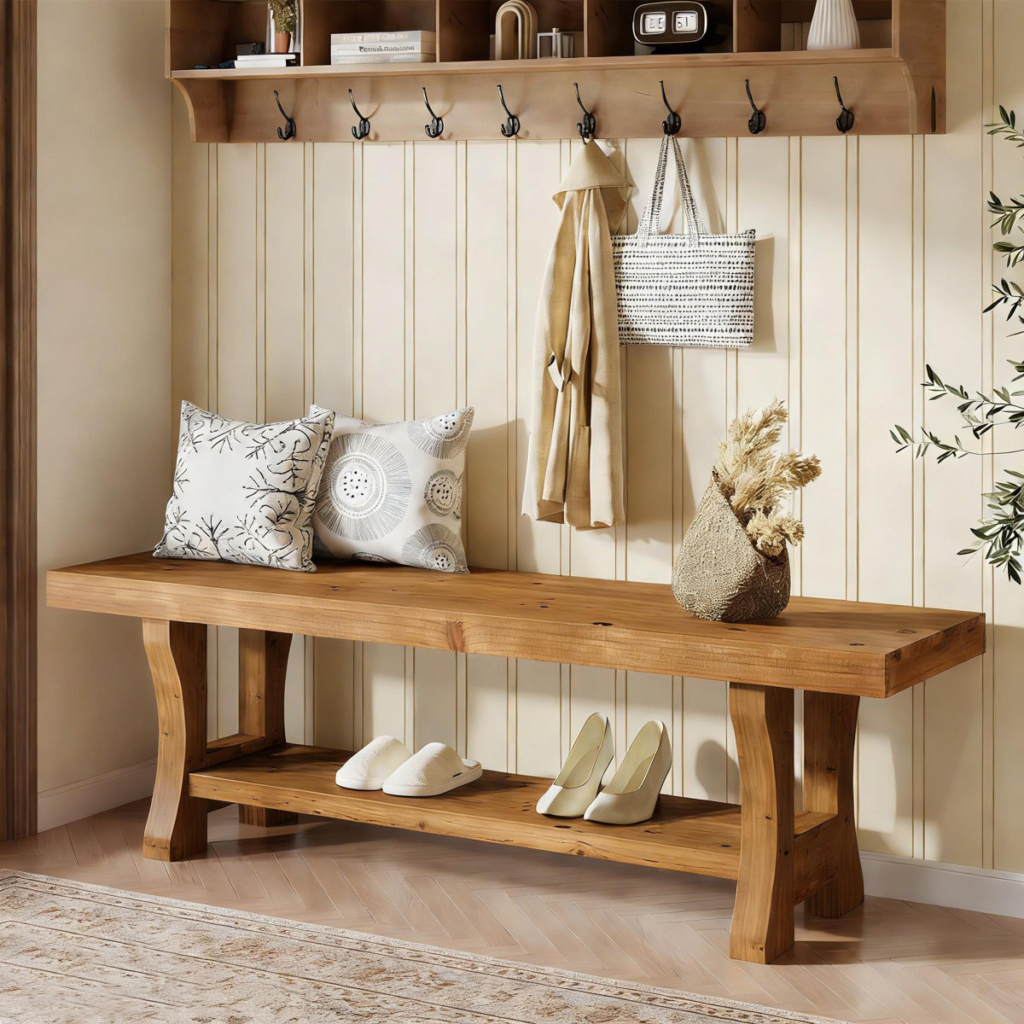
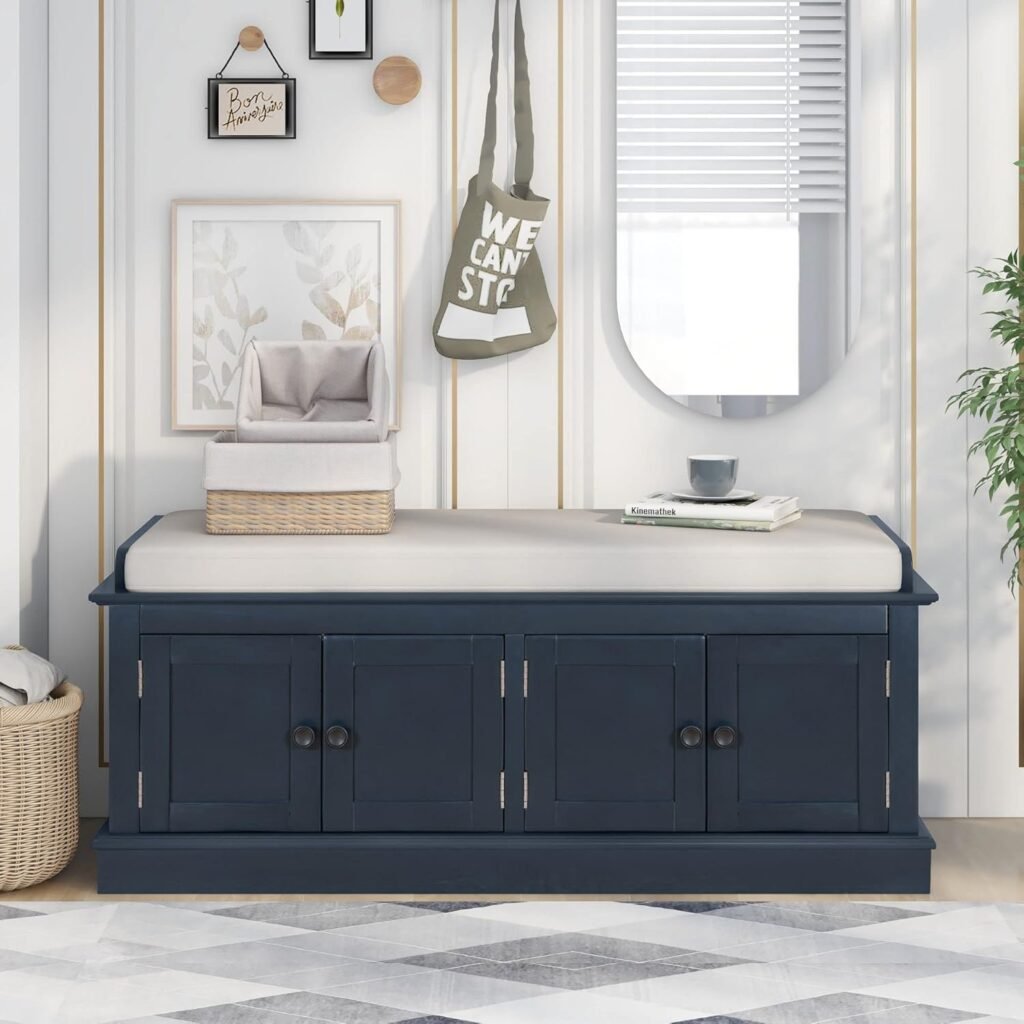
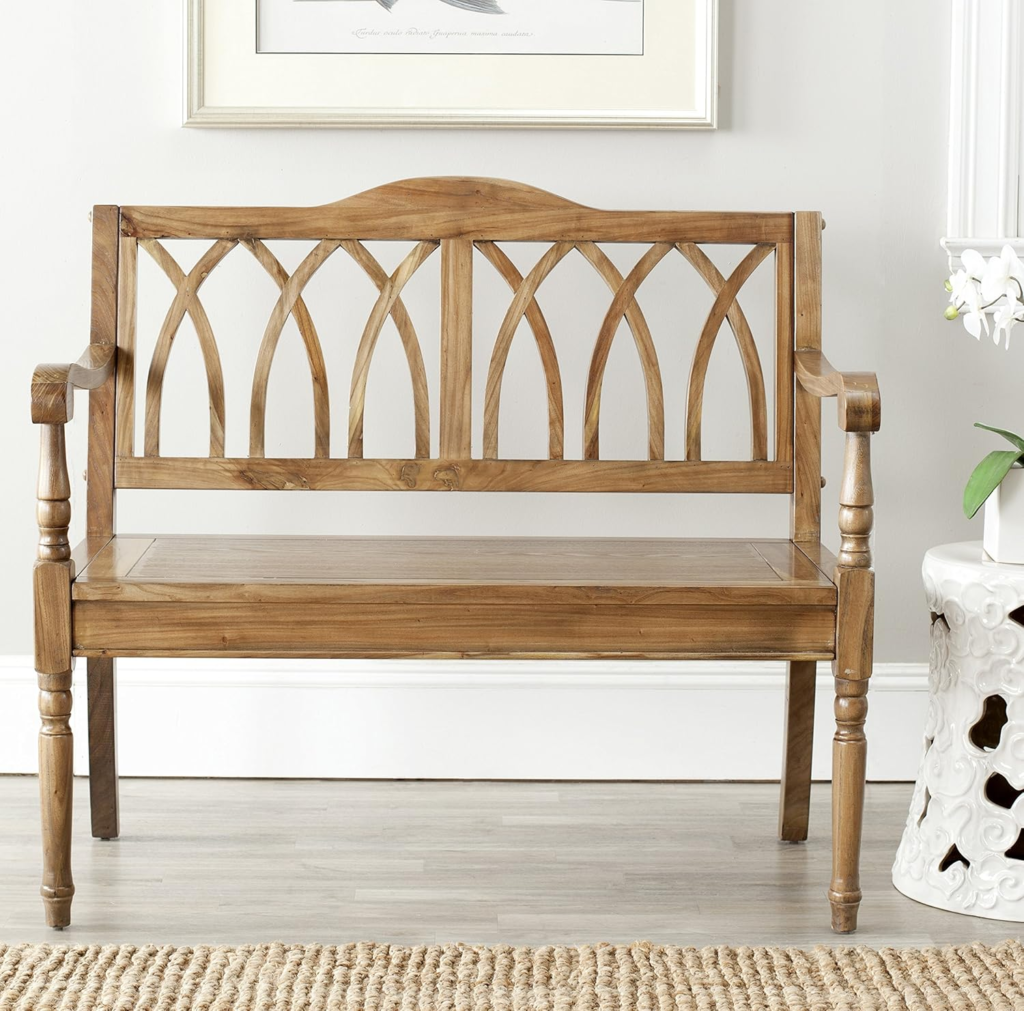
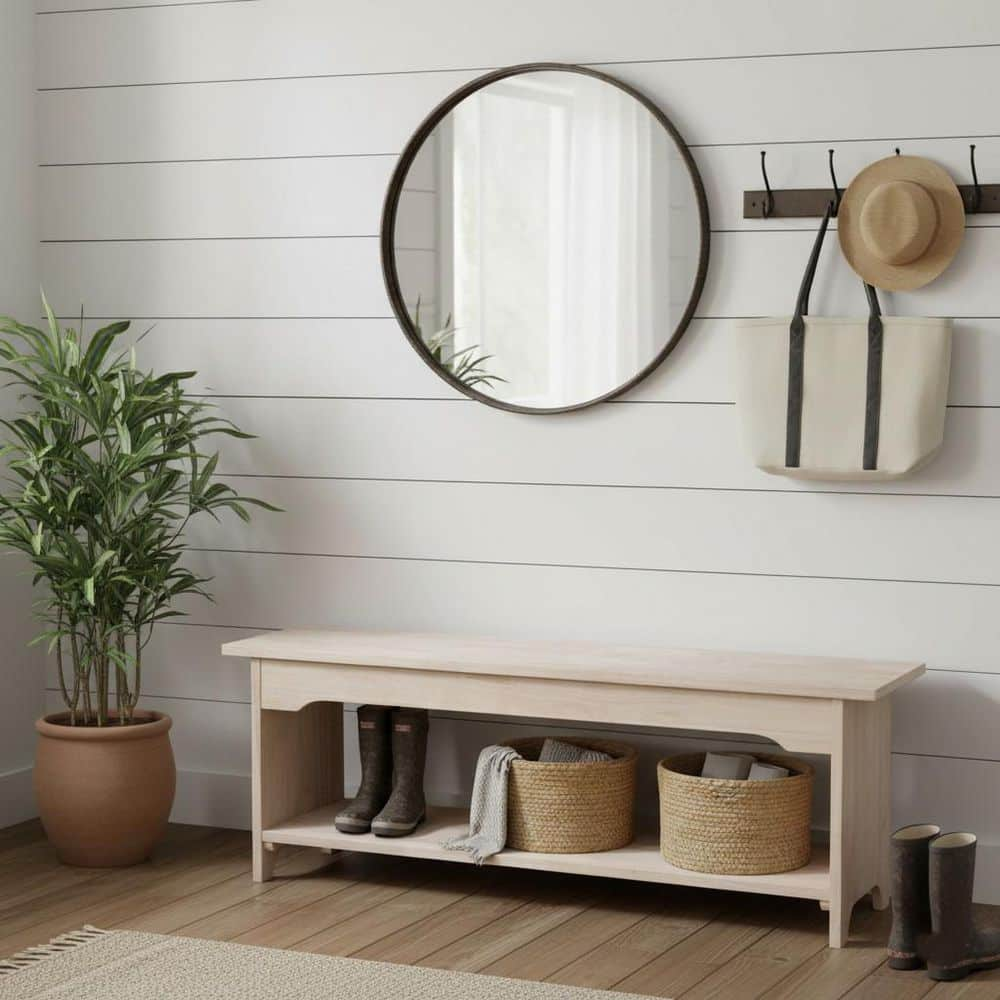
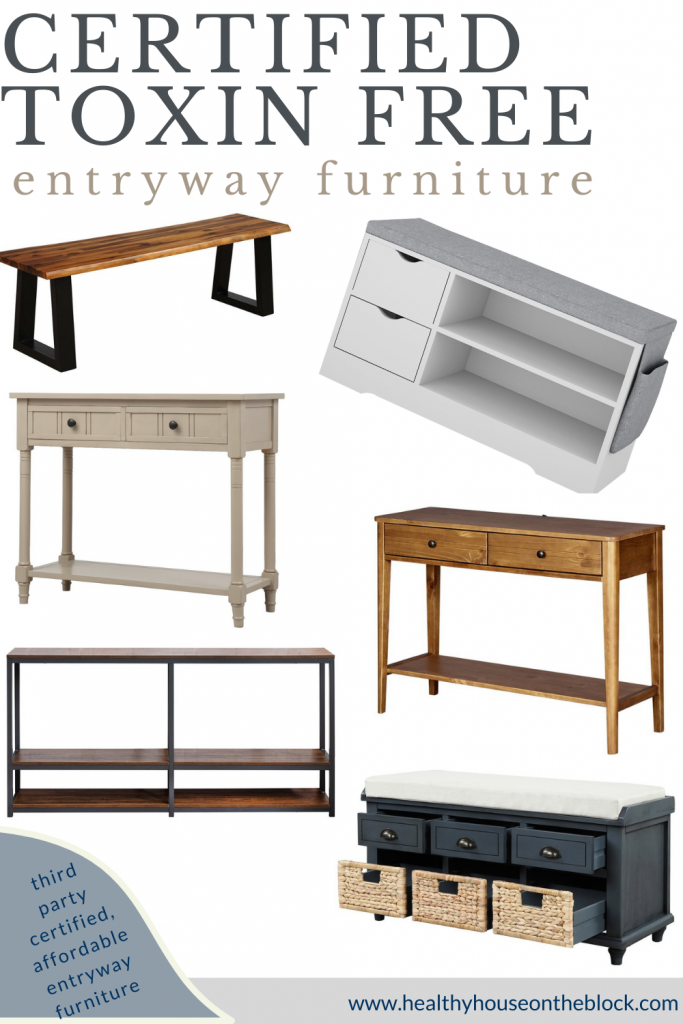
Bench: Having a spot to sit and take shoes off and put them on again is perfect for ensuring that shoes won’t be brought into a kitchen or living room to be put on again. It also serves as another reminder to both kids and guests that shoes can stay in your entryway area. Providing a comfortable bench (like a solid wood or GreenGuard Certified option) makes the process easier for guests and grandparents. It signals that your home is a sanctuary where the floor is safe for little ones to crawl on.
Solid Wood Bench
Bench with Storage
Accent Bench
Unfinished Wood Bench
Table:
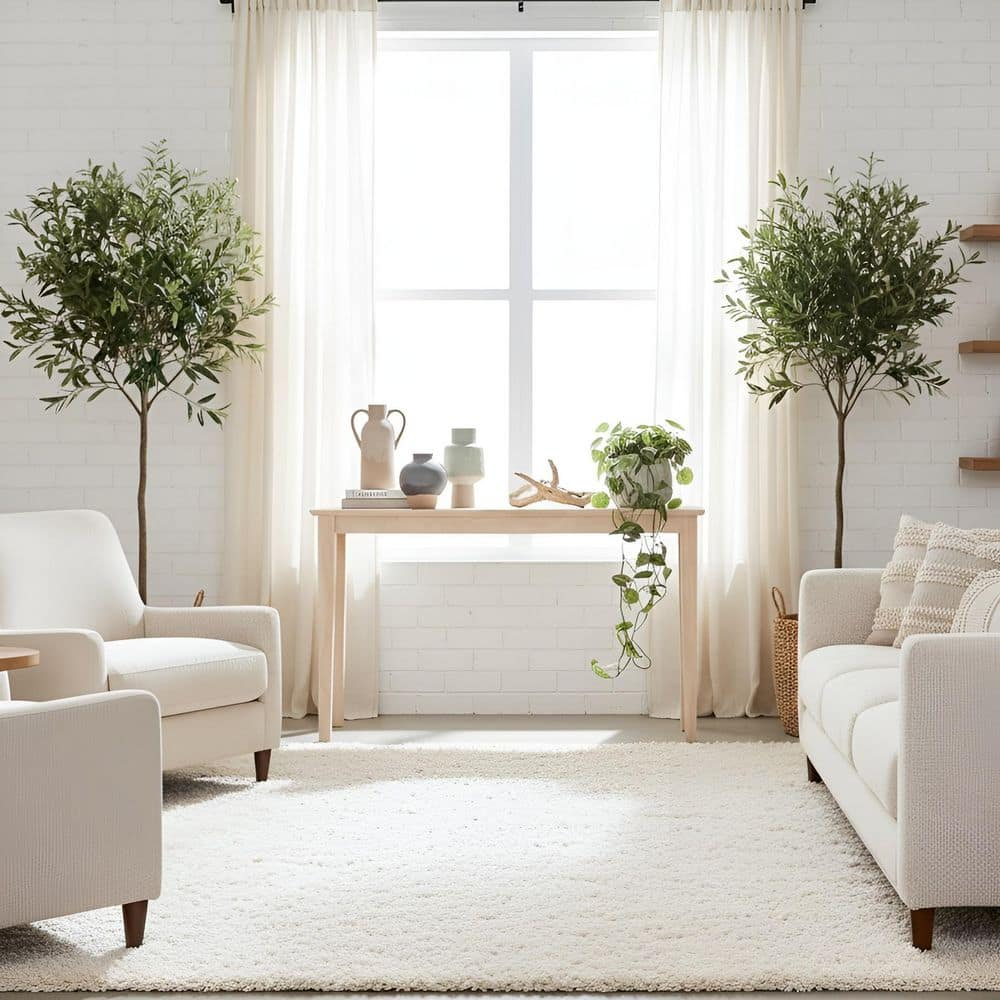
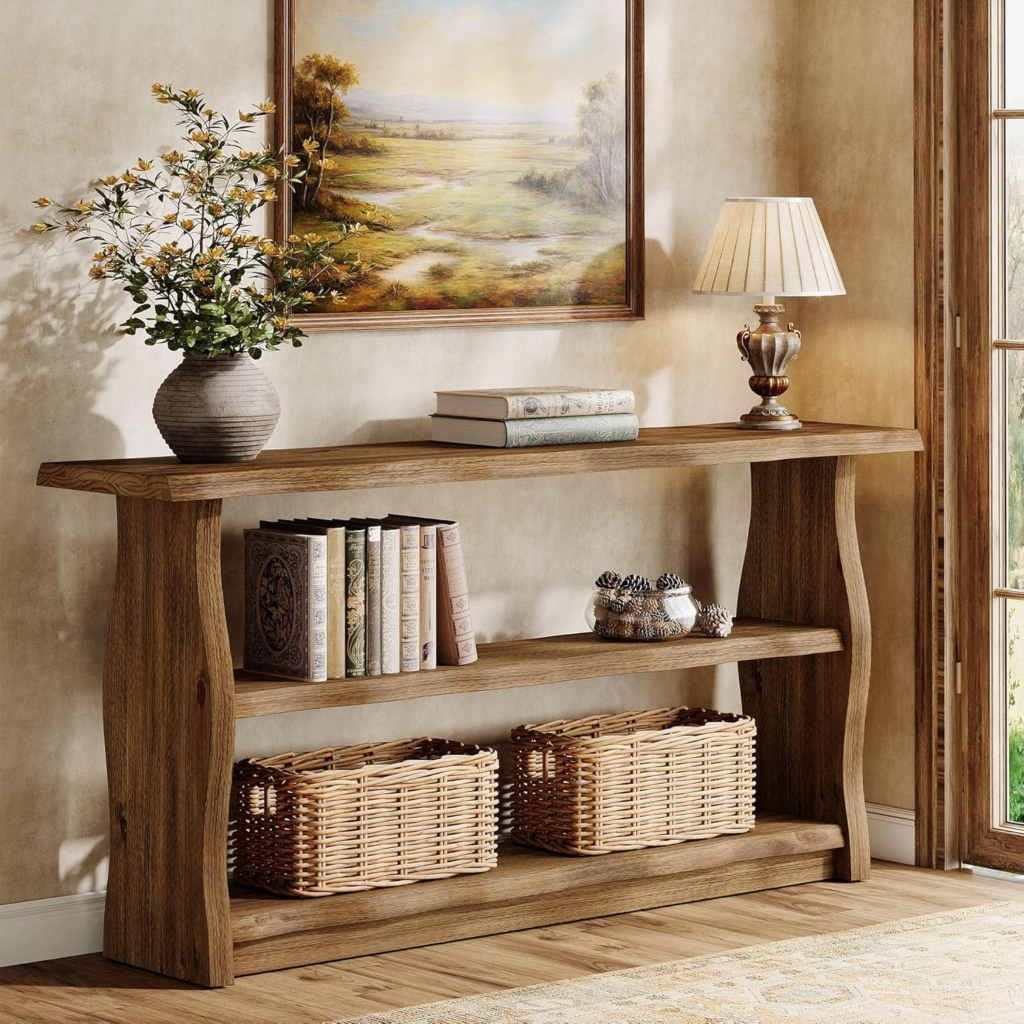
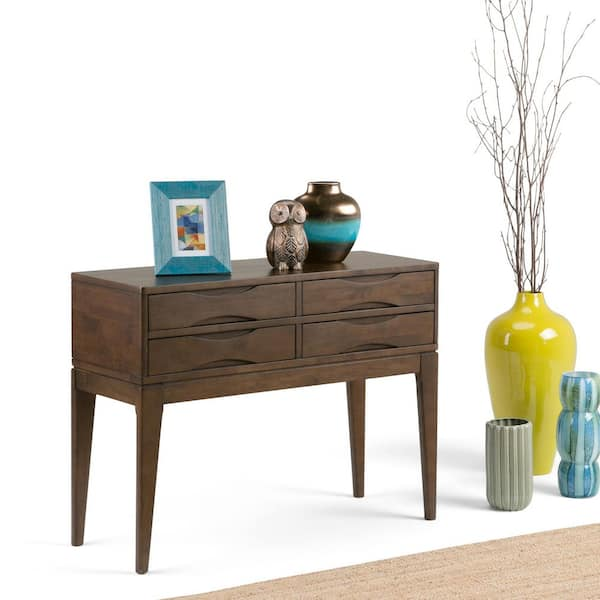
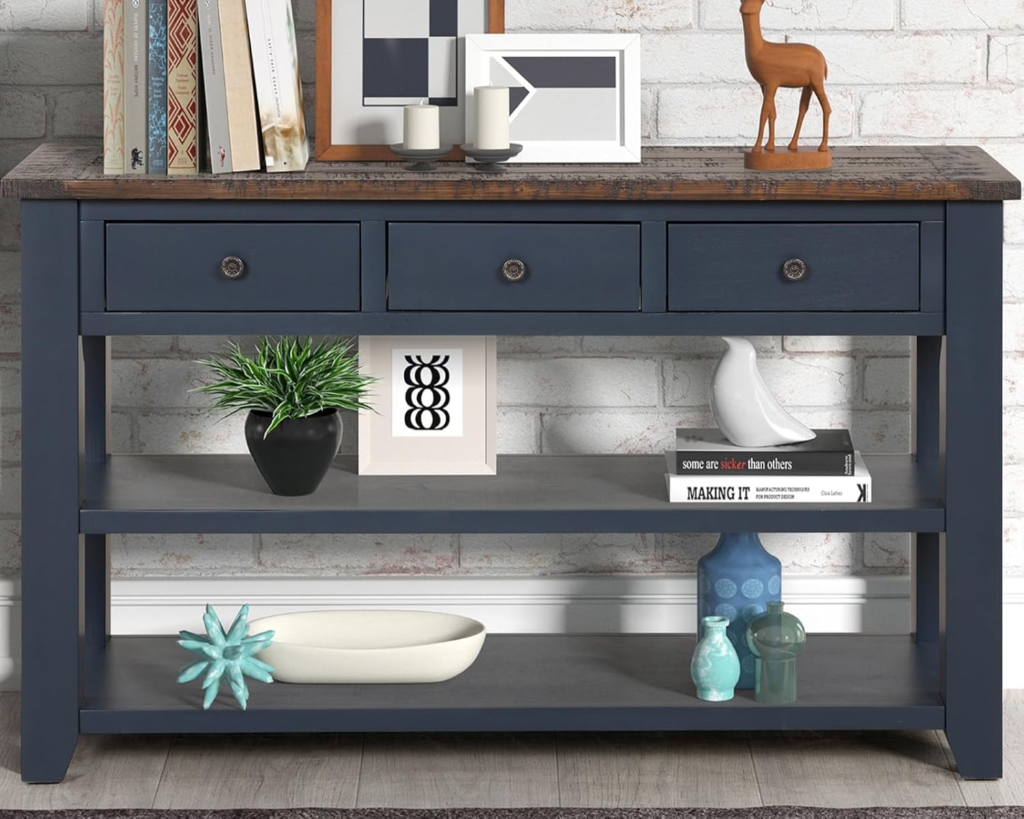
An entry table is a perfect place to set things while you’re getting ready or coming inside. With entryway ideas like this one, you won’t have to track back into the house with shoes on or leave your purse on the kitchen counter. For furniture, I suggest looking for GreenGuard Certified pieces to ensure they aren’t contributing to indoor air pollution while they help you stay organized. Again, these ideas are all GreenGuard Certified safe to bring into your living spaces:
Unfinished Entry Table
Soid Wood Table
Mid Century Modern Table
Solid Wood Table with Drawers
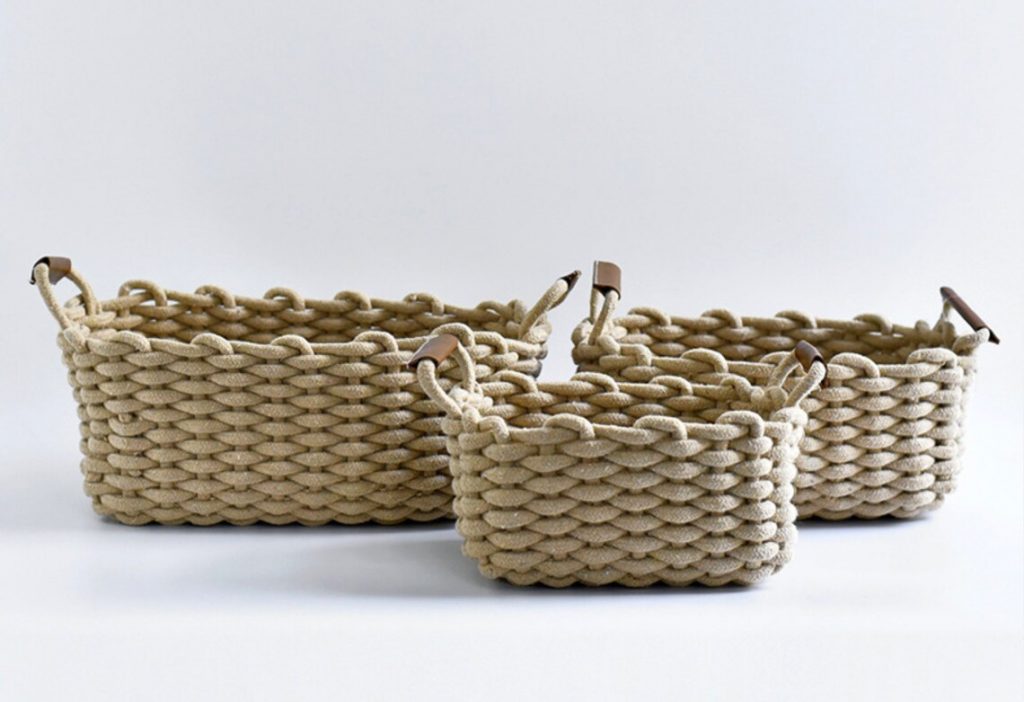
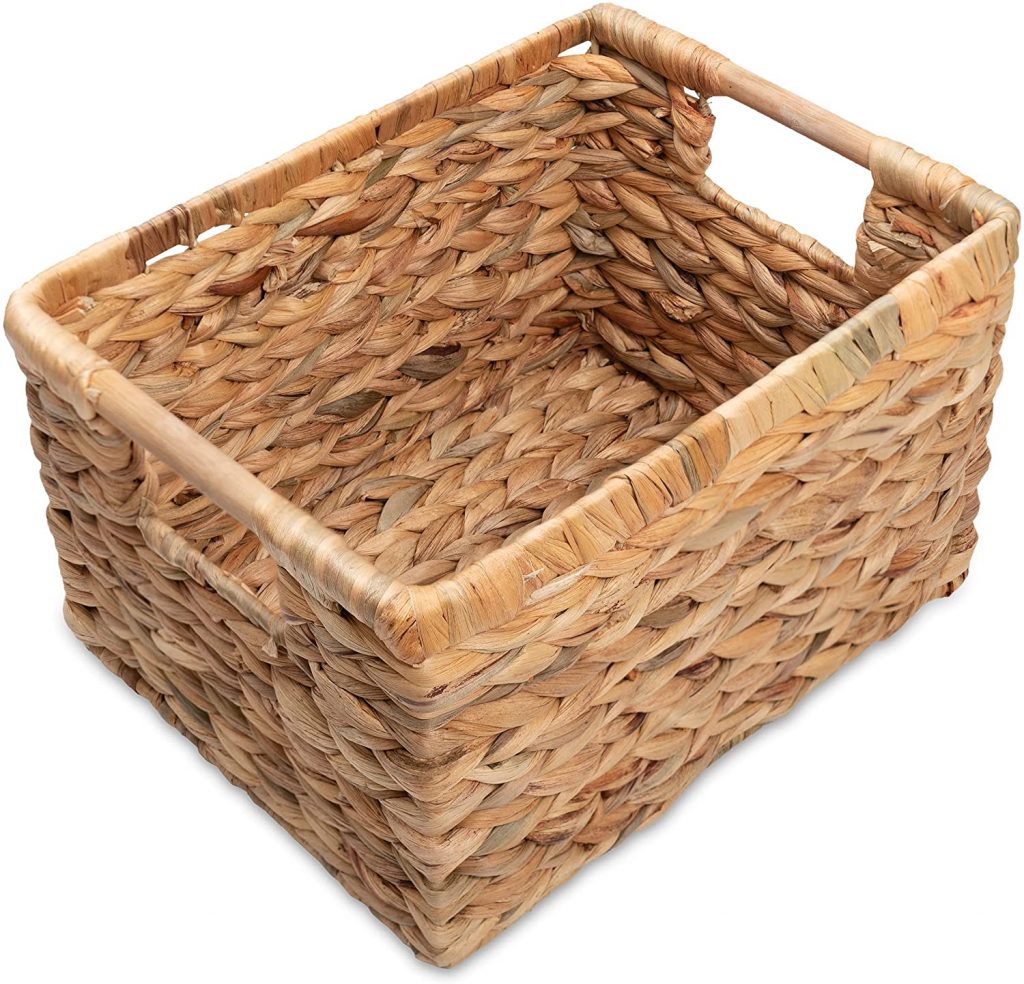
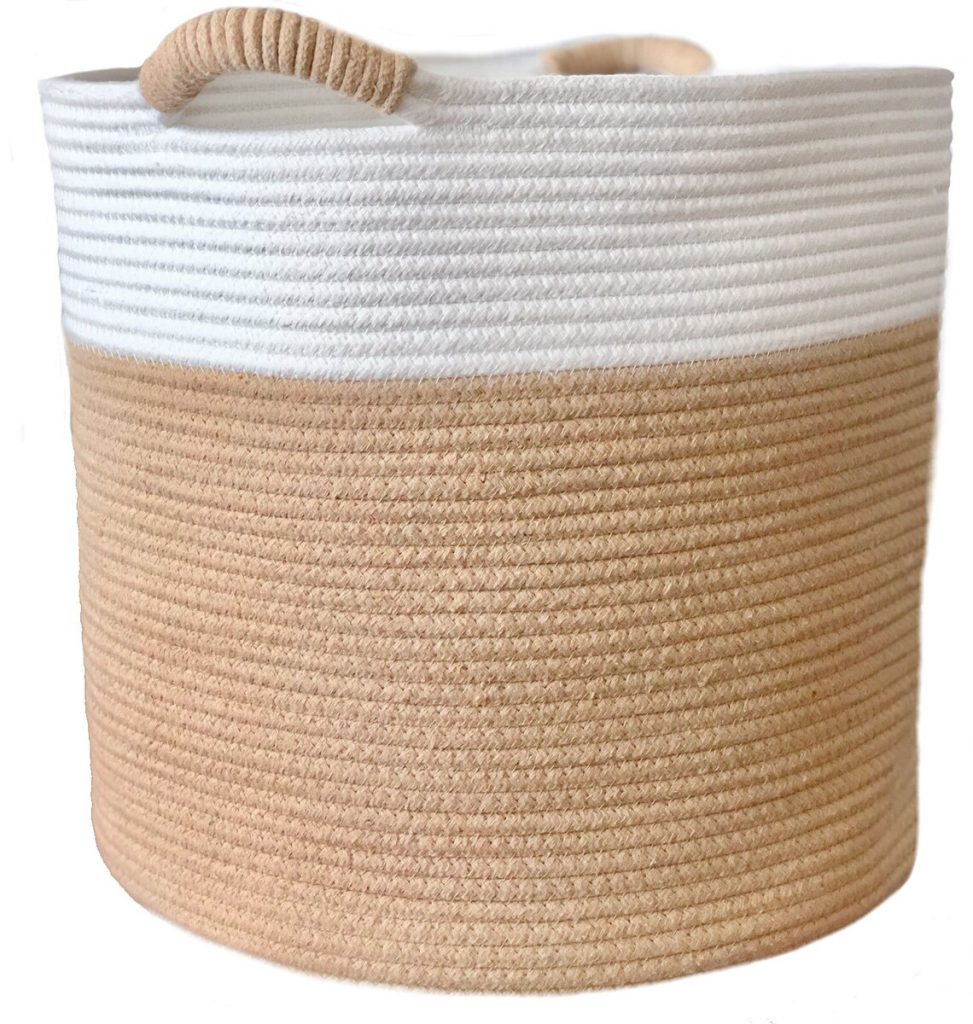
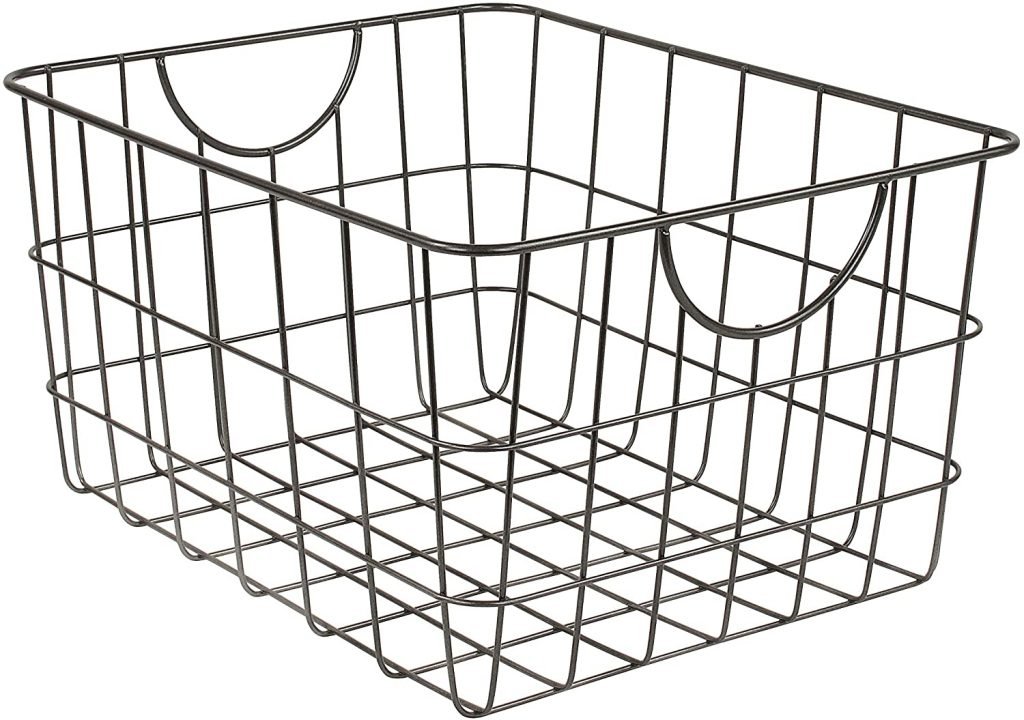
Baskets: I use baskets EVERYWHERE in my house. In our entryway each of the kids gets their own basket for shoes. This way, it’s easy for them to put the shoes away PLUS the basket catches any dirt or debris that was on the shoe. Every now and then we just dump out the basket and vacuum out what’s left over. I love using baskets that are a little more natural. You could also use baskets to store hats and gloves in the winter or suncare items in the summer.
If you have the space, individual baskets made from seagrass or organic cotton are excellent for keeping each family member’s current-season shoes organized while catching any loose debris.
Handmade Baskets
Natural Wicker Metal Frame Basket
Cotton Basket
Wire Utility Basket
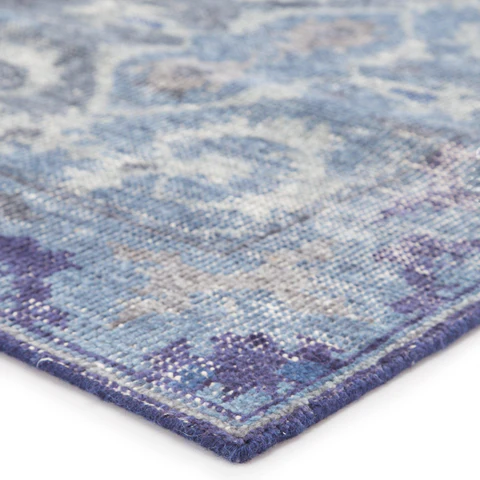
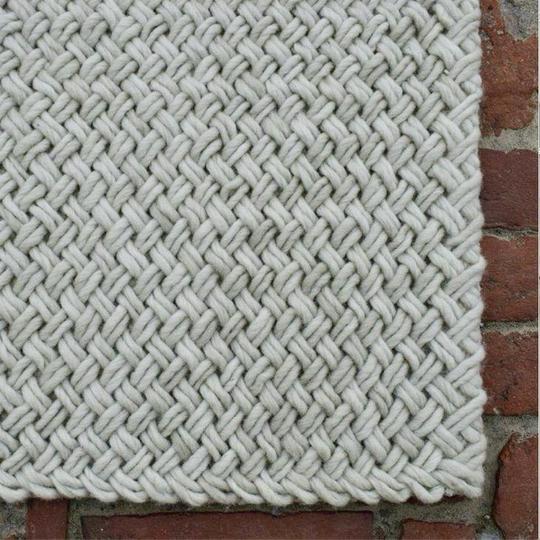
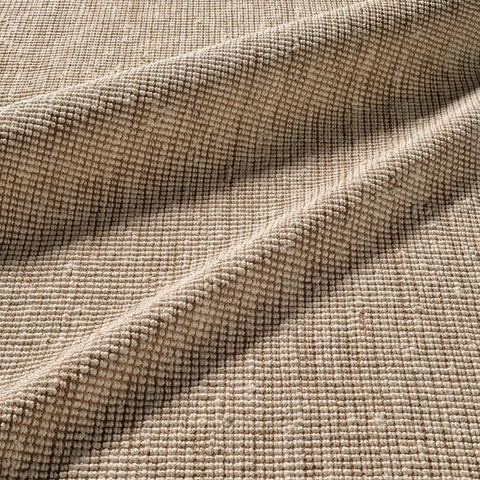
Rug: Area rugs are a great way to catch A LOT of dirt and debris from shoes. I love finding organic or GreenGuard Certified area rugs for my space. I vacuum ours every day to keep dirt from entering our living spaces. Every now and then it’s a good idea to take your rug outside and give it some natural sunlight to kill the germs and bacteria.
Hook & Loom Rugs
Rugs By Roo (Use Code HEALTHYHOUSE15)
Organic Weave Rugs (USE CODE AMANDA)
Rugs By Roo (Use Code HEALTHYHOUSE15)
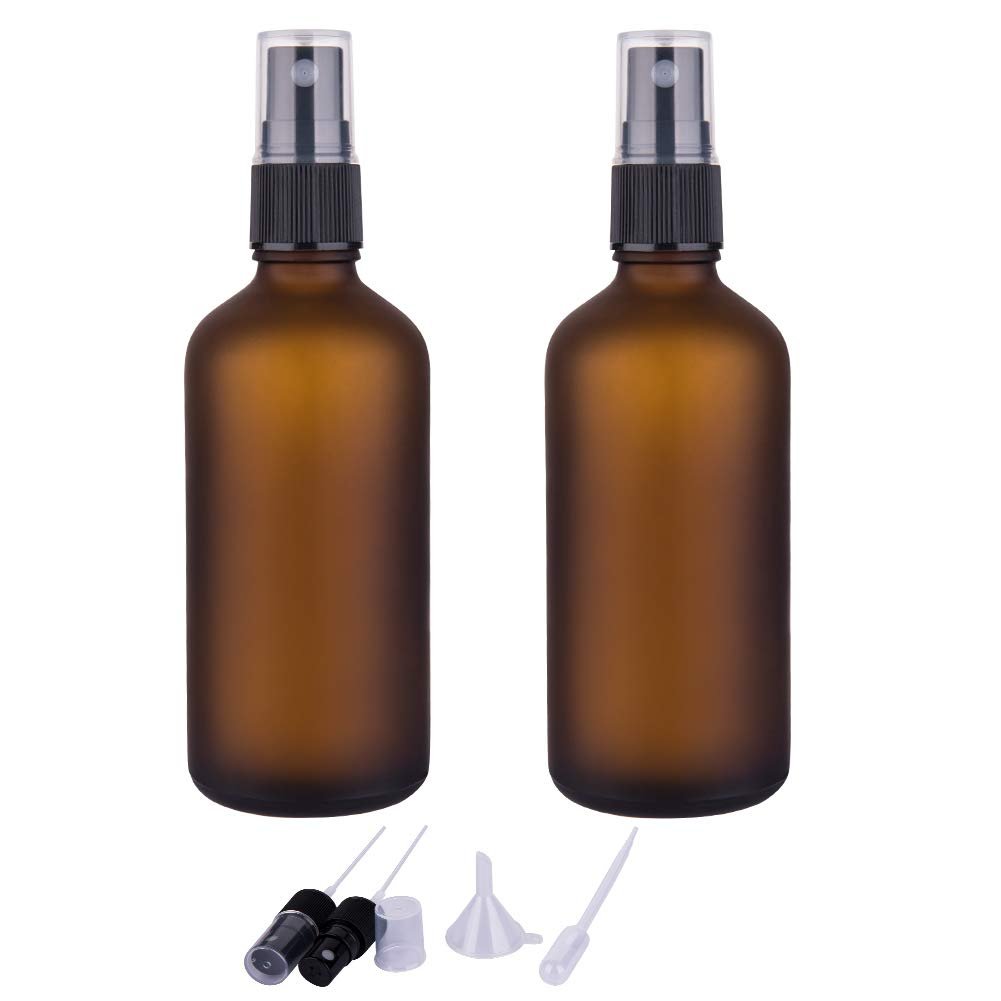
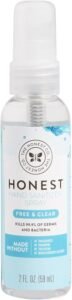
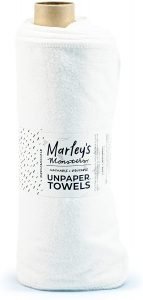
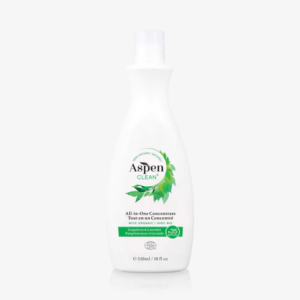
Cleaning Station: With small kids and pets, I have utilized an area near our entryway that served as a clean up station. While most of the time the first stop when we come inside is the bathroom sink to wash hands, sometimes I just can’t get there first and so I use a gentle hand sanitizer. You could also keep a few unpaper towels or Swedish dishcloths and a small spray bottle in case anything needs to get cleaned off right away.
Metal Tray
Clear Glass Spray Bottle
Low Toxin Hand Sanitizeer
Marley’s Monsters UNpaper Towel
Aspen Clean Concentrate
Habits for a Healthy Entryway Space
Even the best-designed space requires intentional habits to keep it functioning as a protective barrier. These are simple shifts that, when done consistently, dramatically reduce the “bio-load” of your home.
The “Shoes-Off” Policy
This is the most effective low-cost health intervention you can make. While it might feel awkward at first, remember that you are the gatekeeper. Your house, your rules, in my opinion.
The HEPA Vacuum Ritual
One of the best entryway ideas you can implement in order to keep toxins from being tracked around your house is to vacuum. Use a vacuum with a HEPA filter and get in the habit of vacuuming your entryway and rugs on a regular basis. Because your entryway is doing the hard work of trapping dust and pesticides, it needs to be cleared out regularly. I recommend vacuuming your entryway rugs at least every other day using a vacuum equipped with a sealed HEPA filter. This ensures that the small particles of lead dust or coal tar are actually trapped in the machine rather than being exhausted back into your breathing zone. We use a stick vacuum that stays in the entryway area at least every other day. It helps keep the rest of the house clean like you wouldn’t believe.
Regular Cleaning & Decluttering
Get in the habit of cleaning up your entryway space. It can be a place that becomes a bit of a “catch all” because it’s the spot where mail, packages, groceries and everything else enters our home. Use these entryway ideas for cleaning, dusting and decluttering to keep your space free from toxins that came in on objects.
Backpacks, Diaper Bags & Purses
I try to keep my purse and backpacks that come in from school and the bus in one isolated spot in the entryway. I know that bacteria, toxins and germs come in on these bags just like they do with shoes. I don’t want backpacks going up to bedrooms and sitting on beds, nor do I really want my diaper bag that I just had on the floor of the library on my kitchen counter. We have hooks on the wall for backpacks and the bottom shelf of our entryway table is the go to storage spot for the diaper bag.
Seasonal Rotation: In Season Shoes Only
To prevent clutter and simplify cleaning, keep only the current season’s shoes in the entryway. Storing out-of-season boots or sandals elsewhere makes it much easier to vacuum the floor and keep the space from becoming a “catch-all” for dust-collecting items.
Keeping out of season shoes stored somewhere besides the entryway has made my life a MILLION times easier. Maybe you’re not in the same boat we are, but living in the midwest we have summer shoes and winter shoes/boots. Even if we keep it to the bare minimum, we still have plenty of shoes around between the five of us. Each kid gets a basket to keep their current season’s shoes in and I store the rest out of sight and out of the way so they don’t cause more clutter and bring in more unnecessary toxins.
Do you think that you’ll try to implement some healthy entryway ideas in your own home? I think our homes and entryways are an ever changing space. And because we are always learning new and more practical ways to keep our homes healthy, I’m sure you’ll come up with more ideas as you delve further into your healthy home journey.
By treating your entryway with the respect it deserves as a building biology filter, you are taking a proactive step toward a healthier home. It is a tangible, science-backed way to protect your family’s endocrine and immune systems from the hidden stressors that we too often invite right through the front door.












Pingback: 8 Ways to Transform Your Healthy Home & Support Your Health